


SEO for a security company: how to reach the buyers who choose without running a tender
A security company has two buyers who share nothing: procurement departments that run tenders, and a business owner who needs cameras this month. Search reaches the second, and shortcuts the first. Audit from €250, and I will say which of your work it cannot help.
- Guarding and installation split
- Audit from €250
- Named by ChatGPT and AI search
What SEO for a security company actually consists of
- Guarding and installation separatedTwo buyers who share nothing
- A page per site type you protectWarehouses, building sites, retail, events, estates
- Response time as a published figureThe specification that decides the contract
- CCTV and the customer's data dutiesSignage, retention, who is responsible
- Licensing and insurance statedTrust, and a search term in its own right
- Being named by AI assistants«Monitored alarm for a warehouse, response under 15 minutes»

Anti-Spam Protection for Website Forms
−98% spamNo CAPTCHAServer-side
Architecture Website Rebuild and SEO
29× organic trafficLoads in under 1 sTop 3 in Poland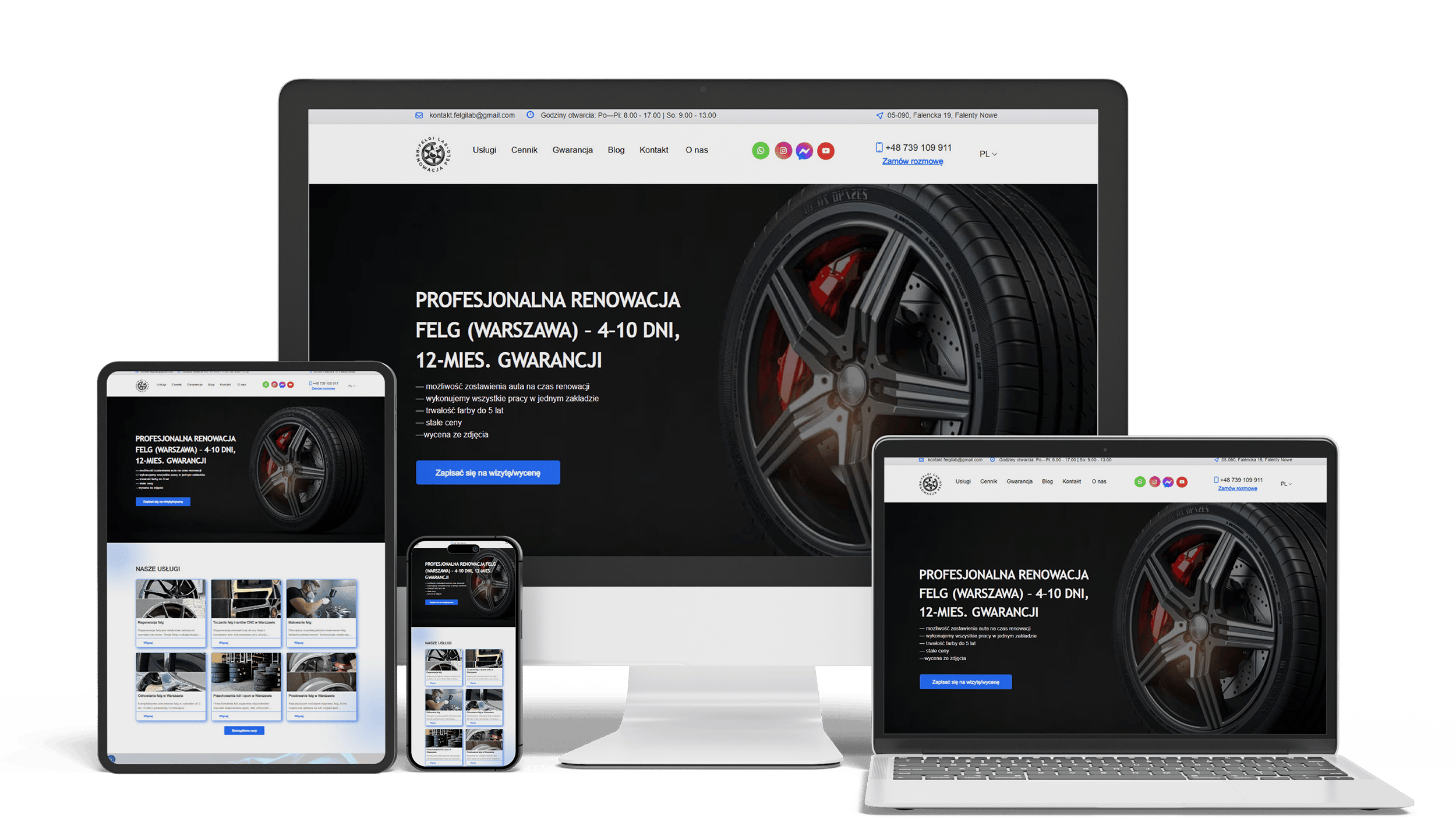
Auto Repair SEO & UX Boost
Performance 90++10% organic trafficLeads from forms
Renovation and investment website with a premium feel and 96/98/100/100 performance
96/98/100/100Design system2 languages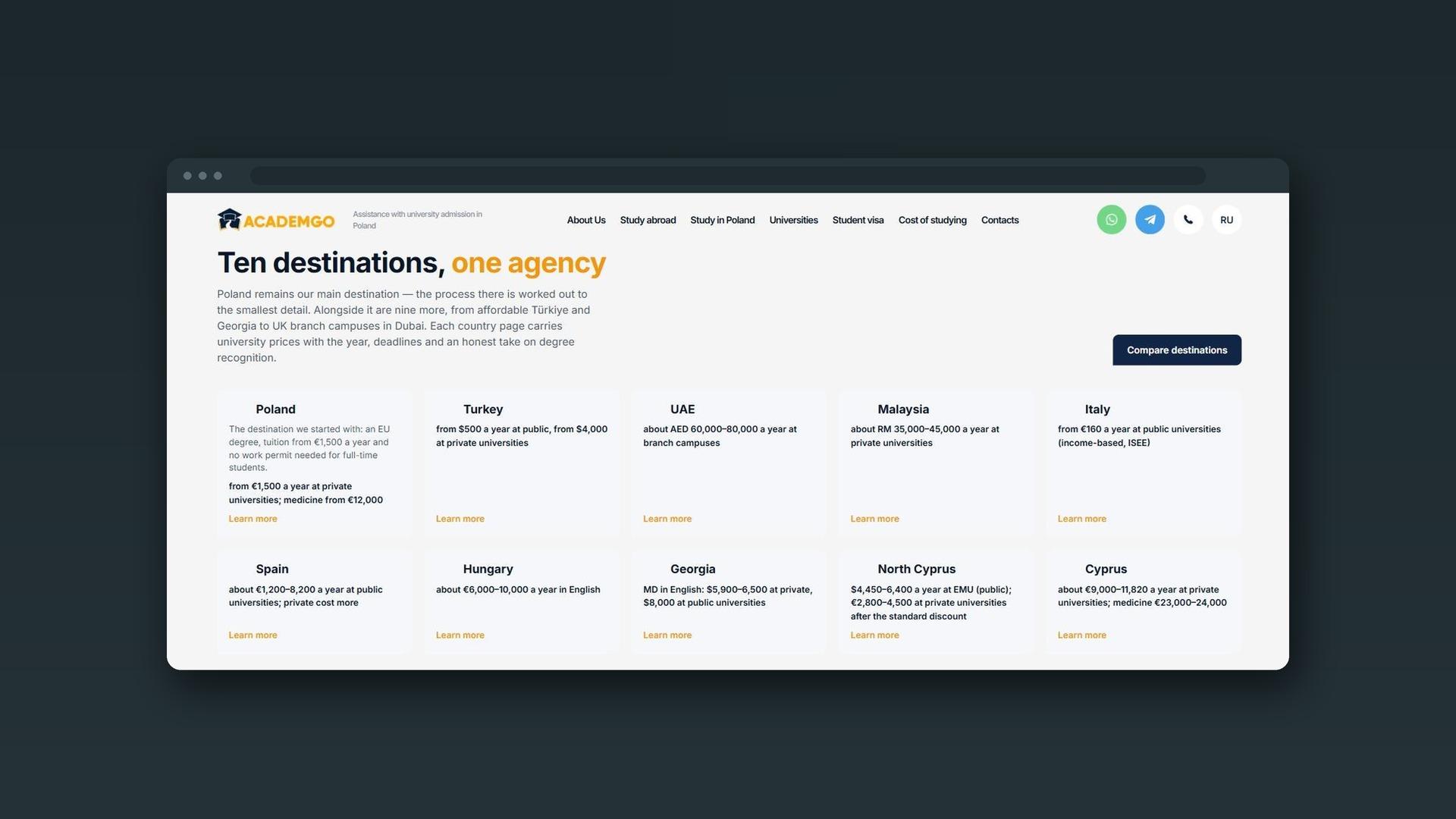
SEO case study: an education agency site, one country to ten
1 → 10 countries180 new pagesPerformance 61 → 91
I do SEO for security companies myself: audit, the fixes in the code and the text, and a monthly report on enquiries.
This page is about physical security: manned guarding, monitored alarms, access control, and camera installation and monitoring. If you sell information security — penetration testing, managed detection, compliance work — the word is the same and nothing else is: that is a business-to-business software market with its own buyers, its own publications and a sales cycle that has little to do with being found locally.
If you fit locks and respond to lockouts rather than monitor premises, the trade is closer to SEO for locksmiths, which is built around emergency searches instead of contracts.
Manned guarding is sold to an organisation: a procurement team, a facilities manager, a developer, a local authority. They work from specifications, insurance certificates, licence numbers and references, over months, often through a formal tender. Alarm and camera work is sold to a business owner or a householder who had a break-in last week, wants a quote, and will decide within days.
These two read nothing alike. The first needs evidence and documents; the second needs prices, response times and somebody who answers the phone. Most security company websites address the first in tone — corporate, formal, photographs of a man in a high-visibility jacket — while almost all of their searchable demand comes from the second. Separating them into two clear parts of the site is usually the first structural change worth making.
- guarding: sectors served, licence and insurance, vetting and training, shift coverage, references;
- installation and monitoring: what systems, what they cost from, how fast, who monitors them and from where;
- one page per type of site you protect, because a warehouse and a building site are different problems;
- and a separate page for events, which is a different purchase again — dated, short, and planned weeks ahead.
The honest limit: search will not win you a tender
I would rather say this before you pay me than after. Large guarding contracts are awarded through procurement, and procurement does not find suppliers through a search engine — it runs a process, often with a shortlist assembled before anything is published. No amount of content changes that, and an agency that tells you otherwise has not worked with a procurement timetable.
What search does do is three things that are worth real money: it brings installation and monitoring work, which is the higher-margin half of most security businesses and is bought like any other local service; it brings the small and mid-sized guarding contracts that are awarded by one person making a decision rather than by a committee; and it makes you findable to the procurement officer who has your name from a reference and is checking whether you look like a serious company. That third one is not lead generation, and it decides shortlists.
Security is bought on specifications, and the deciding one is almost always how fast somebody arrives. Yet most security company sites say «rapid response» and no figure, which reads to a buyer as a number too poor to print. A published range — the area you cover and the time you commit to within it — outperforms every adjective in the industry, and it also pre-empts the conversation where the customer discovers you are forty minutes away.
The same applies to the other comparables: how monitoring is staffed and from where, what happens when the connection drops, who holds the keys, whether patrols are logged and how the customer sees that log, and what the contract minimum is. None of this is marketing copy, all of it is searched, and publishing it is what distinguishes a company that has thought about the service from one that has bought a website template.
CCTV installation makes your customer responsible for personal data, and almost nobody explains it
The moment a camera is installed, the customer acquires obligations about what the cameras may see, what signage is required, how long recordings may be kept and who may access them. Across the European Union those duties fall on the customer as the data controller, not on the installer, and most customers have no idea they exist until something goes wrong.
A page that explains this plainly — what the installer is responsible for, what the customer must do, what retention period is defensible, where cameras should not point — is one of the most useful pages a security company can publish, and in my experience none of its competitors has one. It ranks because it answers a question people ask in those words, and it converts because a company that warns you about an obligation reads as one that will not cut corners on the installation either.
Where your market licenses security work, say so with the licence number and the scope it covers. It is a trust signal, it is checked by serious buyers, and it is also searched directly by people who have been told to verify that a contractor is licensed.
Installation and small guarding work behave like any local service: the map results and a correctly built profile bring the first contact, and the sector pages decide whether it goes anywhere. Those sector pages are where this industry has the most unexploited room, because almost every competitor publishes one page called «our services» covering warehouses, construction sites, retail, residential estates, events and offices at once, and therefore ranks for none of them.
The groundwork for being found by city and across a service area is on the local SEO page, and if you want the state of your own site established before committing to anything, that is the SEO audit.
An SEO audit for your security company
Send the site and I reply within one working day: what is holding it back and what I would do first.
Being named when a buyer asks ChatGPT for a security provider (GEO, AEO)
«Who installs a monitored alarm for a warehouse in my area, with response under fifteen minutes, and roughly what does it cost» is now one question put to an assistant rather than four searches, and security suits it well because every part of the answer is a specification somebody has to have published. The assistant answers from text it can read, so the same things decide whether a company is named: the sectors and systems written out rather than hidden behind «full security solutions», response times and prices it can quote, the licence and the service area stated, and the same company name, address and phone number everywhere.
Getting a site into that state is preparing a site for AI search, and if assistants describe the company wrongly — a service you dropped, an area you no longer cover, a licence that has been renewed under a new number — that is fixing AI misinformation.
SEO for security companies: frequently asked questions
Order an SEO audit for a security company: what to send me
Send the site, say whether the business is mainly guarding, installation or both, and list the sectors you want more work in. I reply within one working day with what is holding the site back, which sector pages are missing, and what I would do first — including a plain note of which part of your business search cannot help, so you are not paying for it.
