


Chiropractor Website Design
Chiropractor website design and build from one person: a first screen that lets a patient in pain book in a minute, real photos of your office, doctor and technique pages, scheduling from your own system and a site that stays yours.
- Design + build, one price
- From 700 €
- Your domain, your content
What you get with chiropractor website design
- Photos of your real office and teamAdjusting rooms, front desk, the doctors at work
- A first-visit page people actually readLength, clothing, imaging and fees in one place
- Scheduling from the system you already useEmbedded booking, confirmed or call-back, clearly
- Fast on a phoneUnder 2.5 s, video loads only on tap
- Intake that keeps health details safeNo symptoms in plain forms; BAA providers for intake
- Clear to Google and ChatGPTDoctors, techniques, hours and insurance as text
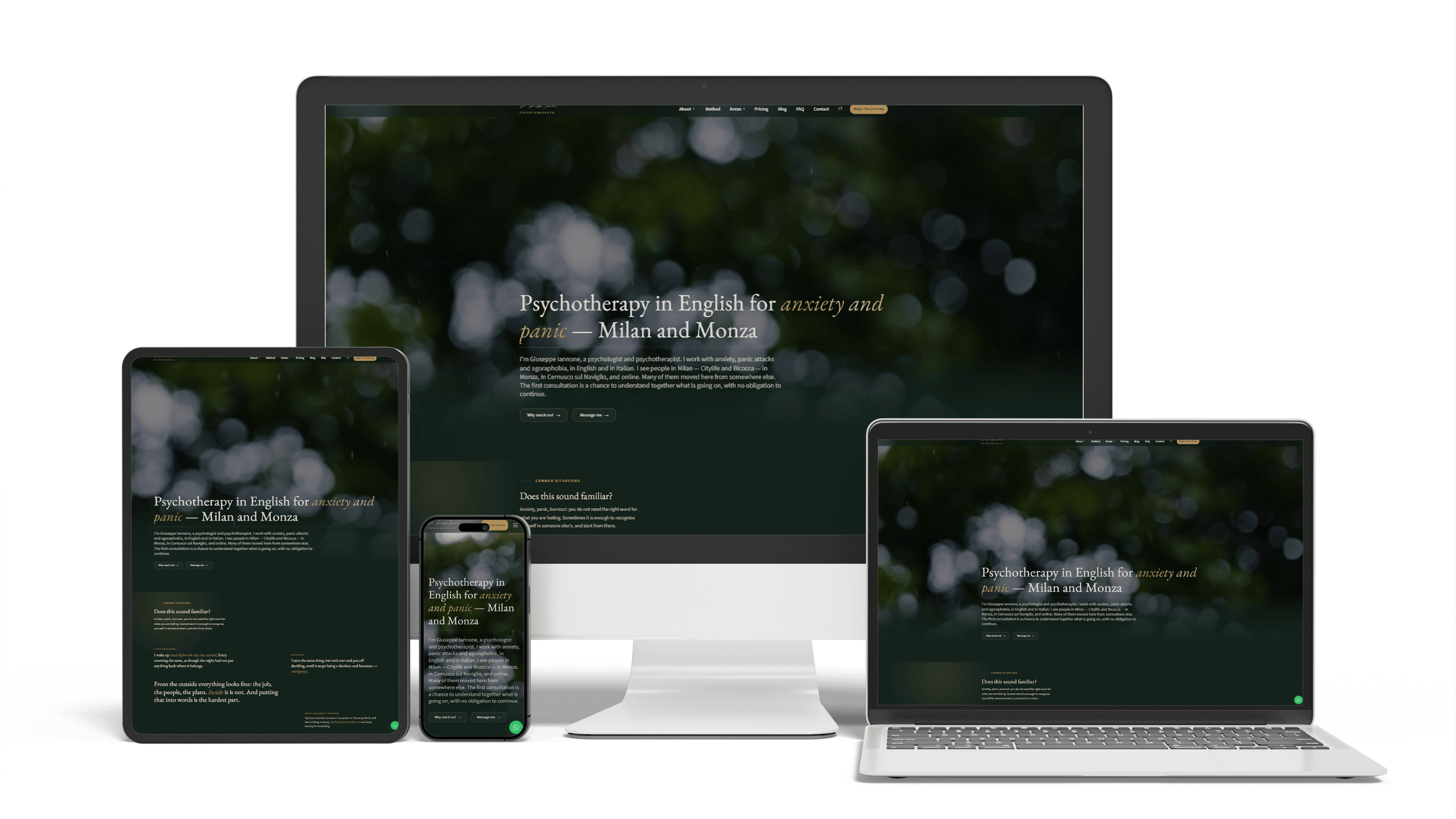
Bilingual psychotherapist website in Italy
468 of 468 posts moved2 languagesSeen in ChatGPT answers
Renovation and investment website with a premium feel and 96/98/100/100 performance
96/98/100/100Design system2 languages
Multilingual real estate platform in Cyprus: SEO and GEO without bought links
16× faster editingTraffic from ChatGPTLeads via WhatsApp
Full WordPress Rebuild for a Car Rim Restoration Company
92/91/96/100Photo quote formLocalBusiness markup
A multilingual landing page for a wheel and tyre storage business
100/95/100/1003 languagesClient edits it
Get a quote for your chiropractor website design
I reply within one business day with a proposed page list — home, doctor bio, first visit — and a fixed price.
I do chiropractor website design and build the site myself, so the layout, the code and the launch come from one person at one price. A chiropractic website is often opened by someone whose back hurts right now, on a phone, in a short break. The design has one job above the rest: show that person that you treat their problem, let them trust the doctor and get them to a booked first visit in under a minute.
On a phone, the visible part of the first screen has room for four things, and they go in this order:
- what you treat and where — “Chiropractic care for back pain, neck pain and sports injuries in [town]”, not a slogan about wellness
- a book button and a call button, fixed to the bottom of the screen on every page
- opening hours, especially early mornings or Saturdays if you offer them
- a real photo of the doctor or the office instead of a stock illustration of a spine
Everything else — mission, the full list of techniques, the blog — goes below. Sliders, autoplay video and pop-up offers push the booking button out of view; they are the first things I remove from existing chiropractic websites.
Search for “chiropractic websites” and most results are platforms made for chiropractors — a monthly plan with a theme, hosting, a newsletter and a library of pre-written articles — plus galleries of chiropractic website templates. They launch fast, and for a new solo office that only needs hours, a phone number and a booking link online, a template can be enough.
The limits appear later:
- the pre-written articles are on hundreds of other chiropractors’ sites, so they add little in search
- the layout changes only as far as the theme allows
- the content, and sometimes the domain, stays with the platform when you cancel
- the monthly fee runs for as long as the site exists
A custom chiropractor website costs more at the start, belongs to you in full and is built around how your office works: your techniques, your doctors, your scheduler.
Most calls to a chiropractic front desk ask the same things: how long the appointment lasts, what clothing to wear, whether imaging is part of it, the fee and whether insurance covers any of it. I design one page that answers them in that order, with a photo of the room where the first exam takes place, and link it from every condition page.
Cash prices and care plans are shown as text, and accepted insurance as a written list rather than a strip of logos, because patients search the page for their plan name. If you advertise a new-patient offer, the layout leaves room next to it for any disclaimer your state requires, at a readable size rather than in fine print.
Patients choose a chiropractor as much as an office. Each doctor gets a page built on one template: a photo taken in your own office, DC degree and school, state license, years in practice, the techniques they use — Gonstead, Diversified, Activator, Thompson Drop — and the patients they see most, such as runners, office workers, pregnant women or older adults.
Technique pages explain each method in a few short paragraphs, next to a short video of a real adjustment recorded with the patient’s written consent. A reader who is nervous about the sound of a joint release understands more from twenty seconds of video than from a page of text.
Booking is the main route through the site. Behind the button sits whatever your practice software offers — an embedded scheduler, a booking link or a short request form followed by a call back — and the visitor sees at once whether the time is confirmed or the office will phone them.
Intake paperwork is where health information enters. There are two safe designs: the public form collects a name, a phone number or email and a good time to call, with a note asking people to leave symptoms for the visit, or intake paperwork goes through a HIPAA-ready service that signs a business associate agreement with the office. Analytics scripts stay off booking and intake pages. Your compliance adviser confirms the final setup.
Some five years back I was part of building a medical system that handled patient data. An NDA covers it, so I cannot say more, but it taught me to treat every extra field on a health form as a liability: if the visit can be booked without it, the field goes.
Adjustment clips, exercise demonstrations and an office tour make a chiropractic site feel real, and they are also what makes it slow. Each video loads only when tapped and shows a still image until then; photos are cropped for phones and served in modern formats. The target is the main content visible in under 2.5 seconds on a mid-range phone, measured before launch, not assumed.
People ask assistants which chiropractor nearby works on Saturdays, takes their insurance or treats sports injuries. Assistants can only repeat what they can read and verify, so those facts live on the page as text and in structured data — doctors, techniques, conditions, hours, insurance and languages, matching your Google Business Profile. Giuseppe’s site was built this way, with structured data for the practitioner, his consulting rooms, conditions and therapies and explicit rules for AI crawlers in robots.txt; its new pages already appear in ChatGPT answers.
Getting your office into those answers over time is described on the AI SEO and GEO optimization page, and ranking in Google and the map pack on SEO for chiropractors.
Older chiropractic sites often carry years of blog posts and condition articles that still bring visits. When I moved Giuseppe’s site from WordPress to Next.js, all 468 blog posts kept their place in search through 301 redirects from every old address. A chiropractic redesign gets the same treatment: each old URL mapped to its new page, structured data carried over and Search Console checked after launch.
Details of that process are on the website redesign page.
- Brief. You send the list of doctors, techniques and conditions, your hours, prices and insurance plans, and the questions the front desk hears most.
- Patient routes. I map the three that matter — book a first visit, read about a condition, call the office — and agree them with you on a phone screen.
- Design. The home page, a doctor bio and the first-visit page are designed in full; other pages follow the same system.
- Build and checks. Scheduling is connected, forms, speed and accessibility are tested, and you get a short manual for editing hours, prices and doctors.
For scale: Giuseppe’s site, with two languages and hundreds of pages, was handed over 44 working days after the first line of code, together with owner’s manuals in two languages and video walkthroughs. My general approach to builds is described on the website development page.
Design is not sold separately; it is part of the build, and the price covers both.
- A simple chiropractic website — home, first visit, conditions, doctor bio, prices and insurance, contact and booking: 700–1,400 €.
- A chiropractic website with several doctors or offices, condition and technique pages, scheduling integration, video and accessibility testing: from 2,000 €.
Other medical practices will find their own page on medical website design. All prices are on the pricing page.
Chiropractor website design: frequently asked questions
Order chiropractor website design: what to send me
Send the office name, a link to your current website or Google profile, the list of doctors and techniques, your hours, prices and insurance plans, and the scheduling system you use. With a few photos of the office and team, the first sketch already looks like your practice rather than a template. You get the sketch and a fixed price back. Use the form above or write on WhatsApp.
