


Pediatrician website design: built for a parent holding a sick child in one arm
Websites for pediatric practices and children's clinics: a first screen that answers a worried parent in seconds, pages arranged by the child's age, a vaccination section that informs without arguing, and clear rules for children's photographs. Design included, from €2,000.
- Pediatric practices and clinics
- From €2,000
- Named by ChatGPT and AI search
What a pediatrician website build covers
- A first screen for a worried parentHours today, phone, what to do now
- Navigation by the child's ageNewborn, infant, toddler, school age
- A vaccination sectionSchedule and your position, stated once
- Observation plans and pricesWhat a year of care actually includes
- Photo rules that holdWritten consent before a child is shown
- Named in ChatGPT and AI answersVisit types and prices to quote
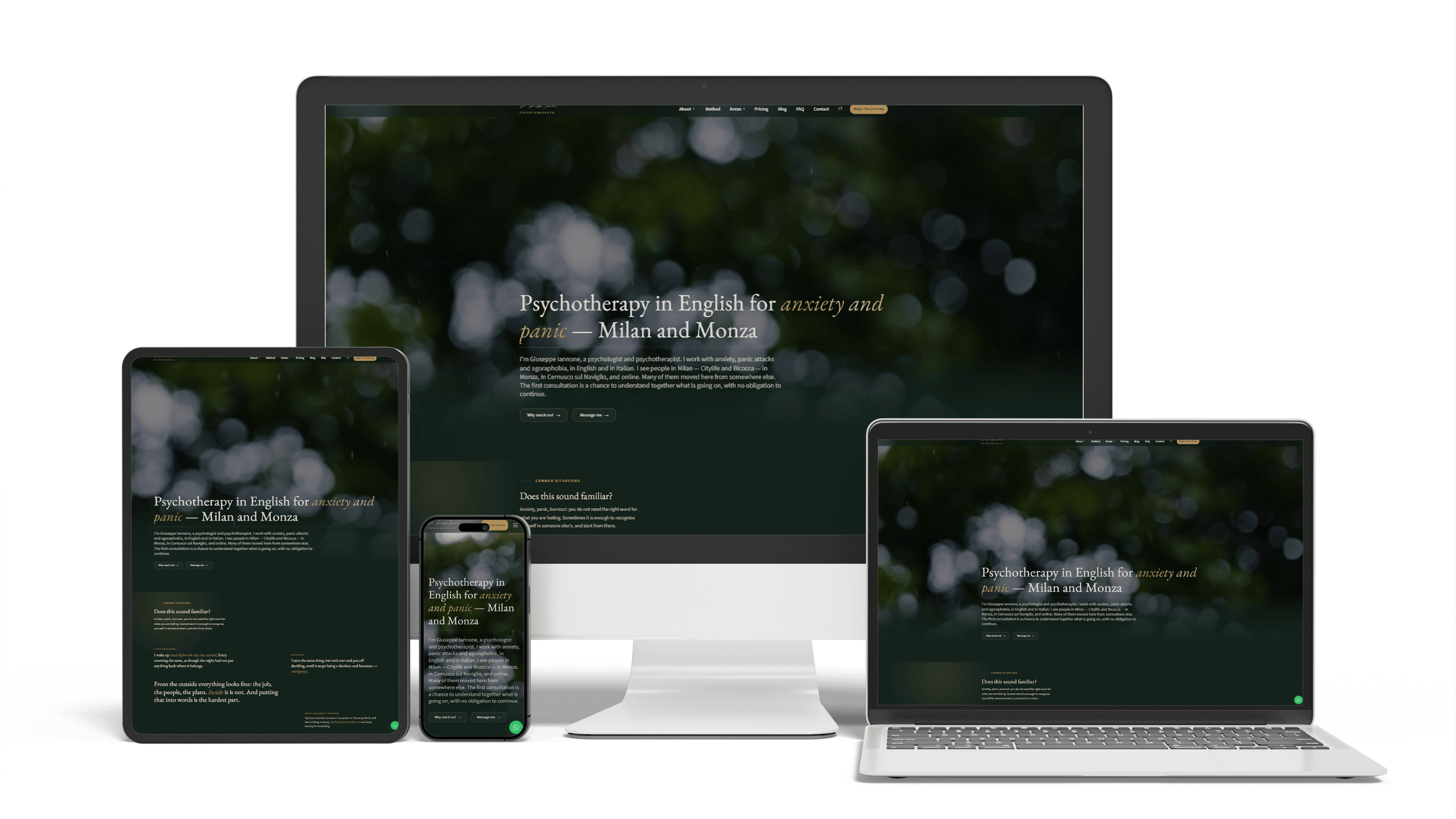
Bilingual psychotherapist website in Italy
468 of 468 posts moved2 languagesSeen in ChatGPT answers
A consultant website for a retail analytics expert
100/100/100/100153 pages3 languages
Multilingual real estate platform in Cyprus: SEO and GEO without bought links
16× faster editingTraffic from ChatGPTLeads via WhatsApp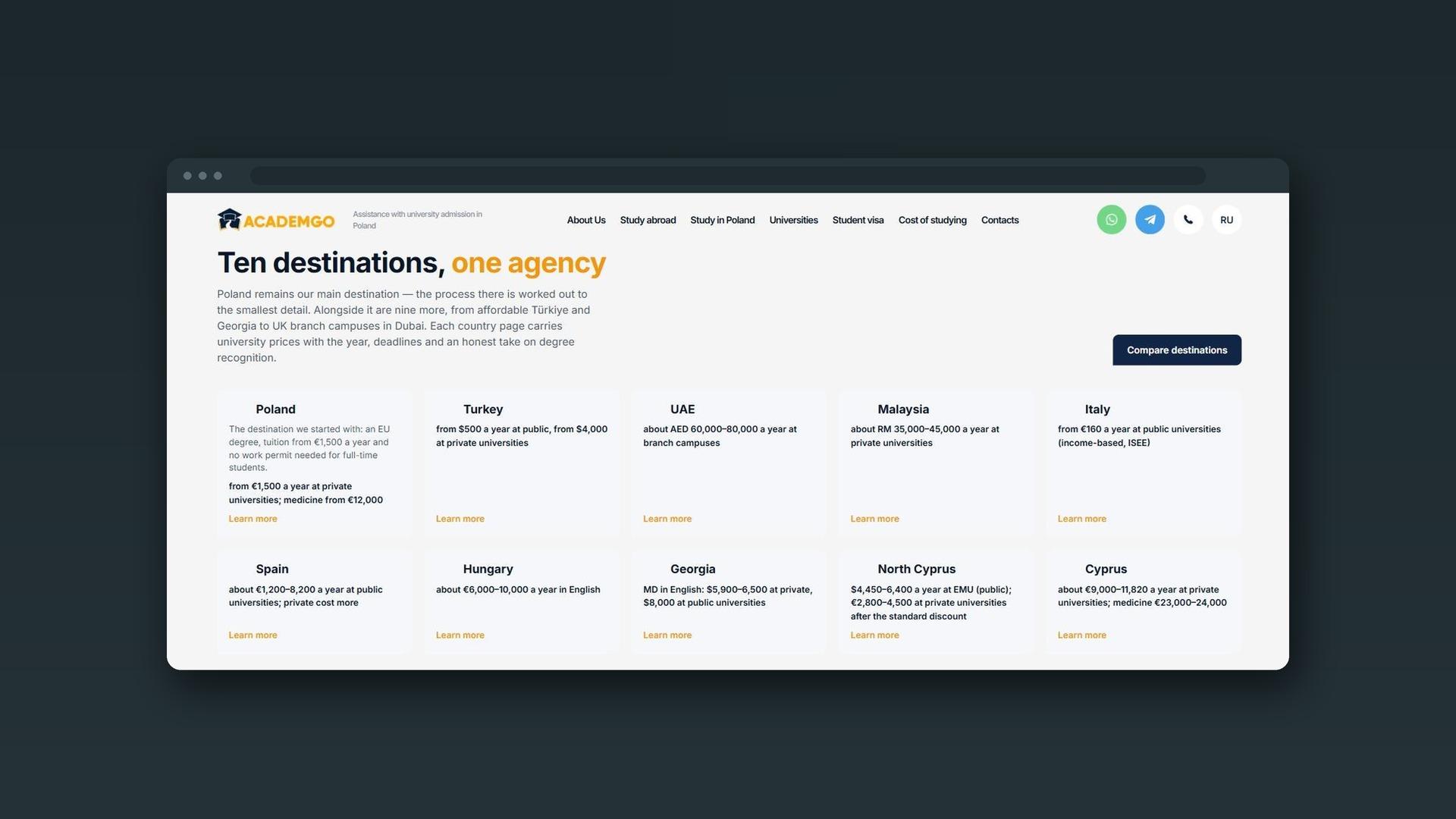
SEO case study: an education agency site, one country to ten
1 → 10 countries180 new pagesPerformance 61 → 91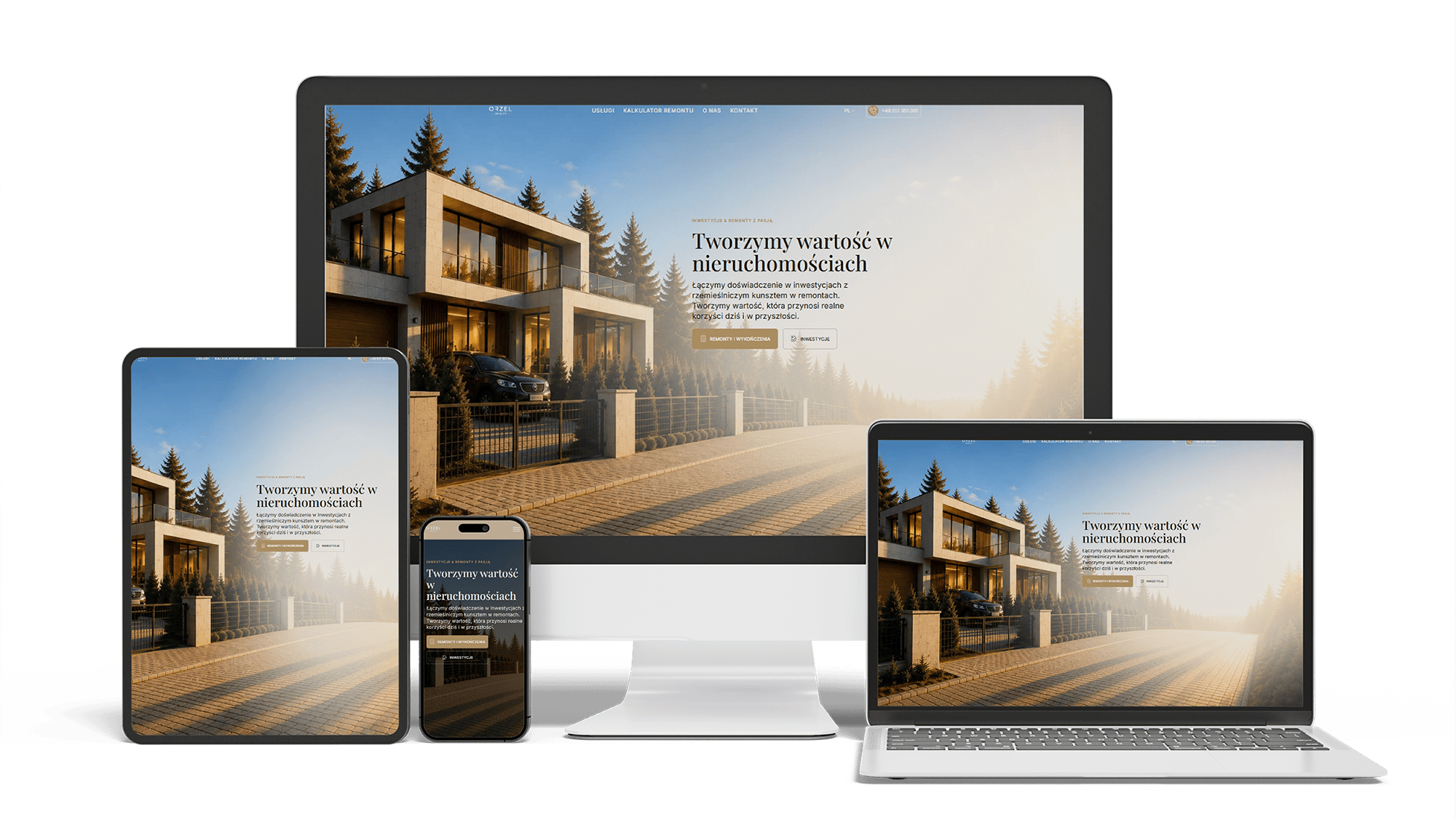
Renovation and investment website with a premium feel and 96/98/100/100 performance
96/98/100/100Design system2 languages
I build websites for paediatric practices: visit type pages, vaccination information, prices in text, booking, and a structure assistants can read.
I design and build websites for pediatric practices and children's clinics, and design comes with the build rather than on a separate invoice. The design brief here is unusual and it is worth stating plainly: a large share of your visitors arrive at night, one-handed, with a child who is crying, and they are frightened. They are not browsing. They want three things in the first five seconds — whether you are open now, what the phone number is, and whether this can wait until morning.
Almost every pediatric site fails that moment in the same way: the first screen carries a photograph of a smiling family and a slogan about care, the hours are three clicks away inside a page called Contact, and the phone number is an image. The fix costs nothing in design quality and everything in outcomes: today's hours as text that changes itself, a phone number that dials on one tap, and a short block about what to do outside working hours.
A general clinic site is organised by specialty, because that is how a clinic is organised. Parents do not search that way. They search by age and by what they are seeing: a newborn's jaundice, a two-month vaccination, a toddler's fever at night, a school medical certificate, a teenager's check-up before sport.
So the structure follows the child's age, and inside each age the two or three questions parents actually bring. This is also the part that earns traffic, because an age-and-situation page matches a real query, while a page called Pediatrics matches nothing anyone types.
Whatever your clinic's approach, vaccination pages draw more reading time than anything else on a pediatric site, and they are also where parents arrive already argued-at from elsewhere. Two decisions make this section work. First, publish the schedule as information a parent can follow — ages, intervals, what happens if a date is missed — rather than as persuasion. Second, state your practice's position once, plainly, in your own words, and link to it from every related page instead of re-arguing it each time.
What the page must not do is promise outcomes or diagnose. That is both a professional rule and a practical one: a parent who feels sold to leaves, and a page that makes claims is the one a regulator reads first.
Continuity matters more in paediatrics than almost anywhere else in medicine. Parents want to know the name of the doctor who will see their child, whether it will be the same person next time, and what happens when that person is away. A site that lists Our team with six faces and no answer to that question is answering a different question.
- each doctor gets a page with their own schedule, languages spoken, and the ages they work with;
- booking says who the appointment is with, not only when it is;
- the page says plainly what happens if your doctor is unavailable, because that is the fear behind the question.
Two practical facts decide more pediatric enquiries than any design decision: whether you see children in the evening and at weekends, and whether a doctor comes to the home. If either is true for your practice, it belongs on the first screen and on its own page, with the area you cover and the cost. If neither is true, say what a parent should do instead at 2 a.m., and that honesty earns the daytime appointment.
A pediatric site is tempting to fill with photographs of children, and that is exactly where practices get into trouble. Every identifiable child needs documented permission from a parent, given for this use, and withdrawable. The build assumes that: the layout works with photographs of the premises, the team and the equipment, and children's images are an addition that can be swapped or removed without redrawing a page.
Paediatrics sells two different things — a single visit and a year of care — and the second one is where parents compare hardest. An observation plan priced as a single number with no list underneath invites a phone call that your receptionist has to answer thirty times a day. A page that lists what a year includes, how many visits, which tests, what is extra and what happens if the family moves away answers it once.
A website for a practice starts at €2,000 with design included. A landing page for one service or one observation plan is €700–1,400. A redesign that keeps existing rankings starts at €1,000. A landing page takes two to three weeks, a full site four to six. What moves both the price and the schedule is how many doctors have pages, how many languages you need, and whether someone on your side can approve medical wording quickly. The figures are on the pricing page, and the broader clinic version of this work is medical website design.
A quote for your pediatric practice website
I answer within one working day: what I would build, in which languages, and what it costs.
A pediatric website that ChatGPT and AI overviews can read (GEO, AEO)
Parents increasingly ask ChatGPT, Perplexity or Gemini before they ask anyone else: a pediatrician who sees children in the evening, one who speaks their language, one who takes newborns. The assistant answers from text it can read. A practice whose hours live in an image, whose prices sit in a PDF and whose doctors are listed only as photographs is invisible to that question, and the assistant recommends the clinic down the road that wrote it all out.
So hours, languages, ages, services and prices stay as text, structured data matches what is visible, and the practice name and address are identical on the site, in the maps profile and in the directories. Bringing an existing site to that state is AI search readiness.
Pediatrician website design: frequently asked questions
Ordering a pediatric practice website: what to send me
Tell me how many doctors will have pages, whether you see children in the evening or at home, whether you sell annual observation plans, which languages your families speak and who approves medical wording on your side. Send the current website link if there is one. I answer within one working day with what I would build and what it costs.
