


Podiatrist website design: for the person whose foot hurts today and for the doctor who refers them
Websites for podiatry and foot clinics: the earliest free slot on the first screen, prices listed per procedure, before-and-after photographs published properly, and a page for diabetic foot patients and referring doctors. Design included, from €2,000.
- Podiatry and foot clinics
- From €2,000
- Named by ChatGPT and AI search
What a podiatry clinic website build covers
- The earliest free slot, visible at onceOne line your front desk can edit
- Prices listed per procedureNot one figure for a consultation
- A before-and-after gallery that holds upConsent, context, no promises
- A page for diabetic foot and referralsWhat you take and what you send on
- Custom orthoses as two appointmentsMeasurement, fitting, what it costs
- Named in ChatGPT and AI answersProblems treated and prices to quote
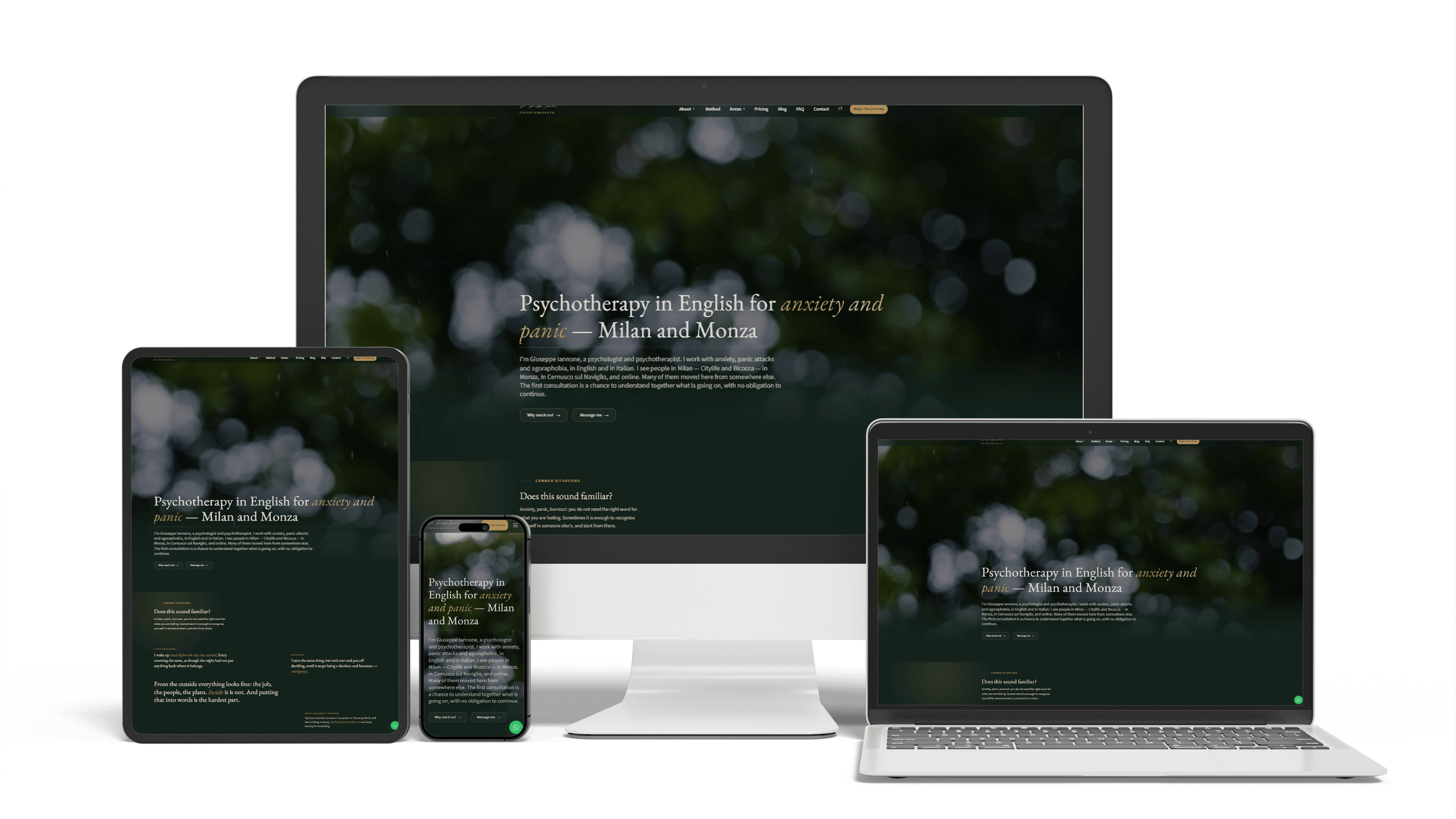
Bilingual psychotherapist website in Italy
468 of 468 posts moved2 languagesSeen in ChatGPT answers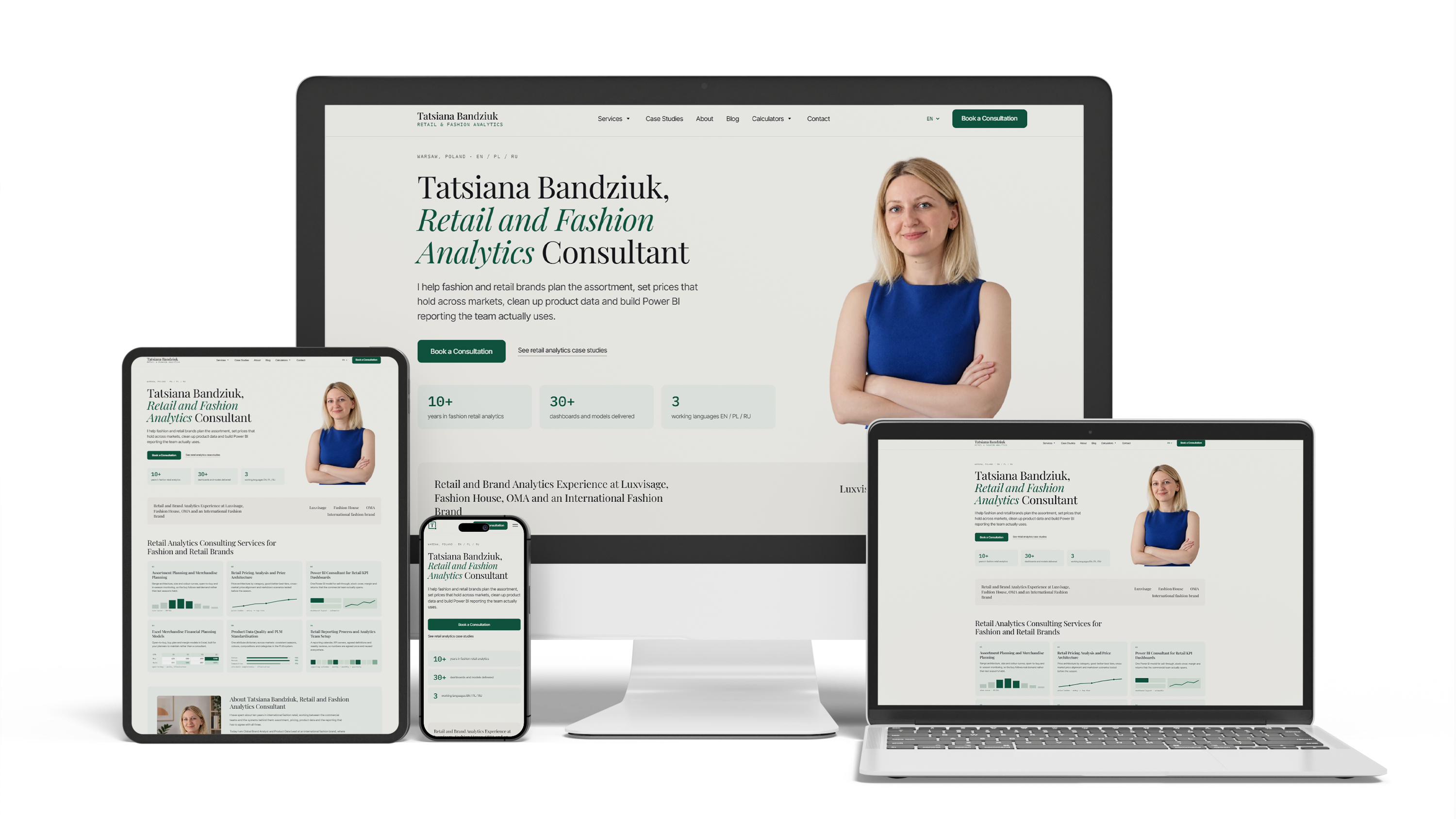
A consultant website for a retail analytics expert
100/100/100/100153 pages3 languages
Multilingual real estate platform in Cyprus: SEO and GEO without bought links
16× faster editingTraffic from ChatGPTLeads via WhatsApp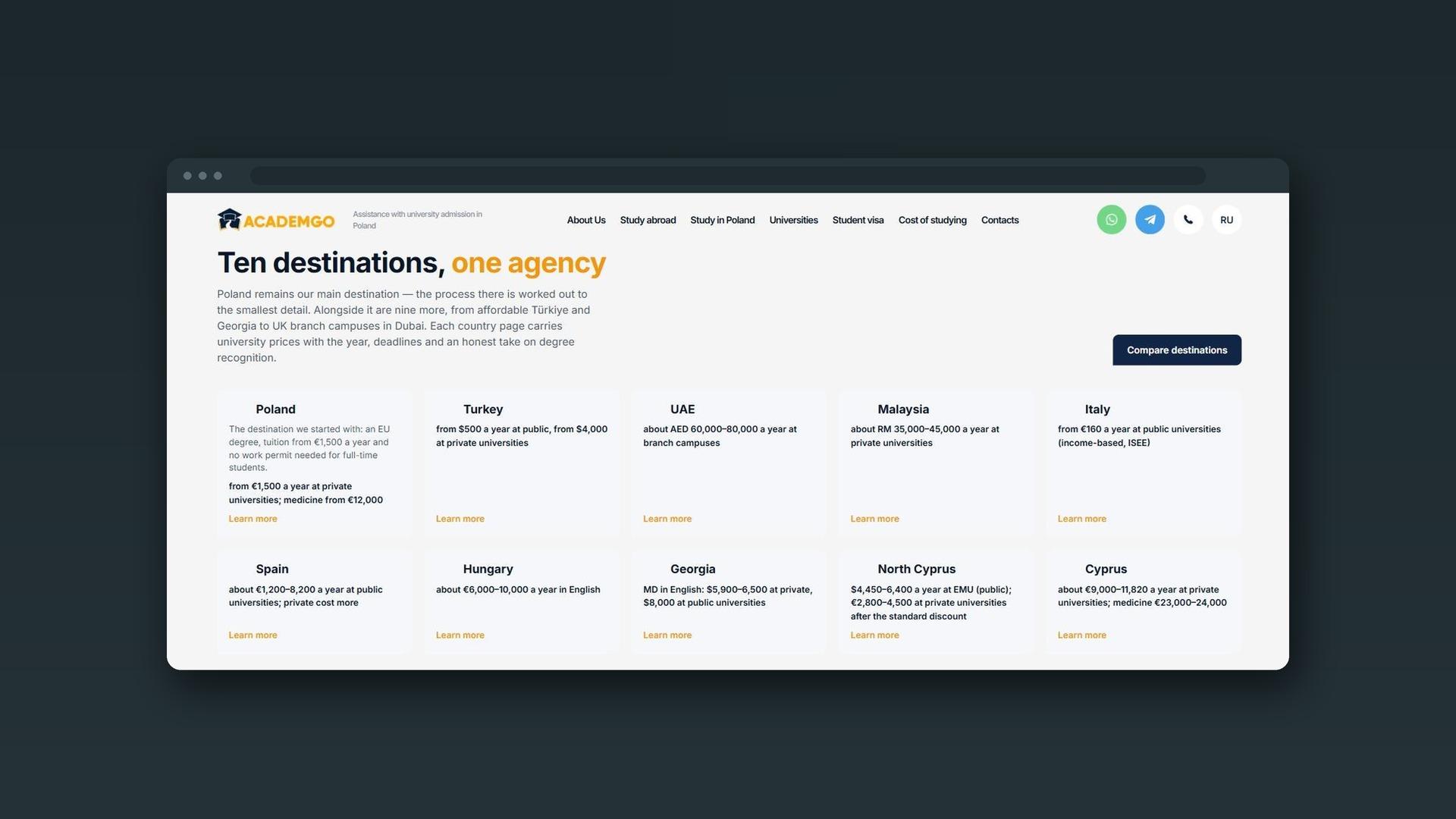
SEO case study: an education agency site, one country to ten
1 → 10 countries180 new pagesPerformance 61 → 91
Renovation and investment website with a premium feel and 96/98/100/100 performance
96/98/100/100Design system2 languages
I build websites for podiatry practices: pages per problem, visit length and prices in text, booking, and a structure assistants can read.
I design and build websites for podiatry practices and foot clinics, and design comes with the build rather than on a separate invoice. The first decision is not visual: the word podiatrist names two different businesses. In the United States it is a physician with surgical training; across much of Europe it is a specialist in foot care working alongside doctors rather than as one. A site built for the wrong one of those two reads as either overreaching or underqualified, and both cost appointments.
So the site states the profession, the training behind it and the limits of what the practice does, in the first paragraph rather than on an about page. If you run a general clinic with several specialties, the page you want is medical website design — the clinic structure and doctor profiles live there and are not repeated here.
Most people reach a podiatry site in discomfort and with one question: can somebody look at this soon. An ingrown nail, a crack that will not heal, pain that made walking to work unpleasant this morning. Everything else on the site is secondary to that question, and a first screen built around the practice's philosophy loses to a competitor's that says «earliest slot: tomorrow, 11:40».
- the earliest free slot as one line the front desk can change in seconds, or an honest «we are booked into next week»;
- the two or three complaints people arrive with most often, as links straight to their own pages;
- a phone number that is tappable, because this visitor is standing up and holding the phone in one hand;
- whether you see children, diabetic patients and people who need a home visit — three questions that otherwise become three phone calls.
Podiatry is unusual among medical services in that visitors ask the price of a specific thing: nail correction, a partial nail plate removal, a wart treatment, custom orthoses, treatment of a diabetic foot ulcer. One figure for an appointment leaves them guessing and sends them to whoever published a table.
The site carries a procedure-level price list where each line names the procedure, says whether it covers one foot or both, and says what the follow-up visit costs. That is the page competitors most often leave out, and it is usually the second most visited page on the site after the home page.
No amount of text persuades like a pair of photographs, and no part of a podiatry site is easier to get wrong. What makes a gallery work: written consent from the patient for publication, kept on file; identical framing, distance and light in both shots, because a flattering angle reads as a trick; a caption saying what was done and over how long; and no claim that the result is typical. Publish ten pairs that meet that standard rather than forty that do not.
Diabetic foot care is where podiatry stops being cosmetic and starts being clinically serious, and it is where referrals come from: diabetologists, GPs, dermatologists, nurses in diabetes clinics. They need to know what you take, what you will not take, how fast you can see an urgent case and whether you write back after the visit.
Patients looking for the same page need the opposite tone: what the first visit involves, why regular appointments matter, and that an inspection today is better than a decision next month. Two audiences, one page, two blocks — and it is usually the page that brings the practice its steadiest work.
Insoles are the most misunderstood thing a podiatry practice sells. People expect to walk in and buy them, and the actual path is a measurement visit, manufacture, a fitting visit and often an adjustment. A page that says so — with the total cost, the time between the visits and what happens if they do not feel right — removes the complaint that follows every order placed under the wrong expectation.
The unspoken fear in foot care is catching something. Nobody asks about sterilisation at the front desk, and everybody wonders. A short block with real photographs of the autoclave and the instrument packaging, and one sentence on what is single-use, does more for conversion than a paragraph about the practice's values.
A practice website starts at €2,000 with design included. A landing page for one procedure or for custom orthoses is €700–1,400. A redesign that keeps rankings starts at €1,000. A landing page takes two to three weeks, a full site four to six. The number of procedures with their own pages, the number of languages and how quickly photographs and consents are ready move both the price and the schedule. The figures are on the pricing page.
A quote for your podiatry clinic website
I answer within one working day: what I would build, in which languages, and what it costs.
A podiatry clinic website that AI assistants can read (GEO, AEO)
Patients now ask ChatGPT, Perplexity or Gemini before they open a map: a podiatrist who treats diabetic foot, one who can see them this week, one who makes orthoses, one who speaks their language. The assistant answers from text it can read, and a clinic whose procedures live inside photographs, whose prices sit in a PDF and whose availability is only known by phone does not appear in that answer at all.
What makes a clinic quotable is the same thing that makes it convenient for a human: procedures as text with their prices, the conditions you treat named plainly, opening hours and languages as data, the earliest slot in one maintained sentence. Bringing an existing site to that state is AI search readiness.
Podiatrist website design: frequently asked questions
Ordering a podiatry clinic website: what to send me
Tell me which procedures you want their own pages, whether you treat diabetic foot and take referrals, whether you make custom orthoses, what your price list looks like today, which languages your patients speak and whether you have photographs with consent. Send the current website link if there is one. I answer within one working day with what I would build and what it costs.
