


Bakery Website Design for Bakeries and Cake Shops
I design and build bakery websites: a catalog of breads, pastries and cakes with the days each is baked, a custom cake order form with servings, a reference photo and an online deposit, pre-orders with pickup slots, allergens on every product and a wholesale page for cafes.
- Design + build, one price
- From 700 €
- Reply within one business day
What you get with bakery website design
- A catalog of breads, pastries and cakesYour photos, prices and the days each item is baked
- A custom cake order formServings, date, flavor, inscription, reference photo
- Deposits paid onlineCard, Apple Pay or Google Pay before you start baking
- Pre-orders with pickup slotsHoliday pies and weekend bread, capped per slot
- Shops, hours and delivery areaA page per location, holiday hours included
- Clear to Google and AI assistantsProducts, allergens and hours written as text
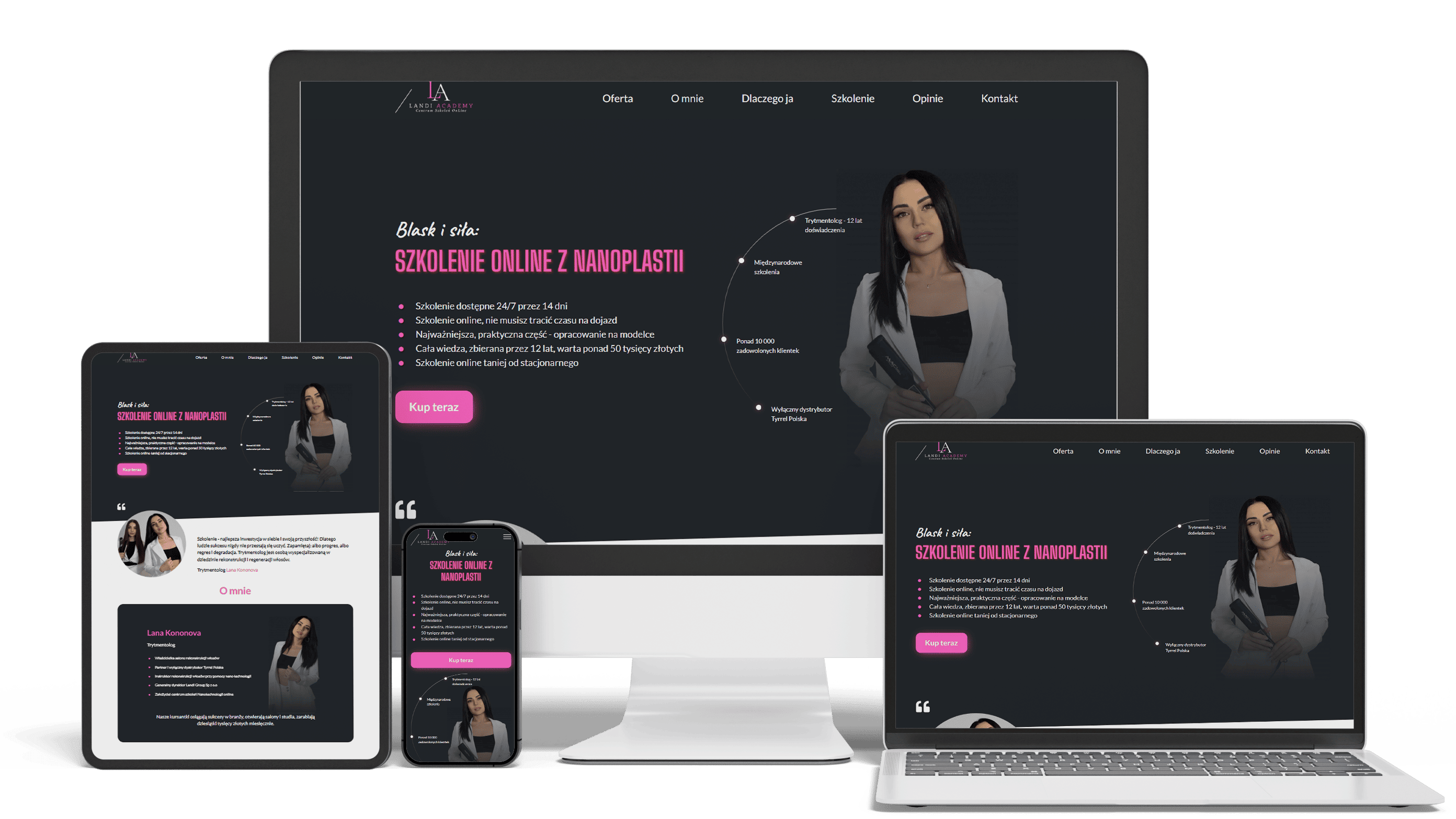
E-commerce landing page with secured video access
100+ course sales0 leaksLinks expire in 14 days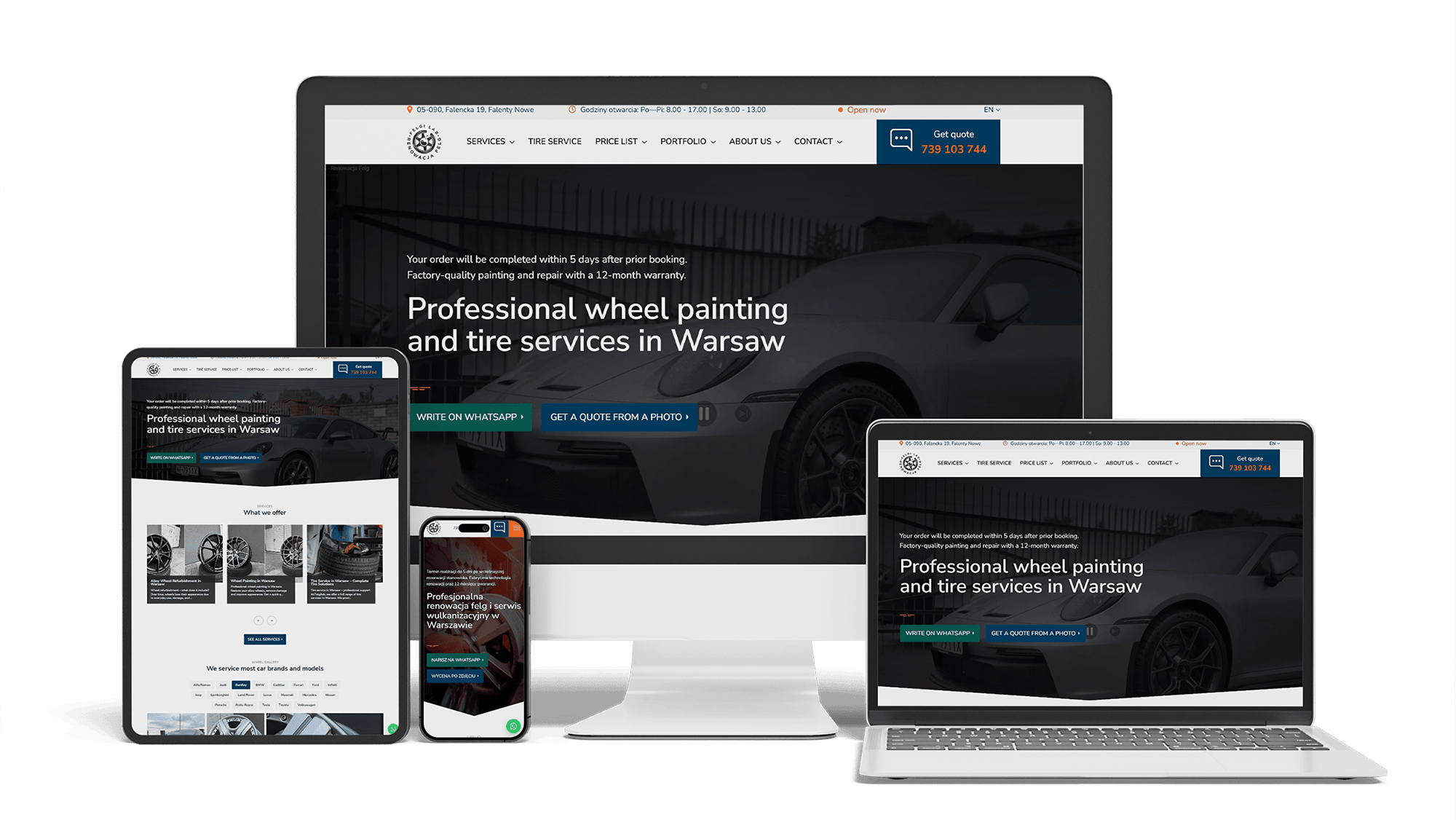
Full WordPress Rebuild for a Car Rim Restoration Company
92/91/96/100Photo quote formLocalBusiness markup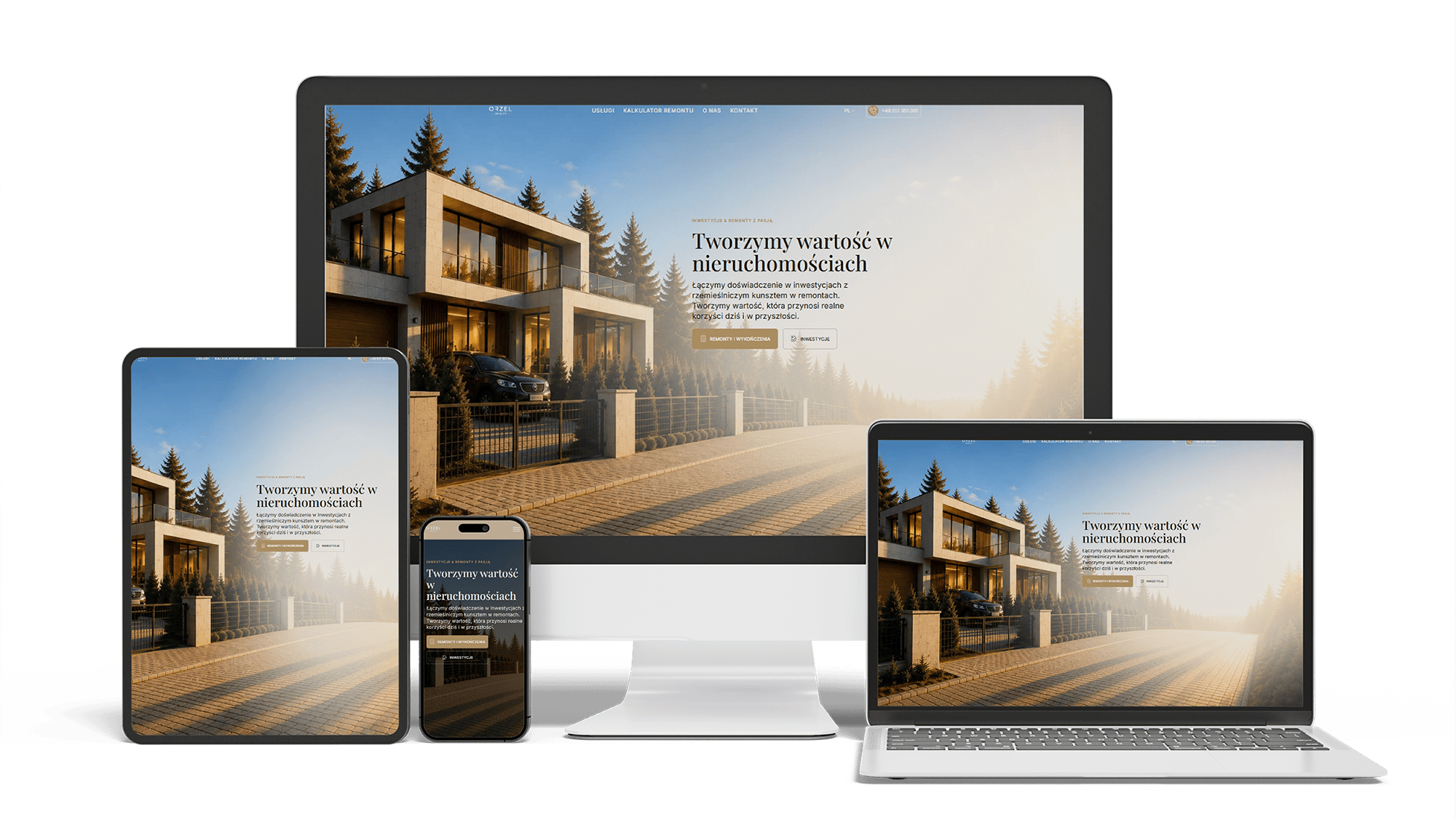
Renovation and investment website with a premium feel and 96/98/100/100 performance
96/98/100/100Design system2 languages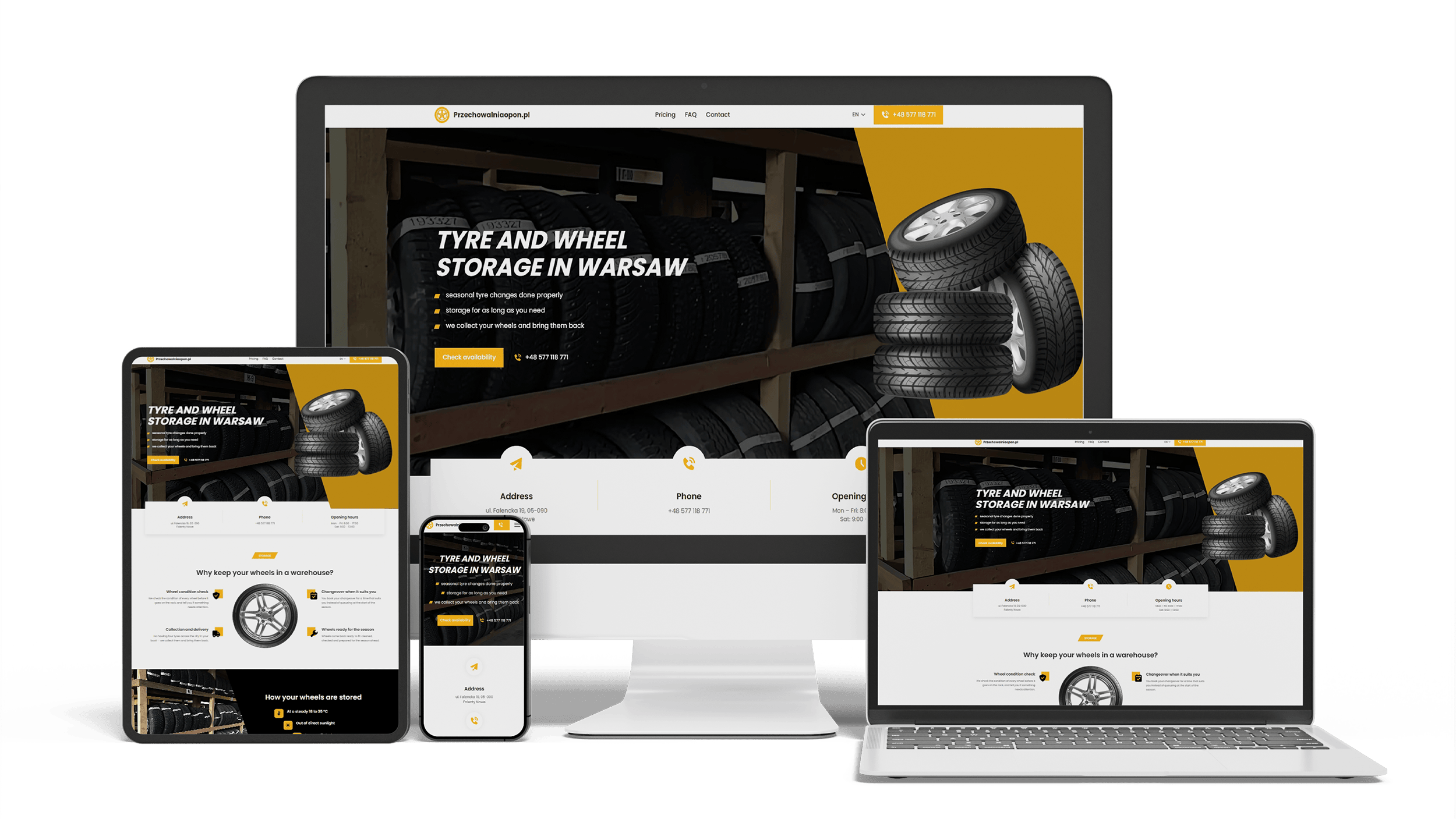
A multilingual landing page for a wheel and tyre storage business
100/95/100/1003 languagesClient edits it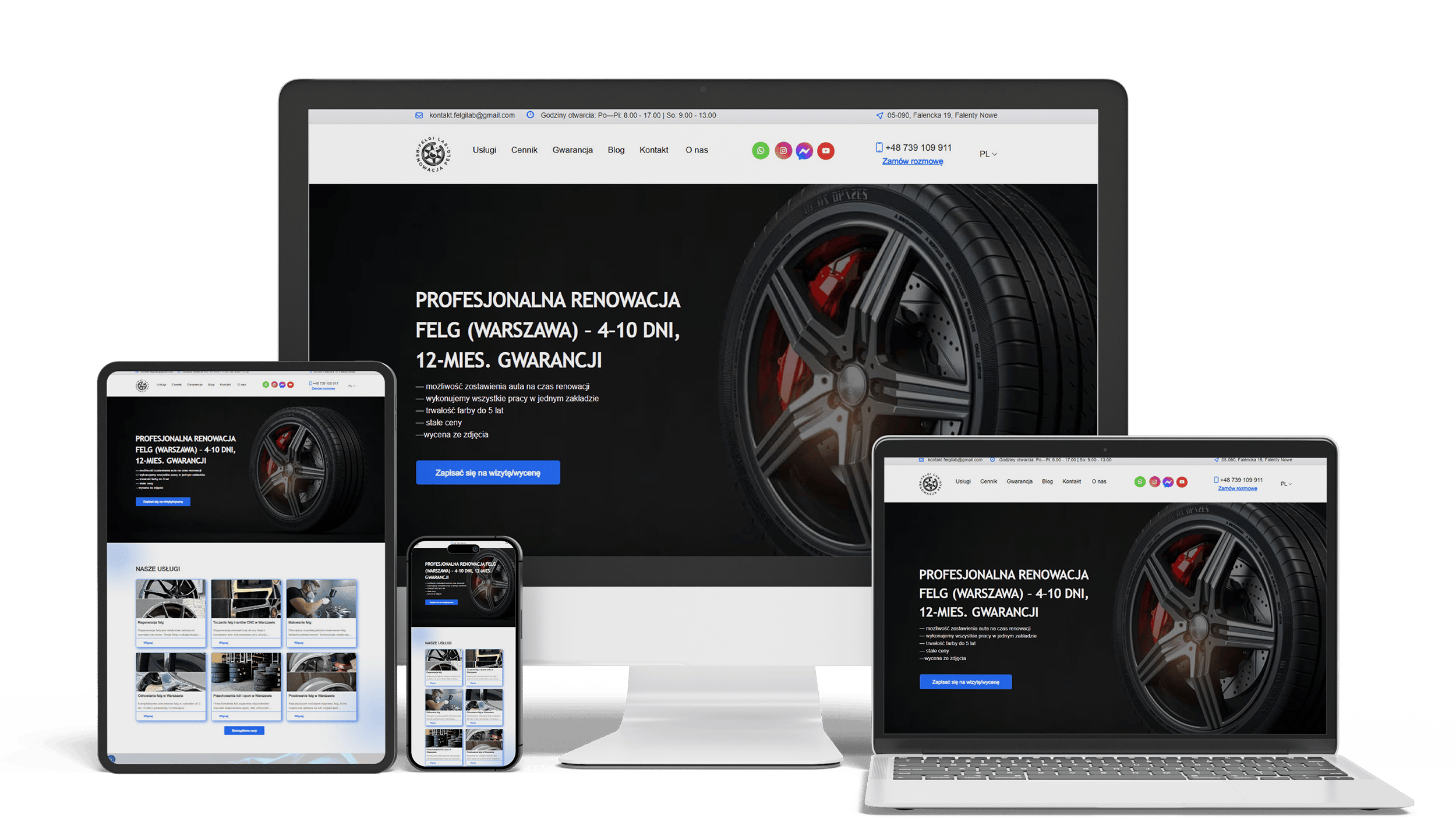
Auto Repair SEO & UX Boost
Performance 90++10% organic trafficLeads from forms
Get a quote for your bakery website
I reply within one business day with a proposed page list, a note on how cake orders and pickup would work, and a fixed price.
Bakery website design, as I do it, covers both the look of the site and the working parts behind it — the catalog, the cake order form, pickup slots and online deposits — designed and built by one person at a price fixed before work starts. A bakery site serves two kinds of visitors. Some want to know what is on the shelves this morning and whether you are open; others are planning a cake for a date three weeks away and want to know whether you can make it.
A bakery catalog works less like a web store and more like a timetable: cinnamon rolls every day, rye only on Fridays, stollen only in December. Each product page holds:
- a photo of the item as it comes out of your oven, cut open where the crumb or the layers do the selling
- the price per piece, per loaf or per dozen, and the weight where customers care about it
- the days it is baked and whether it can be ordered ahead
- ingredients and allergens as text
Seasonal items are switched off in the CMS rather than deleted, so next year the holiday bread page returns with its photos, text and address unchanged. Categories follow the way people shop at your counter — bread, pastries, cakes, cookies, savory — not the way a theme names them.
A custom cake is a small project with a deadline, and phone calls about one can go back and forth for days. The order form collects the brief in one go:
- the pickup or delivery date first, with your lead time built in, so dates you cannot meet are greyed out
- size by servings, not only by inches: a guide that shows how many guests a 6-, 8- or 10-inch round or a two-tier cake feeds
- flavor, filling and frosting picked from your own lists, plus the inscription with a character limit
- a photo upload for a reference design and a note field for colors or a theme
- dietary requests — gluten-free, egg-free, nut-free — offered only where you can actually make them
Simple cakes can be priced on the spot and paid in full. Decorated and tiered cakes end in a request: you confirm the design and the price, and the customer pays a deposit through a link. Once the deposit is in, the order is confirmed by email and the date is blocked in your cake calendar, so a busy Saturday cannot be overbooked.
Pre-orders turn the busiest days of the year into a list you can bake to. Customers choose items and a pickup slot — Saturday 8–9 a.m., 9–10 a.m. and so on — and each slot accepts only as many orders as the counter can hand out. Around Thanksgiving and Christmas the pre-order menu becomes a page of its own, with pies, rolls and holiday breads and a closing date after which it switches to “walk-in only”. Weekend bread works the same way on a smaller scale: order by Thursday, collect on Saturday. The list for each slot prints from the admin panel, so the morning shift knows what to bag before the doors open.
People with allergies, and parents of children with them, read a bakery website more carefully than anyone. Ingredients and allergens sit on every product page as text, not in a photo of a label, and the catalog can be filtered by gluten-free, vegan or nut-free where you offer those. In the EU a bakery has to give information on 14 allergens, unpackaged goods included; in the US customers look first for the major food allergens. Either way the site states the cross-contact risk plainly — “made in a kitchen that also handles nuts, wheat and sesame” — so nobody reads one gluten-free brownie as a gluten-free bakery. Recipes change with suppliers, so ingredients are edited in the same place as prices and update across the site at once.
Many bakeries earn steady money from cafes, restaurants and grocers that take bread and pastries every morning. Wholesale buyers need other things than walk-in customers, so they get a page of their own:
- what you supply, the minimum order, and the delivery days and times
- an application form: business name, address, contact, products and frequency
- a price list that opens for approved accounts, or one sent after the first conversation
- standing orders that a cafe manager can change until a cutoff the day before
Walk-in visitors never see wholesale prices, and a wholesale buyer does not have to phone to change Tuesday’s order.
A bakery with two or three shops needs a page for each, not one contact page with a list of addresses. Every location page carries its own hours and holiday hours, a map, what that shop bakes on site, parking or transit notes and its own phone number. Pickup orders ask for the shop first, so a cake never waits at the wrong counter. If you deliver, the site shows the delivery area — a ZIP code check or a map of zones, each with a fee and a minimum order. Orders through DoorDash or Uber Eats continue as they are; the site links to them where that helps and keeps your own pickup and cake orders, which carry no commission, in front.
If you also run a sit-down cafe or restaurant with table bookings, that side of the business is covered on the restaurant website design page.
Baked goods are photographed close and in daylight. What sells on a bakery site is detail: an open crumb, laminated layers, a glossy glaze, a slice cut from a layer cake. The design takes its colors and lettering from what you already use — boxes, paper bags, the shop sign — and puts the food on a warm, plain background that does not tint it. Product pages give the photos room and keep text short. Every image is compressed and served at the size of the screen, so a page with fifty pastries still opens quickly on mobile data.
If you have no photos yet, a phone and a window are enough to begin: one background, one angle per category, the same time of day. A professional session can come later and replace the pictures without touching the layout.
Search for bakery website templates or bakery website examples and you find WordPress bakery themes, Square Online and Shopify stores, and galleries of attractive home pages. A theme is a fair start for a bakery with a short list of products and mostly walk-in trade. The gaps appear when you add what makes a bakery different: lead times on cakes, pickup slots with a cap, items baked on set days only, wholesale accounts, allergens per product. Themes patch these with plugins that do not talk to each other, and the examples in galleries rarely show an order form at all.
A custom site is designed around your products and your kitchen’s rhythm, built on WordPress with WooCommerce or on Next.js with a headless CMS, and the domain, the code and the customer list stay with you. Moving from an old site keeps your search positions when every old address gets a 301 redirect to its new page.
Ask ChatGPT or Google’s AI Overviews where to order a gluten-free birthday cake nearby, or which bakery opens early on Sunday, and the answer is assembled from pages the assistant can read. So hours, locations, product names, prices, cake lead times and allergen notes are plain text in the HTML, and the bakery, its shops and its products are marked up with Bakery, LocalBusiness and Product structured data. Giuseppe, a psychotherapist in Milan, has a site built on these rules, and ChatGPT already quotes pages added to it since launch.
How a bakery stays in AI answers over the long run is explained on my AI SEO and GEO optimization page. Ranking for searches like custom cakes in your city is the work on the bakery SEO page, and the Google Business Profile and the map pack are covered on the local SEO services page.
Design is part of the build and is never billed on its own:
- A simple bakery website — home page, products with prices, a cake inquiry form, locations and contact: 700–1,400 €.
- A bakery website with a catalog and baking days, a custom cake order form with online deposits, pre-orders with pickup slots, allergen filters, wholesale accounts and several locations: from 2,000 €.
The build process, step by step, is described on my website development page; the full price list is on the pricing page.
Bakery website design: frequently asked questions
Order bakery website design: what to send me
Send me your Instagram or current site, a list of products with prices, the cakes you make to order with sizes and lead times, your shops and opening hours, whether you sell wholesale or deliver, and a few photos of your bakes. I will reply with a page list and a fixed price. Use the form above or write on WhatsApp.
