


SEO for a wedding planner: how to be found by a couple who has never hired one before
Your client buys this service once in their life and cannot tell a full-service planner from the venue's coordinator. The pages that win the enquiry explain the service and its price, not the portfolio. Audit from €250.
- Explaining the service, not the portfolio
- Audit from €250
- Named by ChatGPT and AI search
What SEO for a wedding planner actually consists of
- Pages that explain what you actually doFull planning, partial, day-of coordination
- Package tiers with real figuresCouples have no reference price at all
- Destination couples in their own languageThey search in one country for another
- Published for next season, not this oneCouples book twelve to eighteen months out
- Regions and venues you knowShort, specific, and almost uncontested
- Being named by AI assistants«Planner for a 60-guest wedding abroad, English-speaking»

Full Multilingual Website Development & SEO for Student Services
+5,930 clicks in 6 months359k impressionsTeam edits it
Multilingual real estate platform in Cyprus: SEO and GEO without bought links
16× faster editingTraffic from ChatGPTLeads via WhatsApp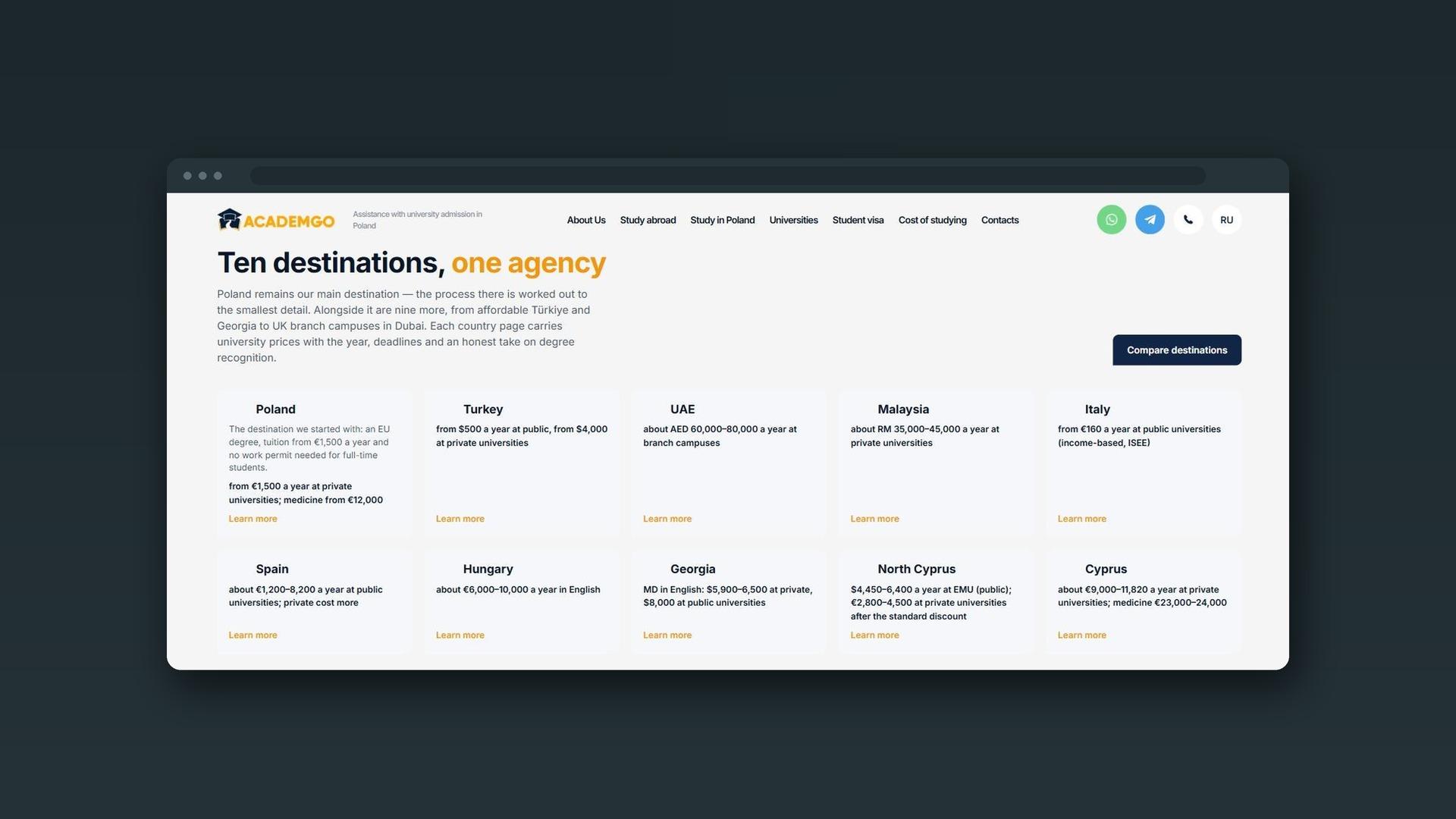
SEO case study: an education agency site, one country to ten
1 → 10 countries180 new pagesPerformance 61 → 91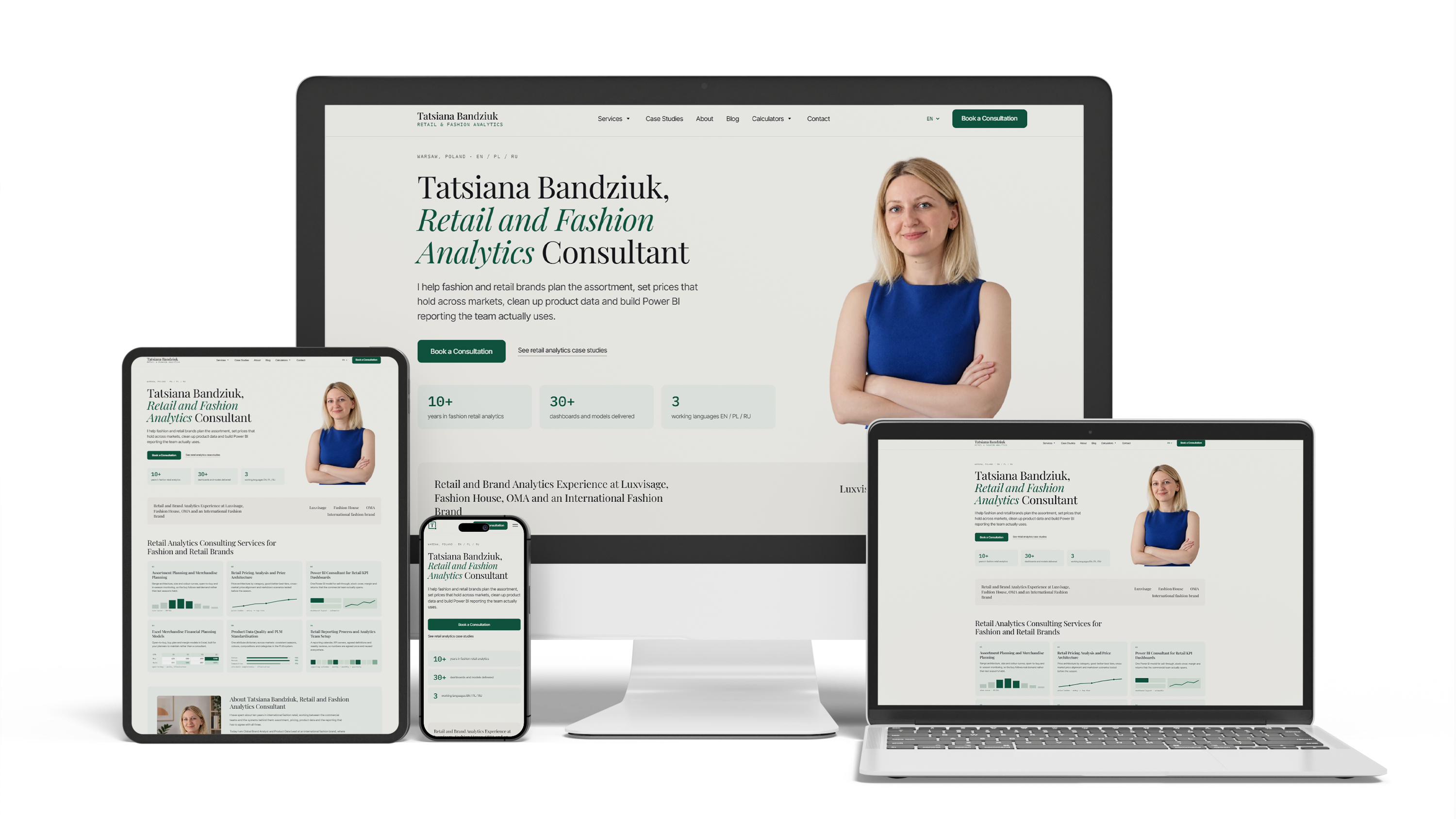
A consultant website for a retail analytics expert
100/100/100/100153 pages3 languages
Renovation and investment website with a premium feel and 96/98/100/100 performance
96/98/100/100Design system2 languages
I do SEO for wedding planners myself: audit, the fixes in the code and the text, and a monthly report on enquiries.
Almost every other business I work with sells to someone who has bought the thing before. A wedding planner does not. The couple is buying this service once, they have no reference price, no vocabulary for the different levels of it, and no way to judge a portfolio of twelve beautiful weddings against another portfolio of twelve beautiful weddings.
The practical consequence is counter-intuitive: the pages that win enquiries are not the gallery. They are the pages that explain the service. Couples routinely believe that the venue's coordinator will do what a planner does, that a planner is only for very large budgets, or that hiring one costs a percentage they have invented. Each of those beliefs is a page, and the planner who writes them gets the enquiry, because they are the only one in the search results who answered the question the couple was actually asking.
- what full planning includes, month by month, and when you join;
- what partial planning means, since every planner defines it differently;
- what day-of coordination is and, plainly, what it is not;
- what the venue's coordinator does and does not do, stated without disparaging them;
- how many weddings you take in a year, which tells a couple whether they get you;
- and who should not hire a planner, which is the page that earns the most trust.
Package tiers and costs, because the couple is guessing and guessing high
The most searched question in this trade is what a wedding planner costs, and most planners answer it with a contact form. The couple then assumes a figure, and the figure they assume is usually either absurdly low or high enough that they do not write at all. Neither outcome is improved by keeping the number off the site.
Tiers with real figures fix it: what day-of coordination starts at, what partial planning runs to, what full planning costs for a wedding of a given size, and what moves a project between the bands. It filters the enquiries you cannot serve, it ranks for the question itself, and it gives search engines and assistants a number to quote rather than one a directory invented.
For a planner taking destination work, the search does not happen where the wedding happens. A couple in one country is searching, in their own language, for someone who can run a wedding in another — and the page that reaches them has to exist in that language, be aimed at that country, and answer the questions specific to marrying abroad: what paperwork is required, how far ahead it has to start, whether the legal ceremony has to happen elsewhere, who deals with suppliers who do not speak the couple's language.
This is a different technical job from local search. It involves which language versions exist, how they are signposted to search engines, and which country each one is meant for — and it is the part most planner websites get wrong by translating a page and stopping there.
That groundwork is international SEO, and it is the strongest opportunity in this trade, because a destination wedding is both the largest project a planner takes and the one with the least competition in search.
Couples book a planner twelve to eighteen months ahead, which means content published in spring is not competing for this summer. It is competing for the summer after, and a page that goes live in March for a season already full has missed by a year rather than by a month.
So the schedule matters more here than the volume. Pages written in the quiet months mature in time for the enquiry season that leads to the season after. And the measurement window stretches accordingly: first movement in search within about six weeks, enquiries on the couple's planning cycle rather than the search engine's. A planner who starts this work in peak season should expect the return a year out, and I would rather set that expectation now than explain it in August.
Venues, regions, directories and the size of your diary
Three shorter points worth stating. If you work repeatedly at particular venues or in a particular region, those pages are specific and almost uncontested, and they are worth writing where you genuinely know the place — what the logistics are, where the guests stay, what the weather does in September.
The wedding directories bring enquiries and share them: the couple sees you alongside competitors and the lead is rarely exclusive. Search works differently, arriving with your name attached and usually without three other planners in the conversation — though it takes months to build and will not replace a directory listing in the first quarter.
And this is a capacity business: fifteen to twenty-five weddings a year is a ceiling, not a target. If your season is full, the work worth paying for is the pages that support a higher fee and the destination market, not more visibility.
The map profile and local groundwork is on the local SEO page. If you also want the suppliers you work with found — the people you recommend to every couple — their pages are SEO for florists and SEO for caterers, and if you want the state of your own site established first, that is the SEO audit.
An SEO audit for your wedding planning business
Send the site and I reply within one working day: what is holding it back and what I would do first.
Being named when a couple asks ChatGPT for a wedding planner (GEO, AEO)
«Find me an English-speaking planner who can run a sixty-guest wedding in Europe next September, and what would it cost» is exactly the sort of question couples now put to an assistant, and this trade suits it unusually well, because a first-time buyer wants two or three names with reasons rather than a directory of ninety. The assistant answers from text it can read, so the same things decide whether a planner is named: the levels of service written out and distinguished, fees or tiers it can quote, the regions and languages you work in, and consistent details across the site, the profile and the directories you are listed in.
Getting a site into that state is preparing a site for AI search, and if assistants describe the business wrongly — a region you no longer cover, a service you dropped, an old fee — that is fixing AI misinformation.
SEO for wedding planners: frequently asked questions
Order an SEO audit for a wedding planning business: what to send me
Send the site, say which levels of service you want more of, and tell me whether destination weddings are something you take or want to take. I reply within one working day with what is holding the site back, which explaining pages are missing, and what I would do first — including, if destination work is on the list, what the language versions would actually require.
