


SEO for artists: how a collector finds your work when they do not yet know your name
Most artist websites give a search engine nothing to read: one portfolio page, images without text, no page per work. Collectors search by subject, medium, size and colour — and those searches can only be answered by a page about the piece. Audit from €250.
- A page per artwork
- Audit from €250
- Named by ChatGPT and AI search
What SEO for an artist's website actually consists of
- A page for every work that is for saleMedium, size, year, series, price, availability
- The words collectors describe art withSubject, medium, size, colour, room
- Your own name, back in your handsInstead of Saatchi, Artsy or an old Behance
- Series and body-of-work pagesWhere individual pieces gain context
- Commissions and prints as their own pagesTwo different buyers, two different searches
- Being named by AI assistants«Large abstract canvas, artist I can buy from directly»
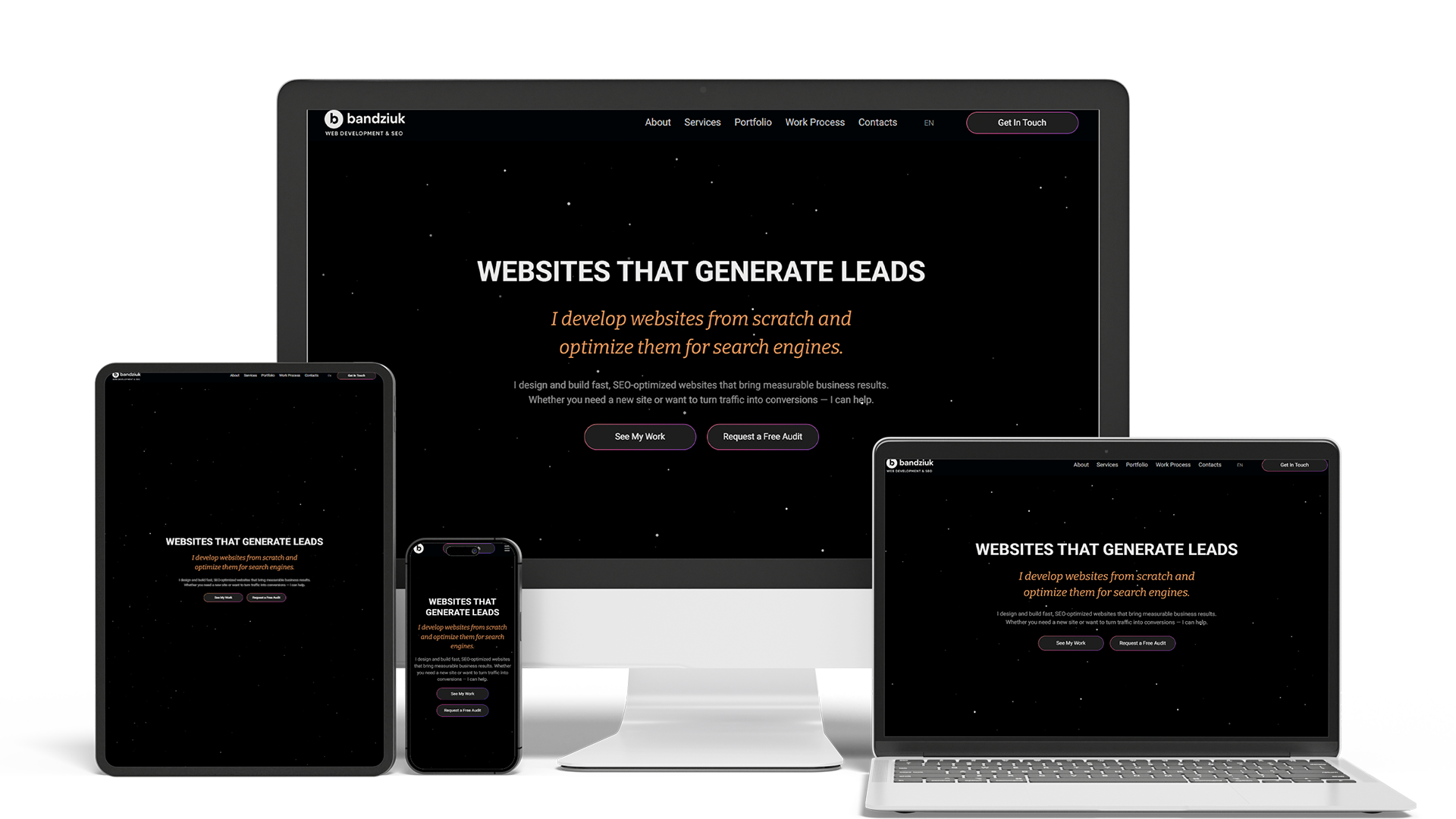
Develop and optimize a personal website with SEO
10× faster editingTraffic from ChatGPTMain lead channel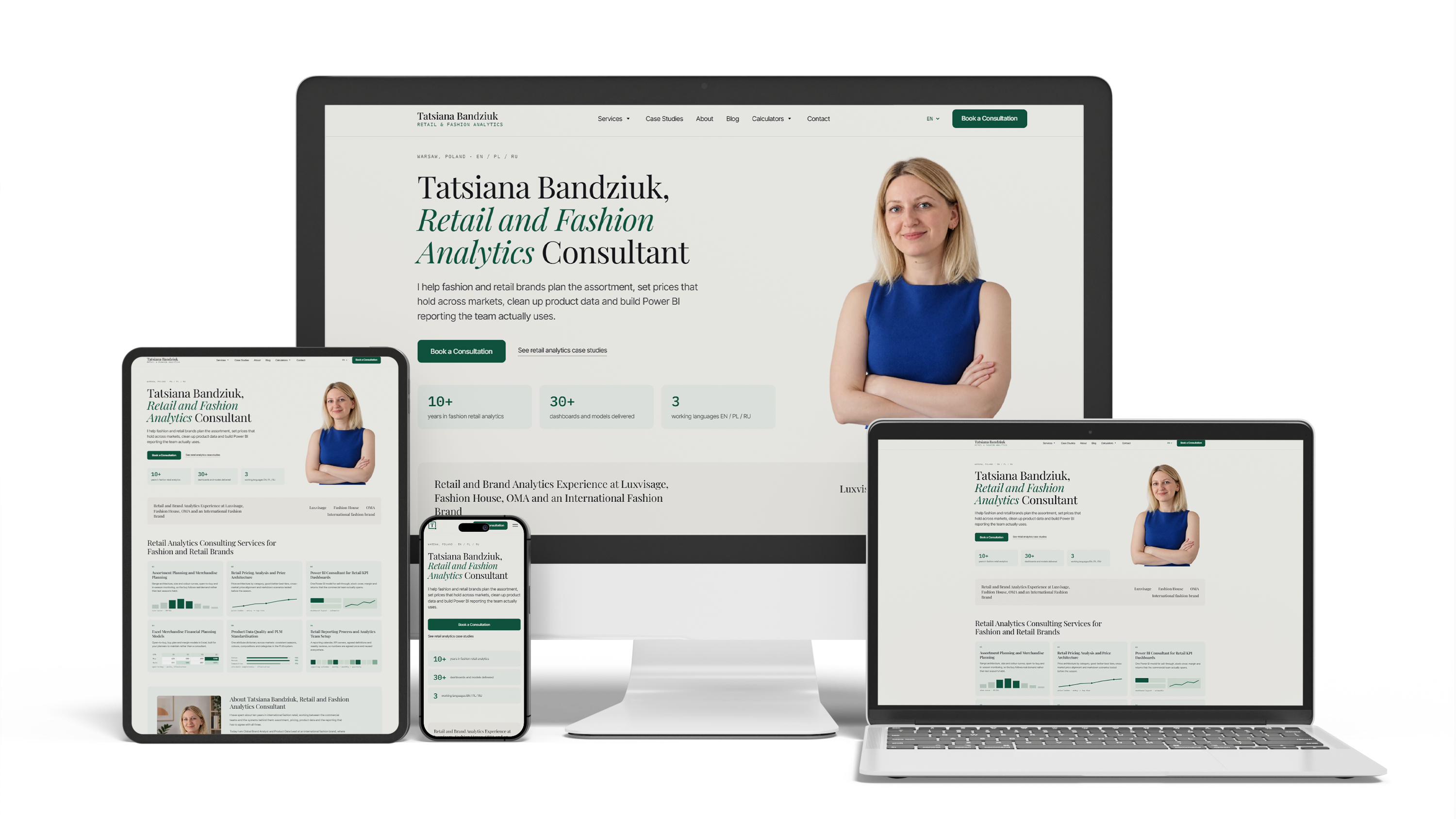
A consultant website for a retail analytics expert
100/100/100/100153 pages3 languages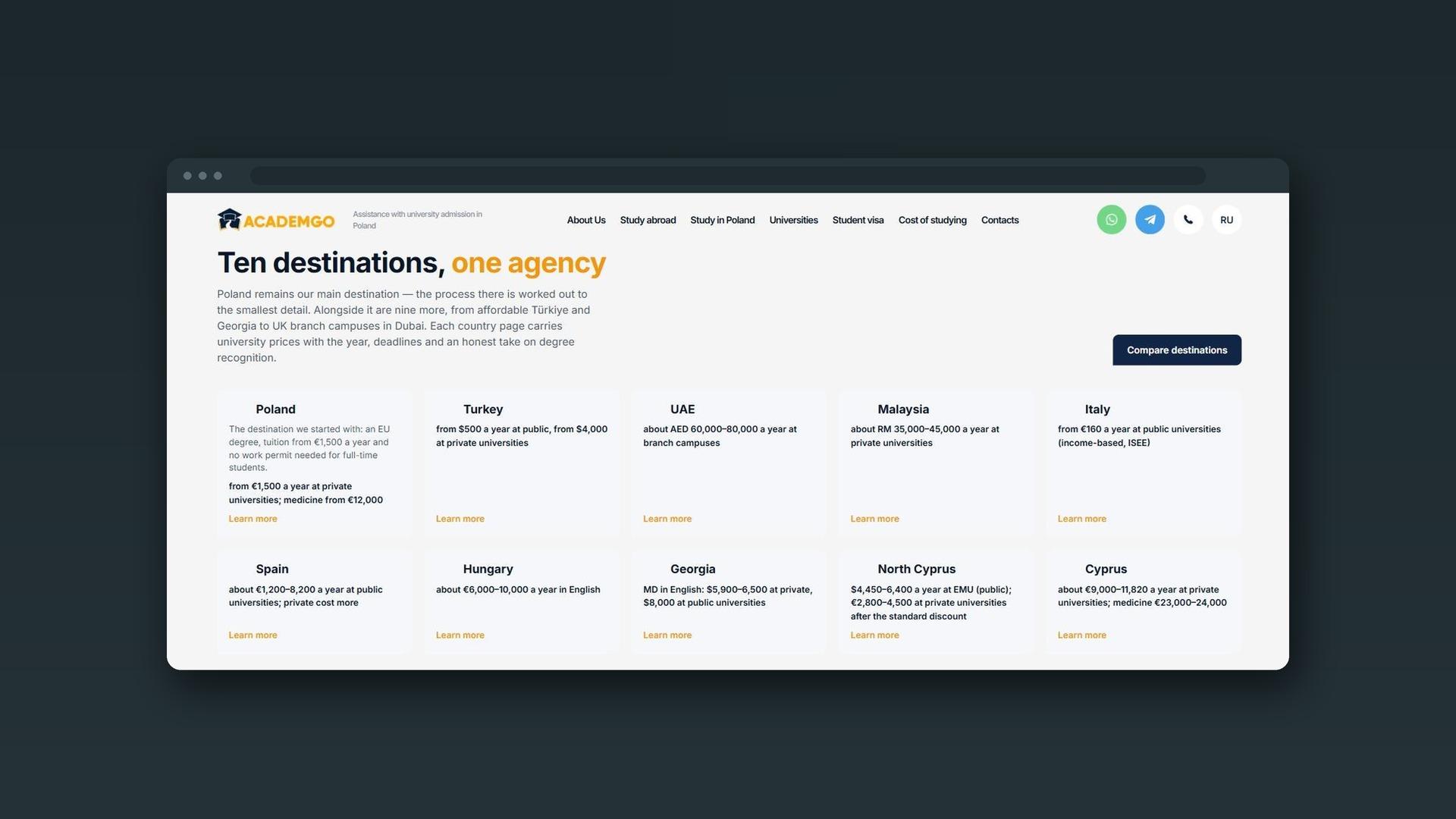
SEO case study: an education agency site, one country to ten
1 → 10 countries180 new pagesPerformance 61 → 91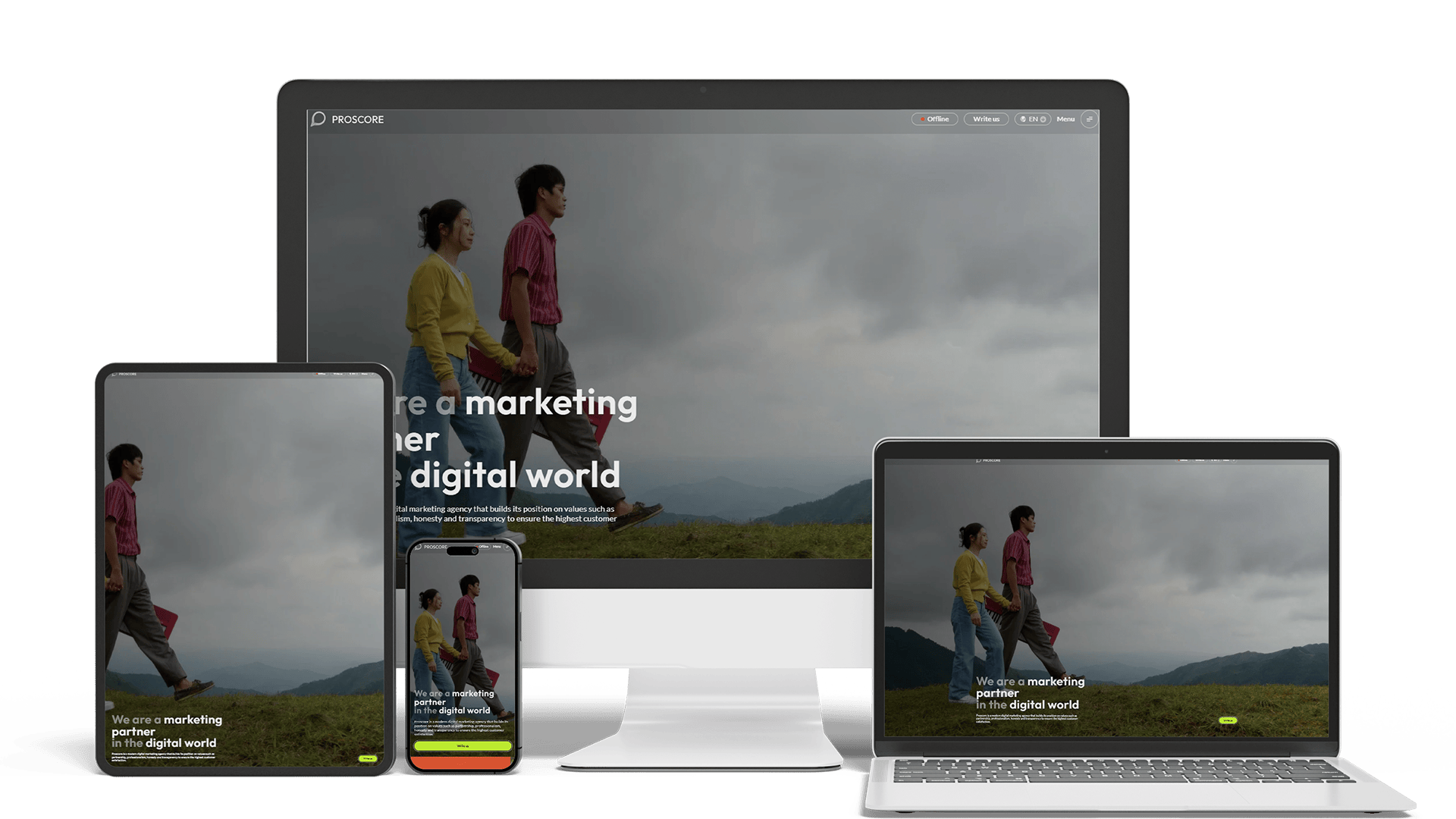
Digital Agency Website Development
100% match to FigmaLive status indicatorNo-code editing
Full Multilingual Website Development & SEO for Student Services
+5,930 clicks in 6 months359k impressionsTeam edits it
I do SEO for artists and art websites myself: audit, the fixes in the code and the text, and a monthly report on enquiries.
«Artist» carries several trades, and they need different work, so to be clear about what is on this page: it is for visual artists who make objects — painters, printmakers, sculptors, ceramicists, illustrators — selling originals, prints or commissions from their own site.
If you are a recording or performing artist, the work is different and it is on the SEO for musicians page. A makeup artist needs local bookings rather than collectors, which is makeup artist website design, and a tattoo artist the same, which is tattoo studio website design.
The standard artist site is one portfolio page holding forty images, a short bio, and a contact form. To a visitor it reads as confident restraint. To a search engine it is a single page with almost no text, where forty works are indistinguishable from each other and none of them has an address of its own, so there is nothing to match against any search a collector could type.
This is not a matter of writing more for the sake of it. A search engine cannot see a painting: it cannot tell oil from acrylic, it cannot measure the canvas, and it has no idea the piece is predominantly blue. Every fact a buyer would filter by has to exist as text somewhere, and on most artist sites it exists nowhere — not in the image file names, not in the alt text, not on the page.
The unit of SEO for an artist is not the portfolio and not the series — it is the individual work. Each piece that is for sale, or that represents the kind of thing you take commissions for, gets its own address and its own text, and that text is mostly facts a collector asks for before they ask the price.
- title, year, medium and exact dimensions, written out rather than abbreviated;
- the series or body of work it belongs to, linked;
- price and availability, or the plain statement that it is sold;
- what the piece is of and what it is about, in two or three sentences;
- framing, hanging, edition size for prints, and what shipping involves;
- and an image with alt text that describes the work rather than repeating the title.
Sold works should stay published instead of being deleted
Artists routinely remove a piece from the site once it sells, which is understandable and costs them twice. The sold pages are the body of text that makes the site legible to a search engine in the first place, and they are the strongest evidence a hesitant buyer can be given — that work at this size, in this medium, at this price, has been bought before by somebody.
The version that works keeps the page, marks it sold clearly so nobody enquires about it in vain, and links from it to the series and to available work of a similar size. Over a few years that turns into the part of the site that brings people in, and it costs nothing to build because the pages already existed.
Searches that end in a sale almost never contain the word artist. They describe the thing wanted: a large abstract painting for a living room, an original seascape in oil, a bronze figure under a certain height, a botanical print in a particular colour. Buyers search by subject, medium, size, colour and sometimes by the room the work is going into, and those are precisely the searches a page about one piece can answer and a portfolio page never will.
The practical consequence is that keyword work for an artist is not about finding a term to rank for; it is about making sure the facts already true of your work are written down in the words buyers use. Somebody looking for a two-metre canvas does not search «large» if they mean two metres, and an artist who writes «large» instead of the measurement has opted out of the search.
Type your own name into a search engine. For most artists the first results are Saatchi Art, Artsy, Etsy, a gallery's roster page, an Instagram profile, and a Behance account abandoned in 2017 — with the artist's own website somewhere below. This matters more than any other search, because the person typing your name has already seen the work: at a fair, in a group show, on a wall at a friend's house.
That visitor is the most valuable one you will ever get, and they arrive at a marketplace that takes a commission, or at a gallery page listing two works from four years ago, and in the worst case at a profile you no longer update. Winning your own name is the cheapest and most profitable piece of SEO available to an artist, and it is mostly a matter of structure rather than content: one clear address for you, consistent naming, and the right pages linked from the right places.
That groundwork is the SEO audit, and where you also want to be found by city — a studio open to visits, a local commission market — it extends into local SEO.
Commissions and prints are two separate searches and two separate pages
Commissions and prints look like extensions of the same business and behave like different ones. Someone commissioning a portrait or a large piece for a specific wall wants process, timeline, price range and reassurance that they can see progress; someone buying a print wants size, paper, edition and delivery. They search differently, they decide differently, and a single page trying to serve both converts neither.
Commissions are a service page: what you take on, what you decline, how long it takes, what it costs from and to. Prints are closer to a shop, and once there are more than a handful the work overlaps with SEO for online stores. What the site itself needs to look like is on the artist website design page.
An SEO audit for your art website
Send the site and I reply within one working day: what is holding it back and what I would do first.
Being named when a buyer asks ChatGPT for an artist to buy from (GEO, AEO)
«Find me a contemporary painter working in large-format abstracts I can buy from directly» is a question people now put to an assistant instead of scrolling a marketplace, and it suits artists unusually well, because the buyer wants a handful of names with reasons rather than four thousand thumbnails. The assistant answers from text it can read, so the same three things decide it: subject, medium and size written as text rather than left in the images, prices or ranges it can quote, and the same name and wording across the site, the gallery listings and the marketplace profiles.
Getting an existing site into a readable state is preparing a site for AI search, and if assistants describe your work wrongly — a medium you left behind, a gallery you no longer show with, a city you left — that is fixing AI misinformation.
SEO for artists: frequently asked questions
Order an SEO audit for an art website: what to send me
Send the site, say what you sell from it — originals, prints, commissions, or all three — and search your own name first so we both see what comes up. I reply within one working day with what is holding the site back, what your name currently leads to, and what I would do first, including which works are not worth giving pages to.
