


Psychiatrist website design: a site for patients, referrers and a closed appointment book
Websites for psychiatric practices: intake criteria and the current wait stated plainly, a page referring doctors can use, an emergency block that points somewhere real, and wording that stays within the rules on prescription medicines. Design included, from €2,000.
- Psychiatric practices
- From €2,000
- Named by ChatGPT and AI search
What a psychiatrist website build covers
- Intake criteria, stated plainlyWho you see and who you do not
- The current wait, kept currentOne editable line, not a phone call
- A page for referring colleaguesWhat to send and how to reach you
- An emergency blockWhere to go when it cannot wait
- Wording within the rulesConditions and methods, not drug brands
- Named in ChatGPT and AI answersFormats and prices to quote
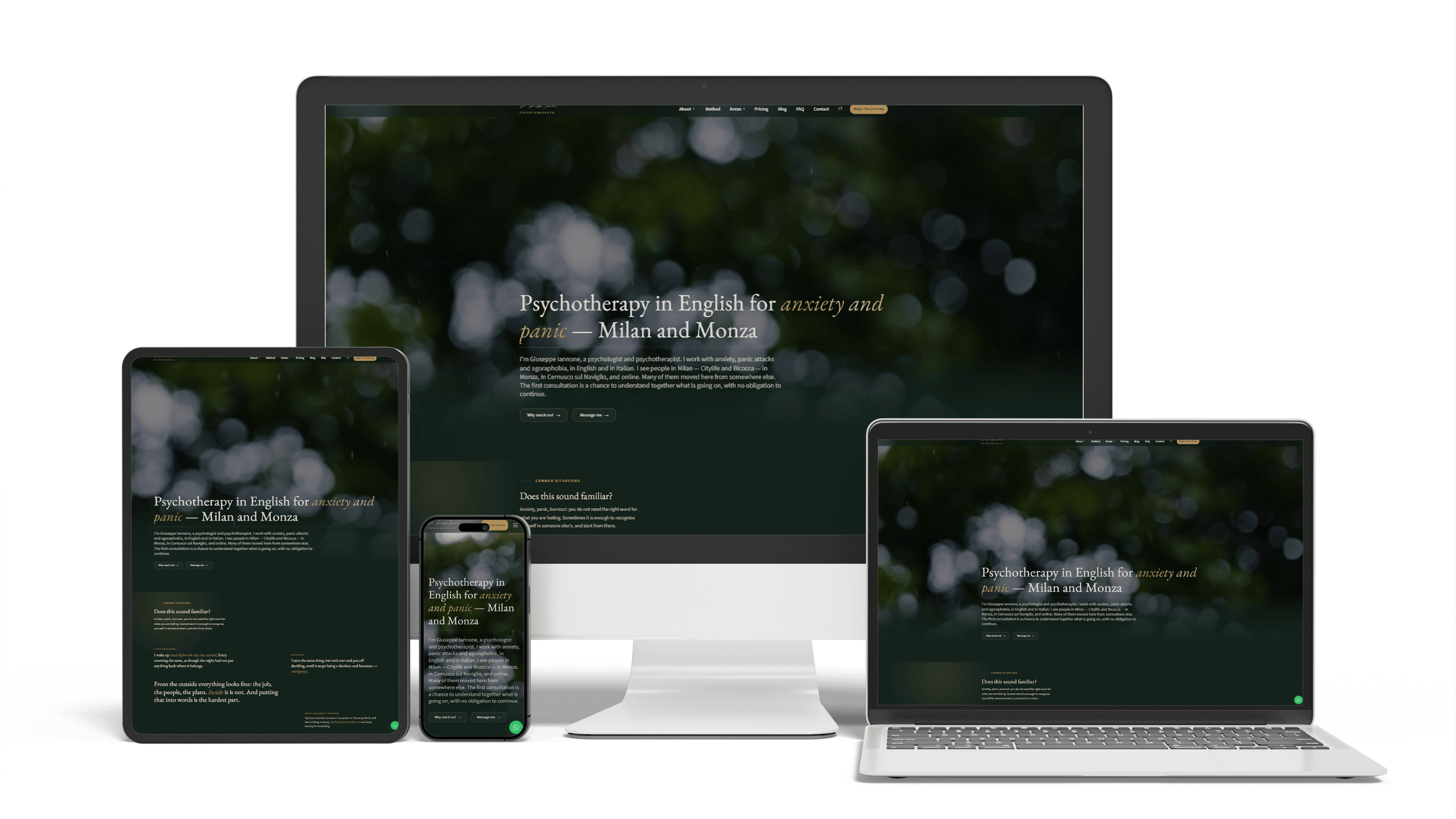
Bilingual psychotherapist website in Italy
468 of 468 posts moved2 languagesSeen in ChatGPT answers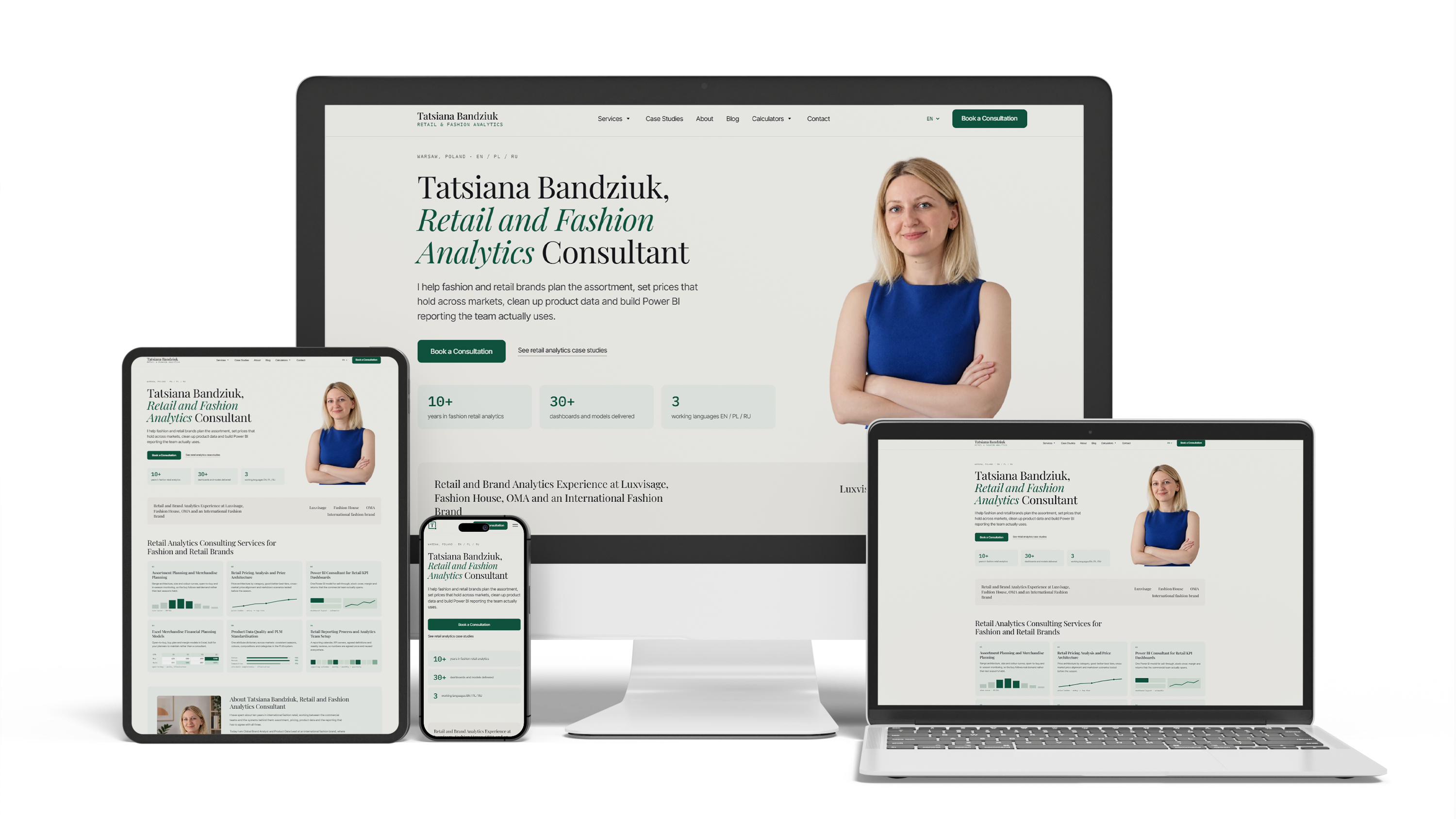
A consultant website for a retail analytics expert
100/100/100/100153 pages3 languages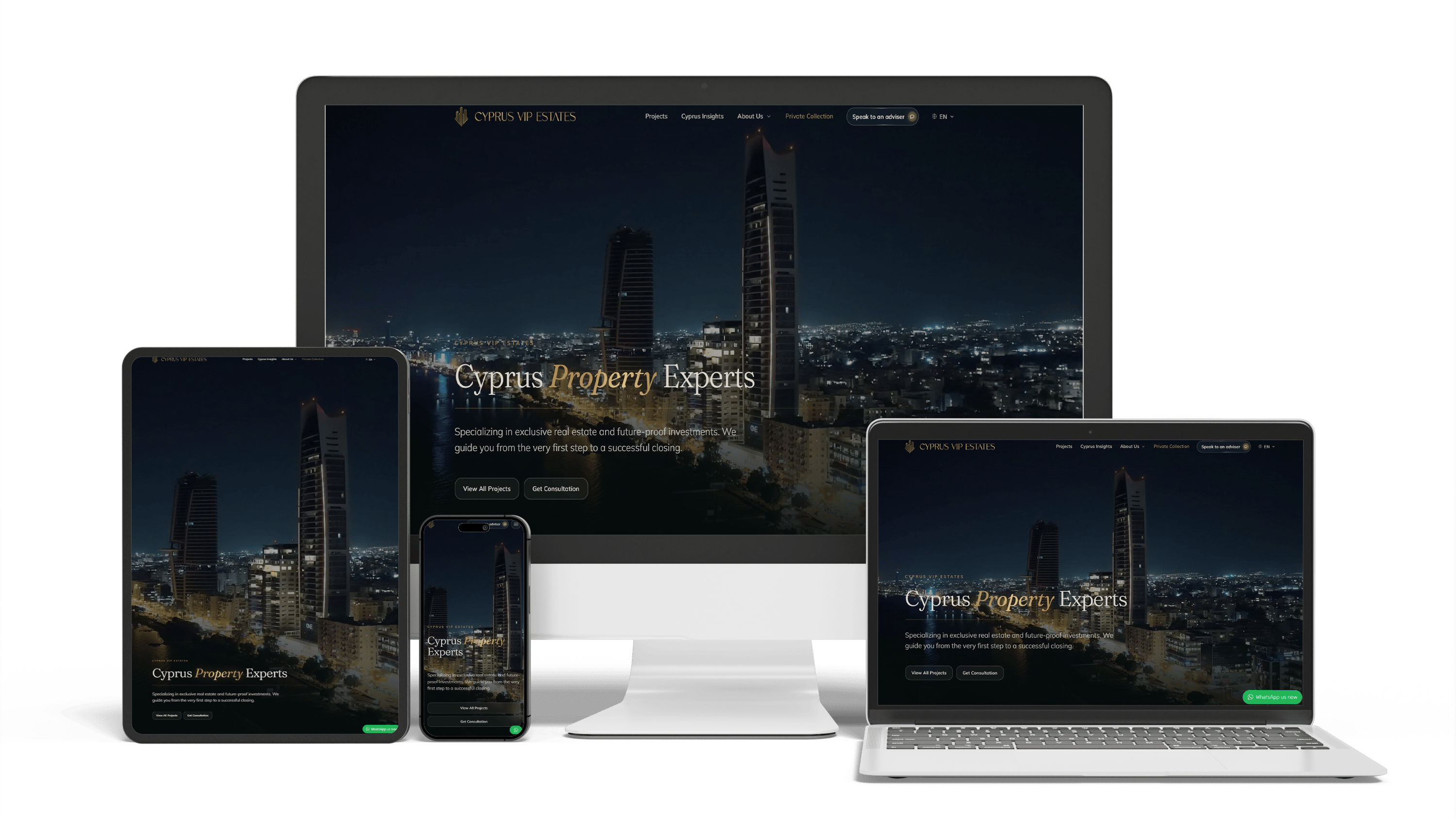
Multilingual real estate platform in Cyprus: SEO and GEO without bought links
16× faster editingTraffic from ChatGPTLeads via WhatsApp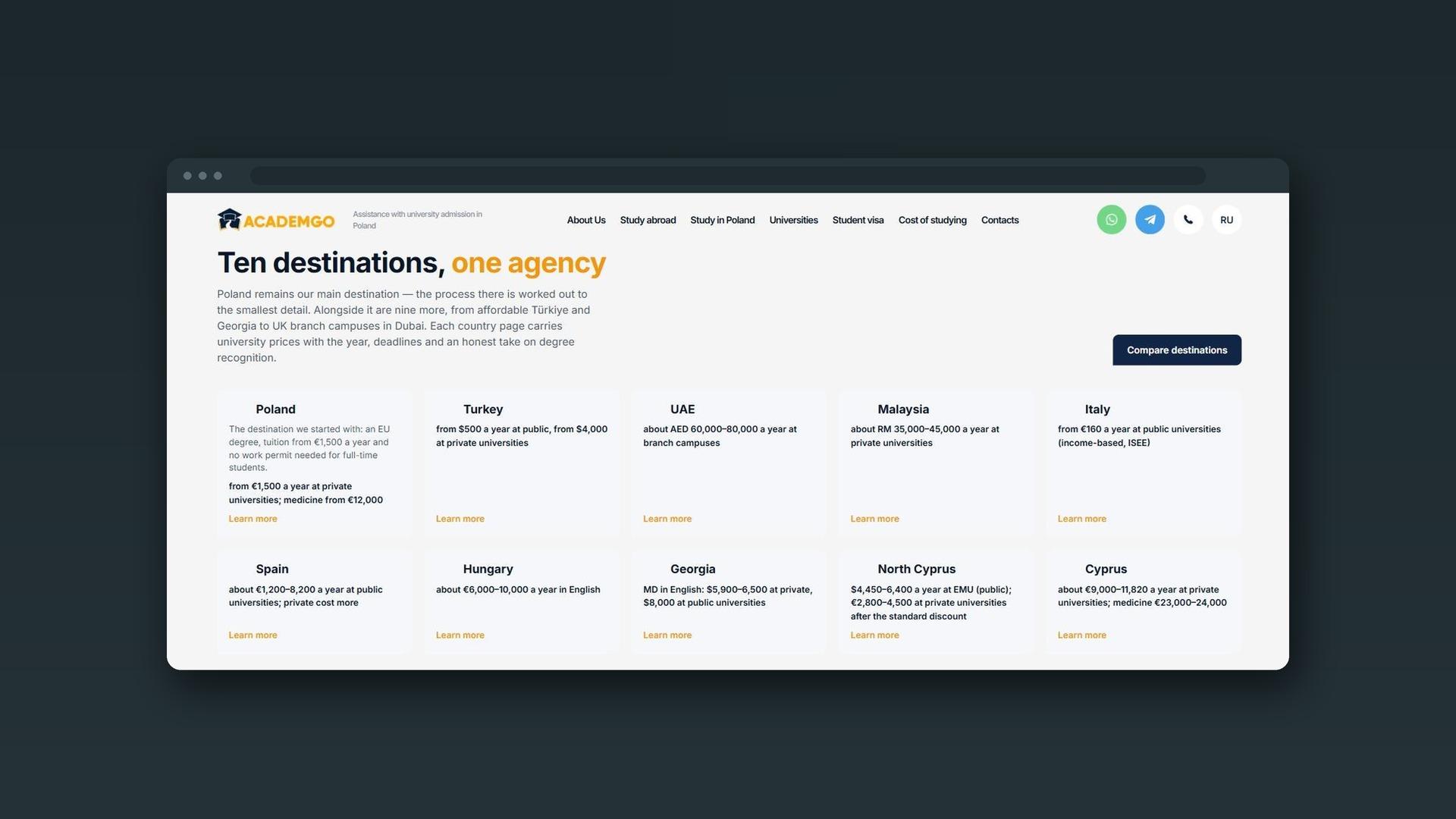
SEO case study: an education agency site, one country to ten
1 → 10 countries180 new pagesPerformance 61 → 91
Renovation and investment website with a premium feel and 96/98/100/100 performance
96/98/100/100Design system2 languages
I build websites for psychiatric practices: consultation pages, prices and formats in text, private booking, and a structure assistants can read.
I design and build websites for psychiatric practices, and design comes with the build rather than on a separate invoice. The reason this is its own page rather than a line on the therapy one: a psychiatrist prescribes, usually has a closed or nearly closed appointment book, and is read by colleagues as well as patients. Those three facts change almost every decision on the site.
If you are a psychologist or psychotherapist, the page you want is therapist website design — it covers the calm first screen, the path to a first session and privacy in forms, and none of that is repeated here.
Most psychiatric practices cannot take everyone, and the site that hides this spends the practice's time rather than saving it. Every unsuitable enquiry costs a reply, and every person who waits three weeks for an answer that was never going to be yes has had a bad experience with your name on it.
- who you see: ages, conditions, whether you take assessments only or ongoing treatment, whether you work with a therapist alongside;
- who you do not see, said kindly and specifically, with a sentence about where those people should look instead;
- the current wait as one editable line that a receptionist can change in ten seconds — the single most useful sentence on the whole site;
- whether the book is open at all today, because that is the question behind the visit.
A psychiatric practice gets a large share of its patients through other professionals: GPs, therapists, paediatricians, occupational health. They need different things from the same site and they look for them quickly between appointments — what you accept, what to put in a referral letter, how urgent cases are handled, a direct line that is not the general phone number, and whether you write back to the referrer afterwards.
One page answers all of it, and it is usually the cheapest page on the site to build and the most profitable to have.
Prescribing is what distinguishes the practice, and it is also the area where the website has to be careful. Across the EU, advertising prescription-only medicines to the public is prohibited, which in practice means the site describes conditions, assessment and treatment approaches without naming brands or promising what a medicine will do.
That constraint is easier to live with than it sounds, and it usually improves the page: patients searching are not looking for a drug name, they are looking for someone who will take their situation seriously and explain what the first appointment involves.
Some people reach a psychiatry website in crisis, at night, through a search that had nothing to do with your practice. The site owes them a short, calm, permanently visible block that says what to do when it cannot wait and gives the local emergency number and crisis line, with a plain statement that the practice does not provide urgent care out of hours. It takes one component and it belongs in the header area rather than buried in a footer.
Remote appointments made psychiatric practices international overnight, and licensing did not follow. A patient in another country can book a video call they cannot legally have, and the practice finds out afterwards. The fix is on the website: state which jurisdictions you are licensed in, which patients you can see remotely, and make the booking form ask the question before the slot is taken rather than after.
Psychiatric first appointments are longer, more expensive and more intimidating than most medical visits, and the fear of the unknown is what stops the booking. A page that says how long it lasts, what happens in it, what to bring, whether a family member can come, what it costs and what happens after converts better than any reassurance about the practice's philosophy.
A practice website starts at €2,000 with design included. A landing page for one assessment or service is €700–1,400. A redesign that keeps rankings starts at €1,000. A landing page takes two to three weeks, a full site four to six. The number of clinicians with their own pages, the number of languages and how quickly clinical wording gets approved move both the price and the schedule. The figures are on the pricing page.
A quote for your psychiatric practice website
I answer within one working day: what I would build, in which languages, and what it costs.
A psychiatric practice website that AI assistants can read (GEO, AEO)
Patients and referrers now ask ChatGPT, Perplexity or Gemini first: a psychiatrist who takes adolescents, one who speaks a particular language, one whose book is open. An assistant answers from text it can read, and a practice whose criteria live in a paragraph of prose, whose wait is only known by phone and whose fees sit in a PDF does not appear in that answer at all.
What makes a practice quotable is the same thing that makes it easy for a human: criteria as a list, ages and languages as text, fees on the page, the wait in a sentence that is kept current. Bringing an existing site to that state is AI search readiness.
Psychiatrist website design: frequently asked questions
Ordering a psychiatric practice website: what to send me
Tell me how many clinicians need pages, whether your book is open or has a waiting list, what your intake criteria are, whether colleagues refer to you, which languages your patients speak and where you are licensed to treat remotely. Send the current website link if there is one. I answer within one working day with what I would build and what it costs.
