


Web design in Cyprus: a design made to be built, not just presented
I design and build websites for companies in Cyprus. Design is part of the build rather than a separate invoice, because a design nobody can build is worth nothing. English, Greek and Russian on one layout, speed kept on the phone, from €2,000.
- Design included in the build
- Websites from €2,000
- Named by ChatGPT and AI search
What web design covers on a Cyprus project
- Design and build togetherOne person decides and ships it
- Layouts for three languagesEnglish, Greek and Russian in one design
- Phone first, not phone laterChecked where the traffic actually is
- Photography planWhat to shoot and what to leave out
- Redesign of an existing siteNew look, rankings kept
- Named in ChatGPT and AI answersServices, prices and area an assistant can quote
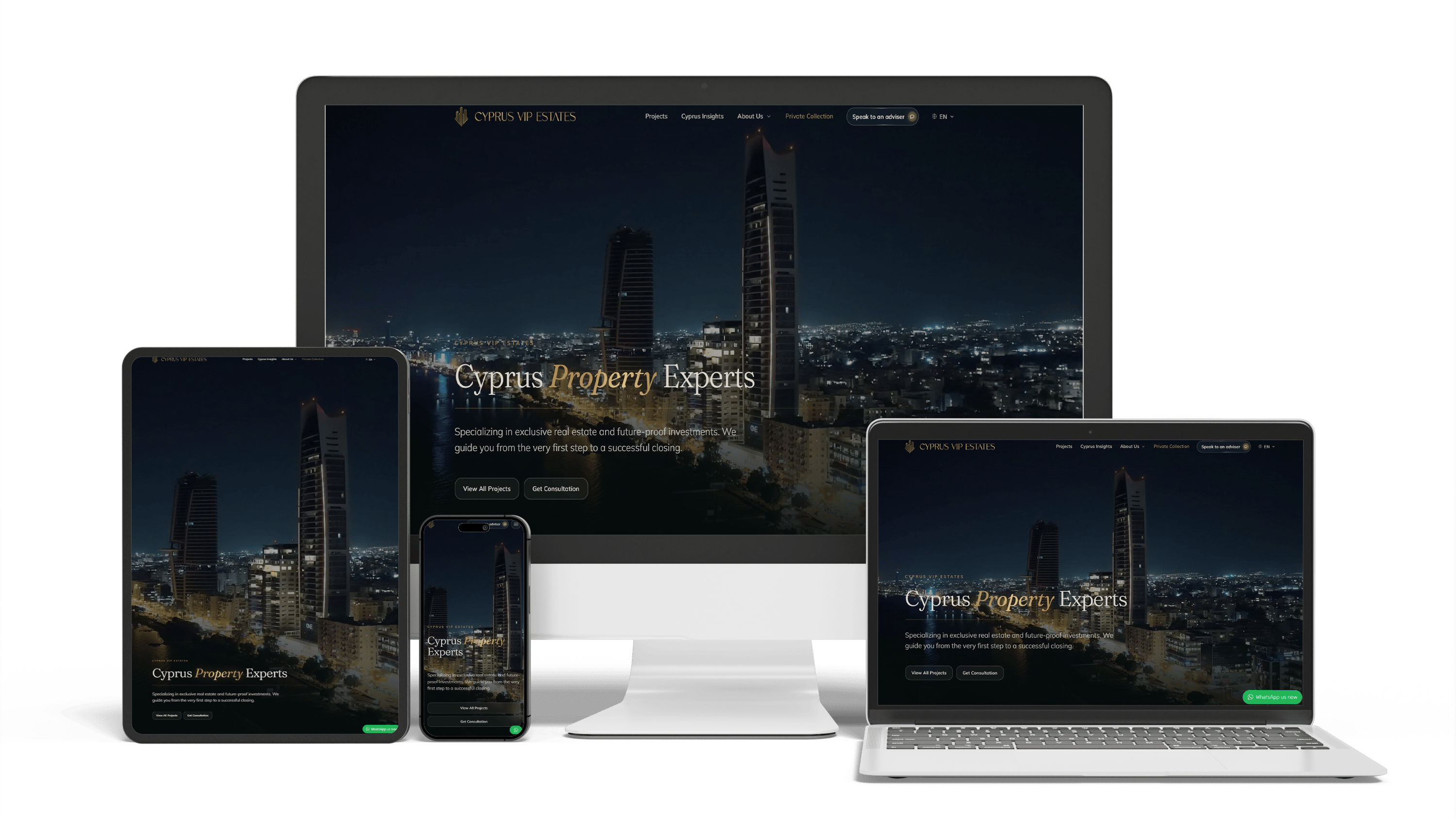
Multilingual real estate platform in Cyprus: SEO and GEO without bought links
16× faster editingTraffic from ChatGPTLeads via WhatsApp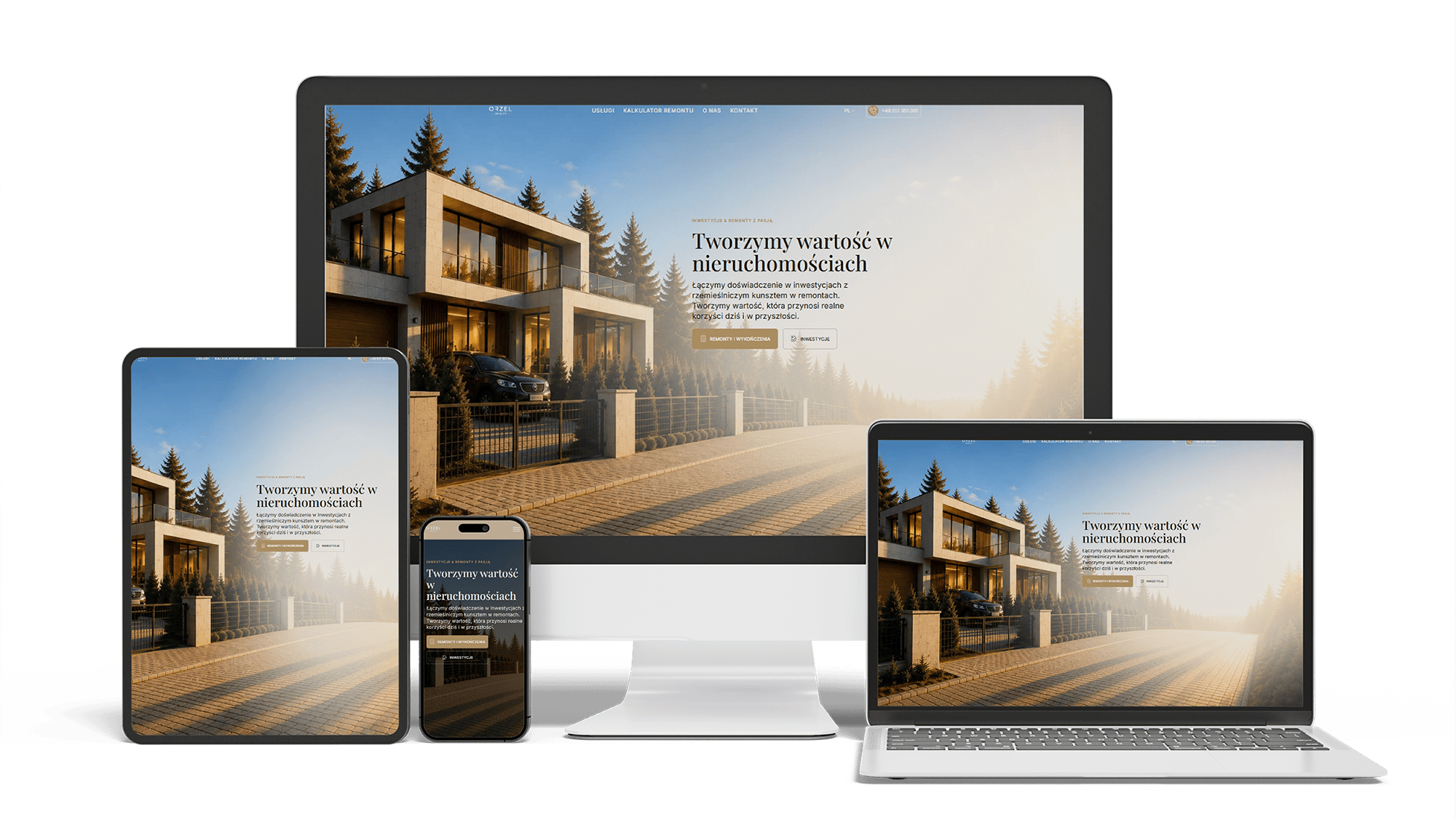
Renovation and investment website with a premium feel and 96/98/100/100 performance
96/98/100/100Design system2 languages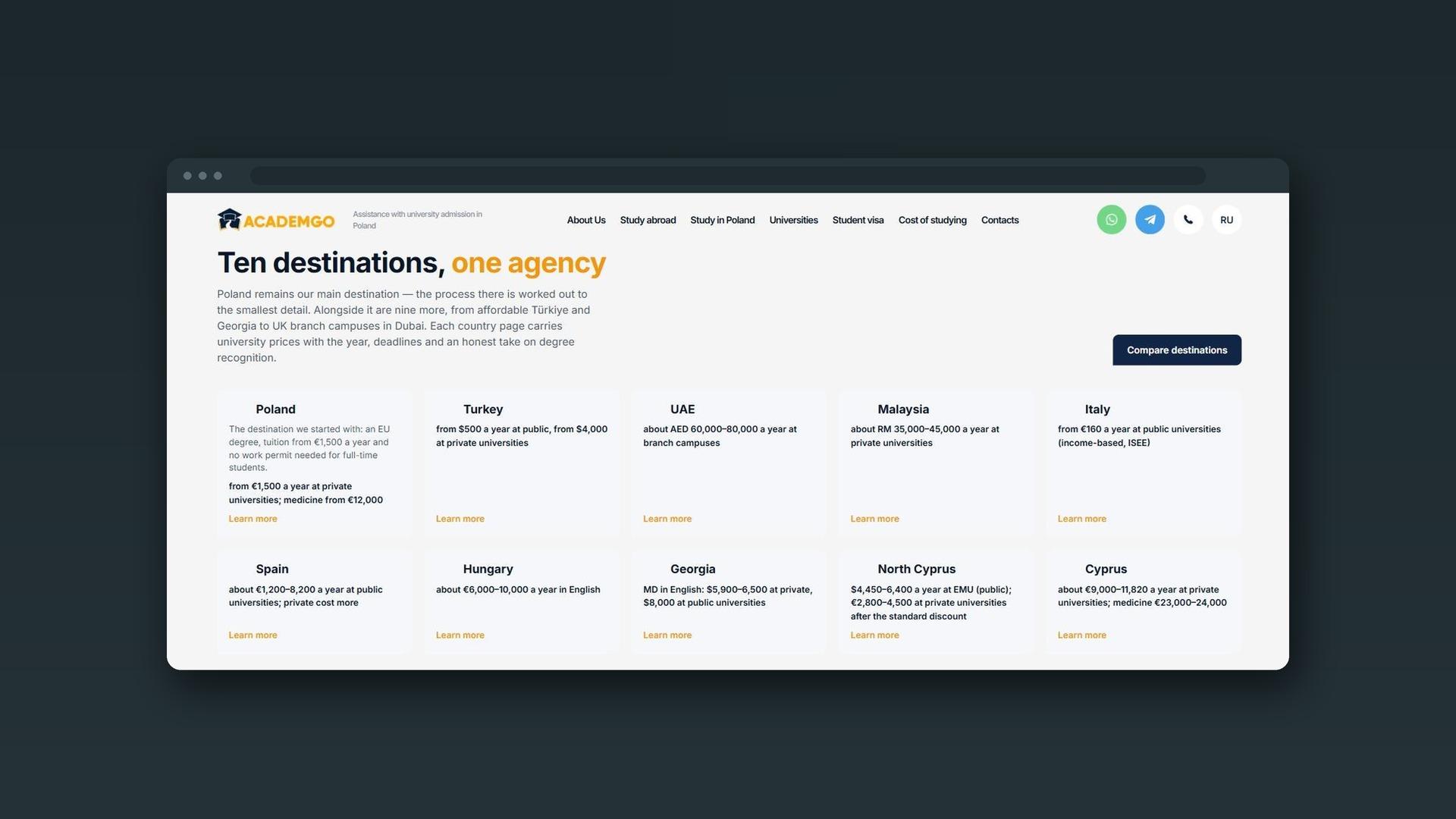
SEO case study: an education agency site, one country to ten
1 → 10 countries180 new pagesPerformance 61 → 91
Full Multilingual Website Development & SEO for Student Services
+5,930 clicks in 6 months359k impressionsTeam edits it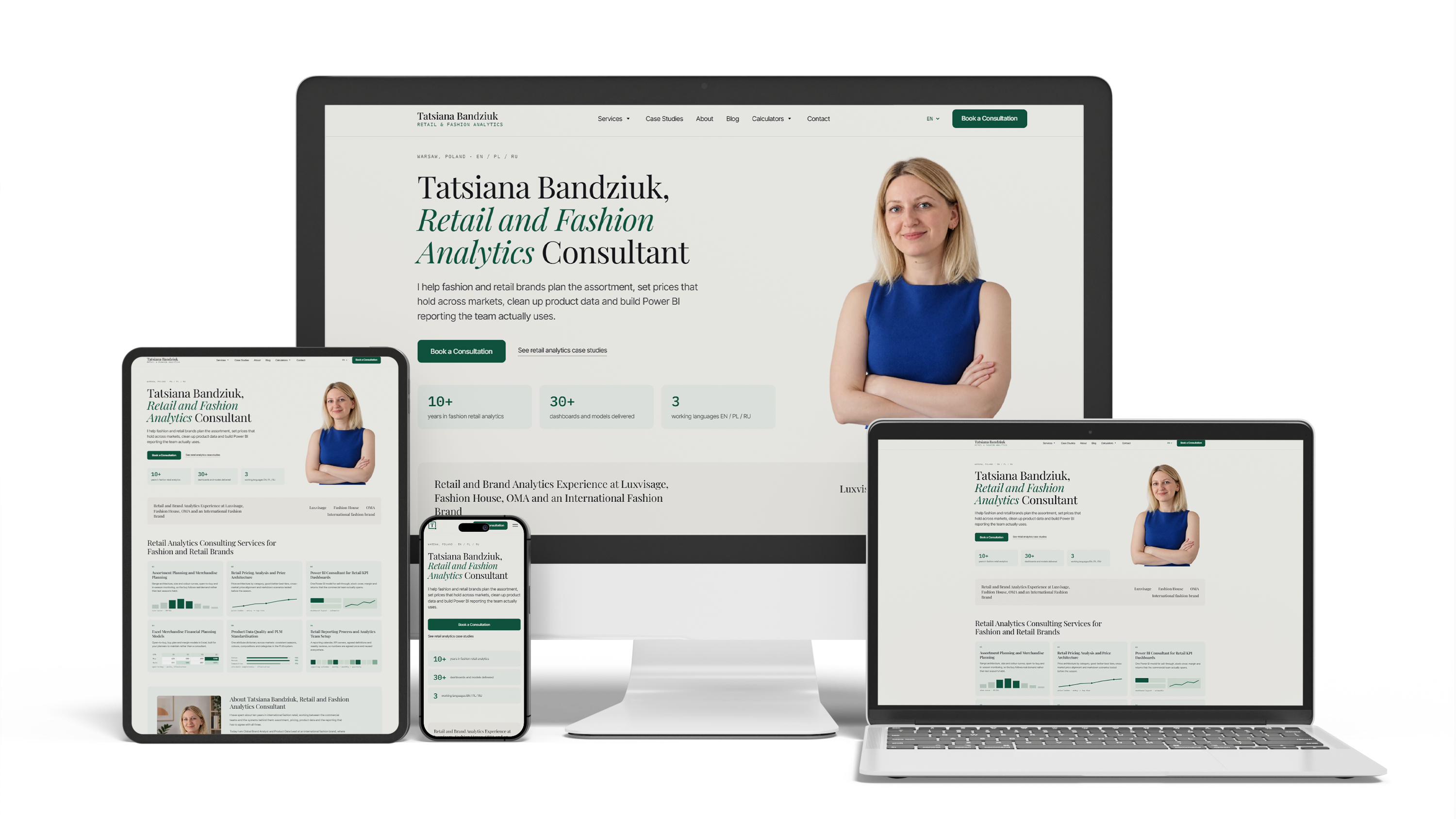
A consultant website for a retail analytics expert
100/100/100/100153 pages3 languages
I design and build websites for companies in Cyprus myself: structure, design, build and launch, with no handover between people.
I design websites for companies in Cyprus, and the design comes with the build rather than on its own invoice. That is worth saying first, because the word design is used for two very different purchases. One is a picture of a website: screens in Figma, a palette, a font pairing, delivered as a file. The other is a website that looks the way it was meant to look once it is live, on a phone, in three languages, with real photographs and real text in it.
The first purchase is the one that strands companies. The pictures are approved, everyone is pleased, and then a developer quotes to build them and the quote is larger than the design was. Parts get cut, the live site drifts from the file, and nobody is responsible for the gap because each side delivered what was agreed.
So on my projects design and build are one job with one person answerable for both. There is no separate design line in the price, and there is no handover where the result can go wrong.
A design decides the order in which a visitor meets your business: what is seen before scrolling, what a service page promises, where the price appears, what the form asks for and how many taps separate reading from enquiring. Those are commercial decisions wearing visual clothes, and they are made well only by someone who knows what the finished page has to do in search and on a phone.
A layout that is drawn without those constraints tends to fail in predictable ways: a photograph that takes a second and a half to appear on mobile data, a headline that no one searches for, a menu that hides the pages that bring enquiries, a form asking for eight fields when two would do.
A Cyprus website usually carries two or three languages, and that is a design problem before it is a translation problem. The same button is wider in Russian, the same heading wraps to three lines in Greek, Latin and Greek letterforms sit at different heights, and a nav that fits in English pushes into a second row elsewhere.
- the layout is tested in the longest language rather than the shortest, so nothing breaks when the content arrives;
- the language switch sits where a multilingual visitor looks for it, and leads to the matching page rather than the home page;
- the type is chosen from families that actually carry Greek and Cyrillic, not patched with a fallback that changes shape mid-sentence.
Most of the visitors a Cyprus business gets arrive on a phone, often outdoors and on mobile data. The mockup does not show that: in a design file every image is already loaded and every shadow is free. On the live page a full-width hero photograph, three webfonts and a slider cost seconds, and seconds cost enquiries.
What I do about it is unglamorous. Images are sized and formatted for the slot they sit in, typefaces are limited to what the design really uses, and the layout is checked on the templates that carry the business — service pages, not only the home page. The look survives; the weight does not.
Design fails more often on pictures than on layout. Stock photographs of generic offices read as a company that has nothing of its own to show, and in a market where buyers check you before they call, that is expensive. A short shot list fixed before the design starts usually covers it: the team as they actually look, the premises, the work finished, and two or three details that only your business has.
Where photographs do not exist yet, the design is built so the page still works without them, and so they can be dropped in later without redrawing anything.
A redesign is where a good-looking site most often costs its owner traffic. The protection is dull and it is design work as much as development: keeping the addresses, keeping the text that earned, carrying over the structured data, and resisting the urge to delete pages because they do not fit the new grid.
The step-by-step version is on the website redesign page, and the island-wide service page is web development in Cyprus.
A company website with design included starts at €2,000. A single-service landing page is €700–1,400. A redesign that keeps the rankings starts at €1,000. Design never appears as a separate line, because I do not sell drawings I am not going to build. What moves the price is the number of service pages, the number of languages, whether the site connects to a system you already run, and whether the photographs and text exist. The numbers are on the pricing page and in how much a website costs in Cyprus.
Design stalls when nobody is allowed to decide. The arrangement that works: one person on your side signs off, we agree the structure before anything is drawn, and the first thing you see is the page that matters commercially rather than the home page. Two rounds of changes are normal and included; the third usually means the structure was never agreed, and that is a conversation rather than another round.
A landing page takes two to three weeks, a company website four to six, a site with a catalogue or a client area is quoted separately. What stretches it is almost never the drawing — it is content and decisions: who approves the wording, which services get their own page, which languages are needed, whether the photographs exist.
A quote for your website design in Cyprus
I answer within one working day: what I would design and build, in which languages, and what it costs.
Getting a designed Cyprus site read by AI assistants (GEO, AEO)
A design can quietly hide a business from the assistants people now ask first. Services set in images, prices inside a PDF, a portfolio that loads only after a script runs, an address that appears as part of a picture — all of it looks fine to a visitor and is invisible to ChatGPT, Perplexity, Gemini or Google's AI overviews. They answer from text they can read and from sources that agree with each other.
So the design keeps services, prices and the address as text, structured data that matches what is visible, and content that is present before any script executes. Bringing an existing site to that state is its own job: AI search readiness.
Web design in Cyprus: frequently asked questions
Starting a website design in Cyprus: what to send me
Tell me what the company does, who the website has to convince, which languages your buyers use, and what exists now — a link if there is a site, nothing if there is not. Say whether photographs and text exist. I answer within one working day with what I would design and build, in which languages, and what it costs.
