


SEO for a pharmacy: how to be found in markets where advertising a pharmacy is restricted or banned
Most of what agencies sell to pharmacies is illegal in some markets. In Poland advertising a pharmacy is prohibited outright today, and the law is mid-replacement. The work that remains is being findable rather than advertised — and it is substantial. Audit from €250.
- Within the advertising rules
- Audit from €250
- Named by ChatGPT and AI search
What SEO for a pharmacy actually consists of
- First, what your market permitsChecked before anything is written
- Location and opening hours, done properlyThe part that is allowed almost everywhere
- Night and duty hours, kept currentThe most urgent search in the sector
- Technical state of the siteSpeed, structure, how it is read
- Being named by AI assistants«Pharmacy open now near me»
- A written note of what was excludedAnd which rule excluded it
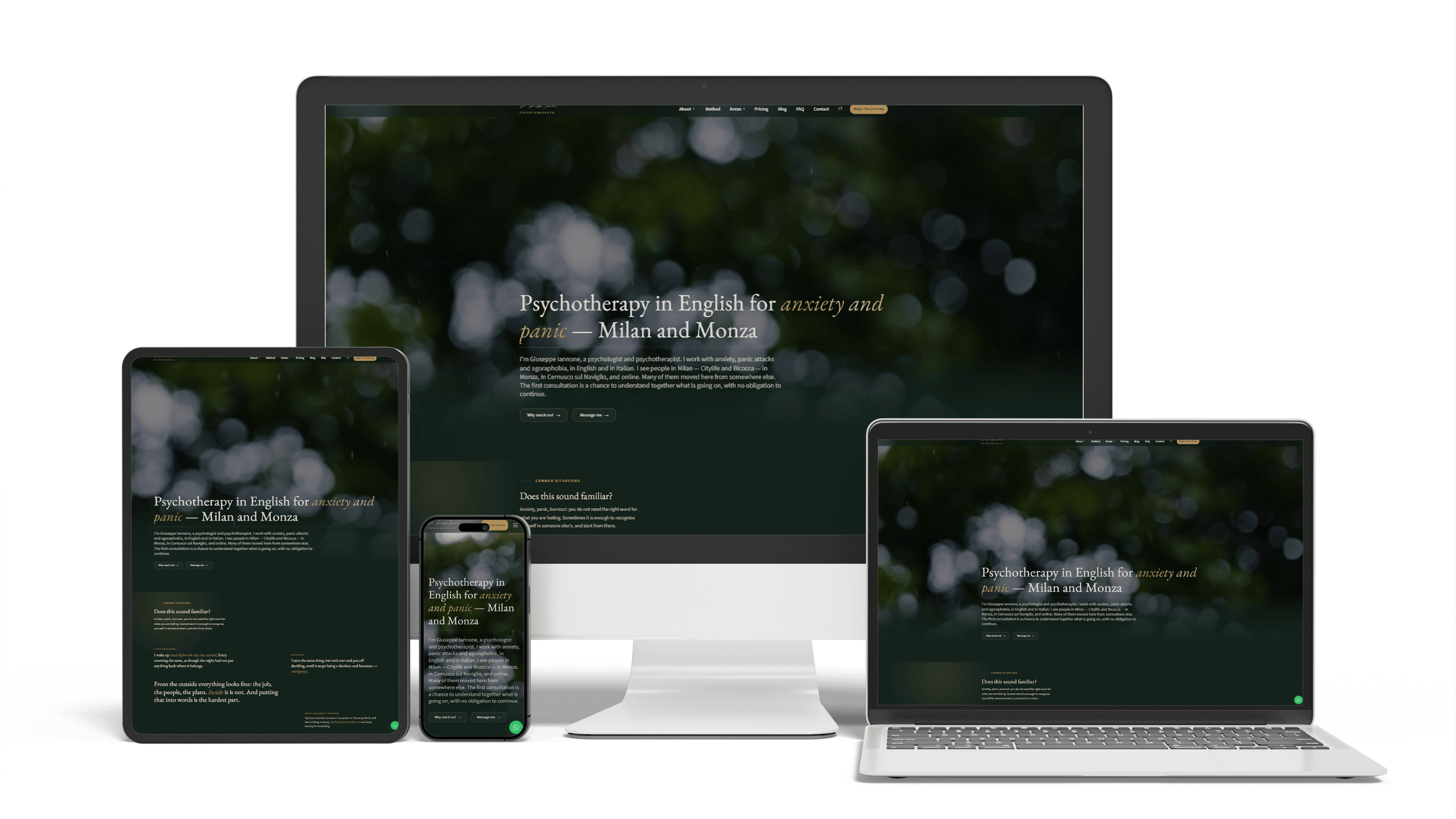
Bilingual psychotherapist website in Italy
468 of 468 posts moved2 languagesSeen in ChatGPT answers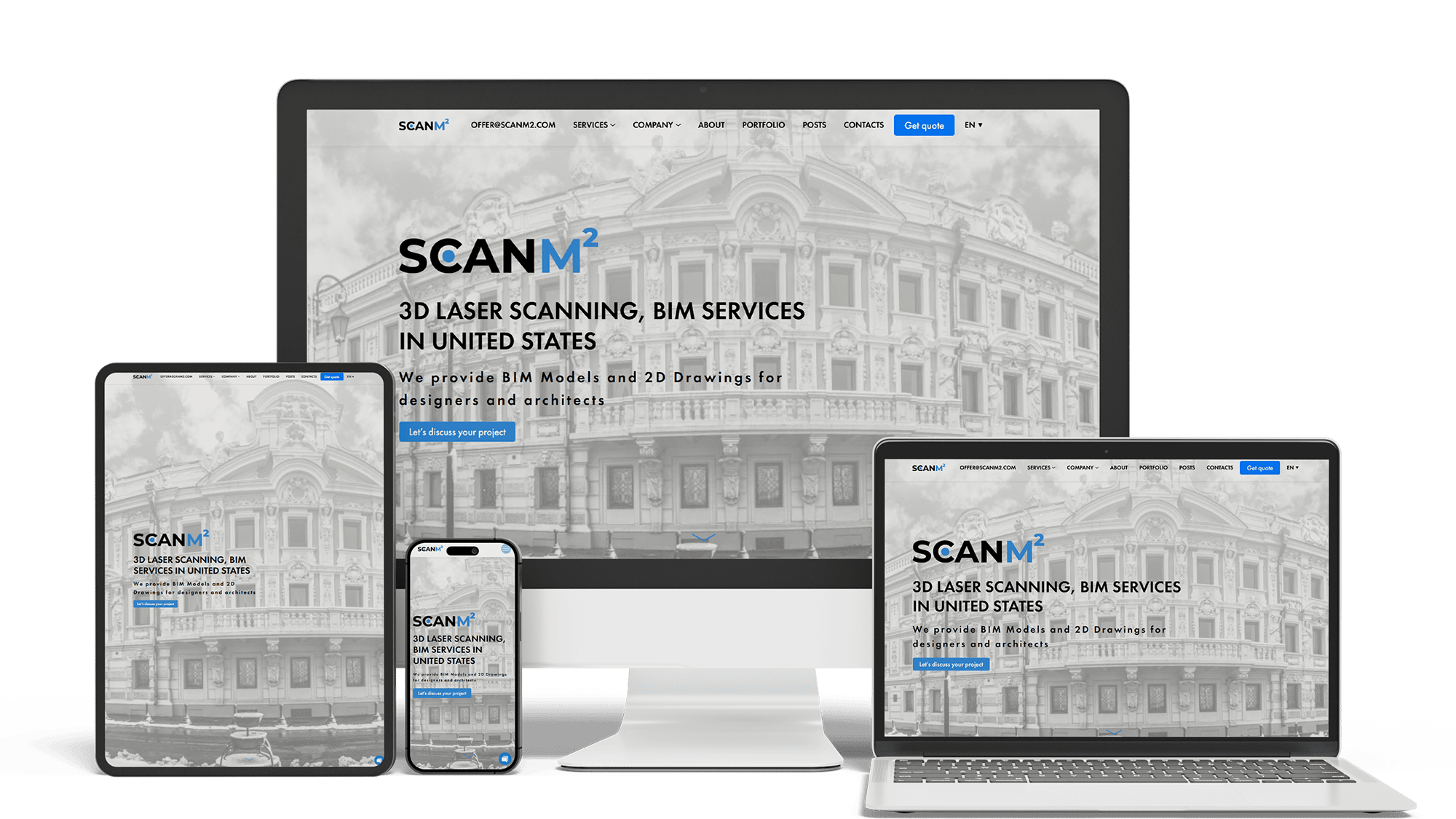
Architecture Website Rebuild and SEO
29× organic trafficLoads in under 1 sTop 3 in Poland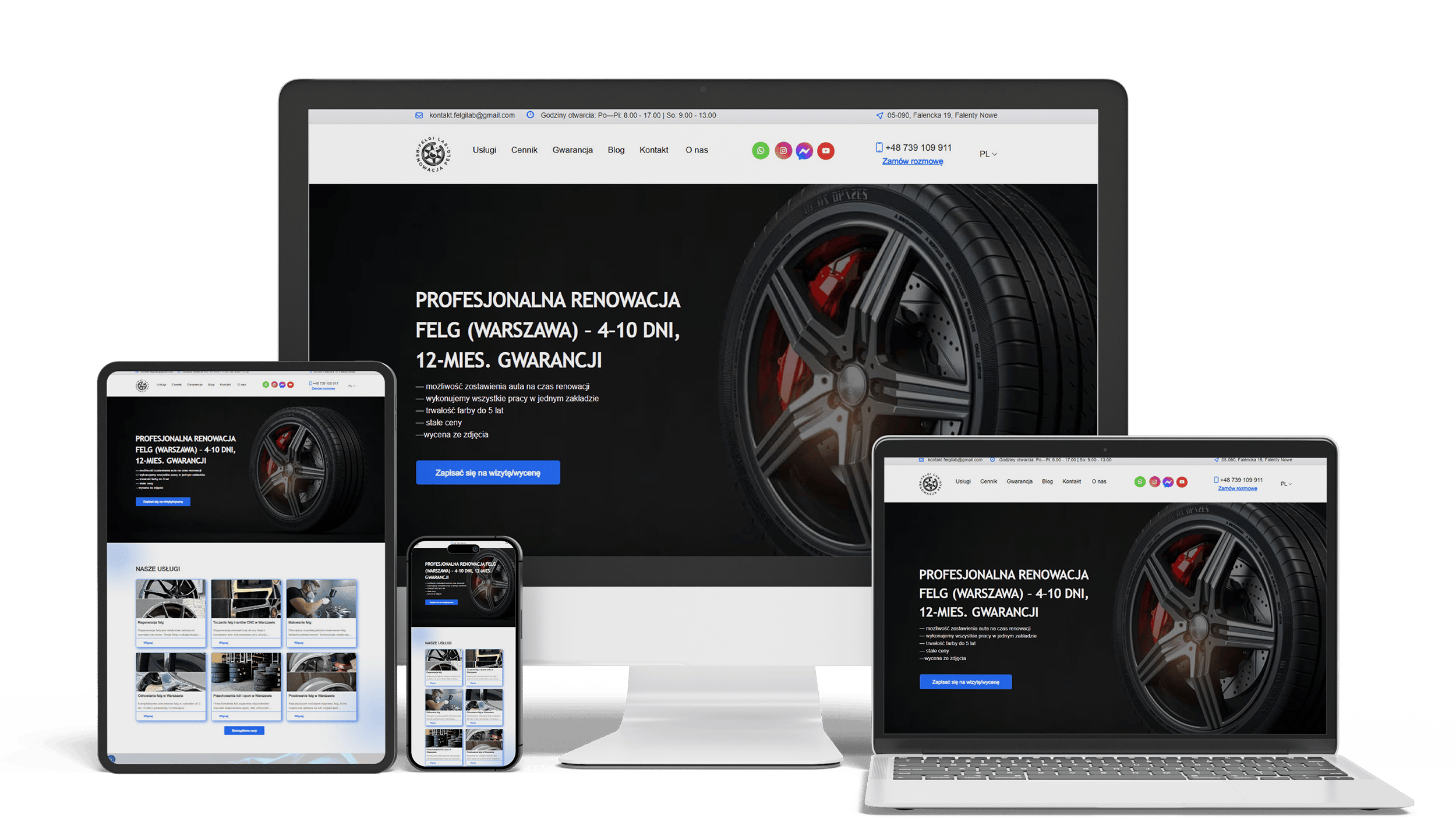
Auto Repair SEO & UX Boost
Performance 90++10% organic trafficLeads from forms
Renovation and investment website with a premium feel and 96/98/100/100 performance
96/98/100/100Design system2 languages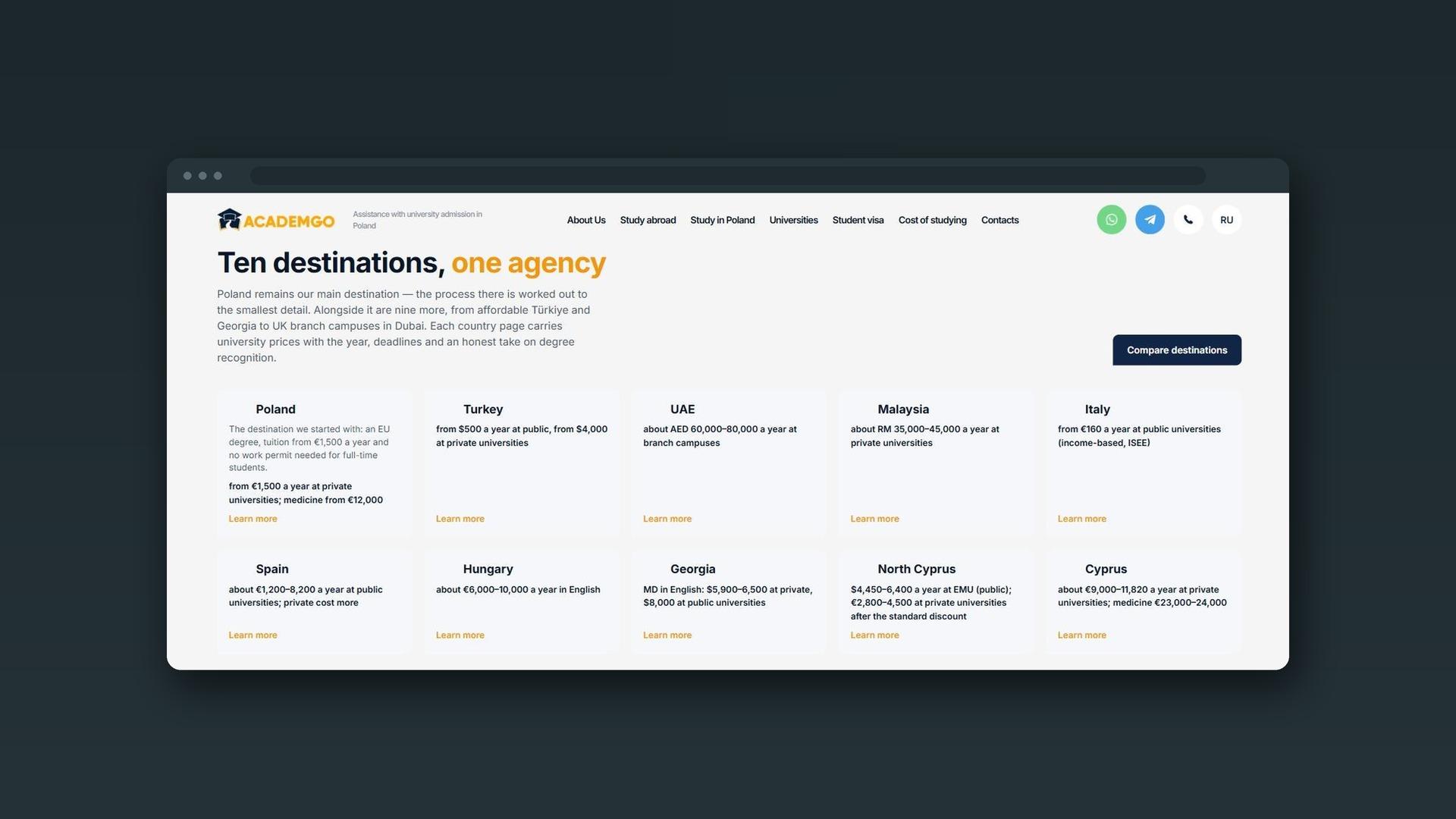
SEO case study: an education agency site, one country to ten
1 → 10 countries180 new pagesPerformance 61 → 91
I do SEO for pharmacies: pages for the services you actually offer, opening hours and stock in text, the map listing, and visibility in AI answers.
This page is about community pharmacies — a dispensary serving the people who live and work nearby. It is not about pharmaceutical manufacturing or distribution, which shares the word and almost nothing else: that is a business-to-business market with its own regulations, its own buyers and a completely different kind of website.
If you run a clinic or a practice rather than a pharmacy, the governing rules are different and the pages for that are medical SEO and SEO for doctors. The distinction is not cosmetic: a pharmacy is not a healthcare provider in the legal sense used by those rules, and the norm that applies to it is stricter.
In most of Europe a pharmacy cannot advertise itself the way a shop can, and in several markets it cannot advertise itself at all. That is not a detail to be managed later; it decides what the website is allowed to contain, and therefore what the work can consist of. An agency that sells a pharmacy the standard package — promotional landing pages, offers, product promotions, review campaigns — is selling something that in some markets carries an order to take it down and a fine.
So the first thing I do on a pharmacy is not keyword research. It is establishing which regime applies where you operate, what the published exceptions are, and what is left. That usually turns out to be less than the owner was promised by somebody else and more than the owner feared, because being findable and advertising are not the same activity, and search rewards the first.
This page describes rules as they stood when it was written and is not legal advice. I am not a lawyer, and for a pharmacy the stakes are high enough that the final word on a borderline page should come from one, or from the supervising inspectorate.
Poland: advertising a pharmacy is prohibited today, and the law is being replaced
Poland has one of the strictest regimes in the European Union. Article 94a of the Pharmaceutical Law states that advertising of pharmacies and pharmacy points, and of their activity, is prohibited, and that information about the location and opening hours of a pharmacy does not constitute advertising. That exception is the whole of it — two items. Supervision sits with the voivodeship pharmaceutical inspector, who orders the advertising stopped by a decision that is immediately enforceable, and the penalty today runs to fifty thousand złoty.
That regime is in the middle of being replaced. A law lifting the total ban passed the Sejm in September 2026, was amended by the Senate in October, and went to the President on 23 October 2026 for a decision within twenty-one days; it takes effect fourteen days after publication. The replacement is not simply a liberalisation: the penalty ceiling rises from fifty thousand złoty to a million, and where a breach covers several pharmacies, a separate fine applies to each one.
The practical consequence for anyone commissioning work on a Polish pharmacy right now is that the answer depends on the date the page goes live, and the cost of getting it wrong is going up twentyfold. This is a reason to check the position on the day rather than to rely on what an agency wrote in a blog post last spring — including what is written here, which I will keep current but which is dated by definition.
Strip out everything promotional and a surprising amount is left, because the searches that bring somebody to a pharmacy are not persuadable. Nobody is talked into needing a dispensary. They need one now, near where they are standing, that is open, and the pharmacy that answers those three things first gets the visit.
- the location, written as an address a search engine and a map can both read, with the entrance described;
- the opening hours, accurate, including the days and weeks you are closed;
- duty and night hours, which change on a roster and go stale faster than anything else on the site;
- accessibility, parking and which languages are spoken at the counter;
- and the technical state of the site, which no advertising rule touches at all.
Nothing in that list is promotion. All of it is information somebody is actively searching for, and most pharmacy websites get at least half of it wrong — most often the hours, which is the single most consequential field on the entire site.
«Pharmacy open now» and the duty roster, the most urgent search in the sector
The largest and most valuable pharmacy search is someone standing in the street at nine in the evening looking for somewhere open. It is answered almost entirely from opening hours and location data — the two things explicitly permitted even under the strictest regime — and it is won or lost on whether those are correct in every place they appear.
Duty rosters are where this falls apart. A pharmacy on night duty one week in six has hours that differ from its published ones on exactly the nights when demand is highest, and a site showing the standard hours sends that person elsewhere. Getting the roster onto the site and into the map profile, in a form that updates rather than rots, is the highest-value piece of work available to most pharmacies and is entirely inside the exception.
Prescription medicines cannot be advertised to the public, in any market in the European Union
Separately from whether the pharmacy itself may advertise, advertising prescription-only medicines to the public is prohibited across the European Union. That rules out product pages, promotions and content built around prescription products, whatever the pharmacy's own regime permits, and it is the mistake I see most often on pharmacy sites built by general web agencies.
Non-prescription products are advertisable but regulated, with requirements about what claims may be made and how the product is described. The safe default for a community pharmacy's website is to describe services and availability rather than to promote products, and to treat any product content as something to clear before publishing.
Many pharmacies do considerably more than dispense: vaccinations, blood-pressure and other measurements, medication reviews, compounding, equipment hire, dressings. Where the local regime permits describing the services offered, these are worth their own pages, because each is a distinct search made by somebody who does not know which pharmacy near them does it.
Where the regime does not — and Poland today is the clearest case, with an exception covering only location and hours — the honest answer is that those pages cannot go up yet, and that the work worth paying for is the permitted material plus the technical state of the site. I would rather tell a pharmacy owner that in the first conversation than build a set of service pages that an inspector orders taken down.
The map profile and local search groundwork is on the local SEO page, and if you want the position on your own site established before committing to anything, that is the SEO audit.
An SEO audit for your pharmacy
Send the site and I reply within one working day: what the rules allow in your market, what is wrong now, and what I would do first.
Being named when somebody asks ChatGPT for an open pharmacy (GEO, AEO)
«Which pharmacy near me is open now» is a question people increasingly put to ChatGPT, Perplexity or Gemini rather than to a map, and for a pharmacy it is unusually important, because the answer is built from exactly the two facts the rules permit you to publish: where you are and when you are open. There is nothing promotional to argue about — the assistant either has current, consistent hours for you or it does not, and if it does not it names a competitor.
Getting a site into a state where that data is readable is preparing a site for AI search, and if assistants state the wrong hours, an old address or a branch you closed, that is fixing AI misinformation — which for a pharmacy is not a marketing problem but somebody arriving at a locked door at eleven at night.
SEO for pharmacies: frequently asked questions
Order an SEO audit for a pharmacy: what to send me
Send the site, say which country the pharmacy operates in and how many locations there are, and tell me whether you take night or duty shifts. I reply within one working day with what your market's rules appear to allow, what is wrong on the site now — starting with the hours — and what I would do first. If the honest answer is that very little may be published, I will say that and tell you what is still worth fixing.
