


Carpentry Website Design
Carpentry website design and build for carpenters, cabinet makers and joinery workshops: a project gallery sorted by type of work, a quote request that takes measurements, photos and drawings, starting prices per job, and a page for the builders and designers who send you repeat work.
- Design + build, one price
- From 700 €
- For carpenters and joinery shops
What you get with carpentry website design
- A project gallery sorted by type of workKitchens, built-ins, stairs, doors, decks, furniture
- A quote request with sizes and drawingsMeasurements, room photos and PDFs in one request
- Wood species and finishes explainedSolid wood, veneer, plywood, MDF — and what each costs
- A trade page for builders and designersShop drawings, lead times, how you work with GCs
- Workshop address and install areaWhere you build, where you install, how to visit
- Readable by Google and AI assistantsServices, prices and area written as text
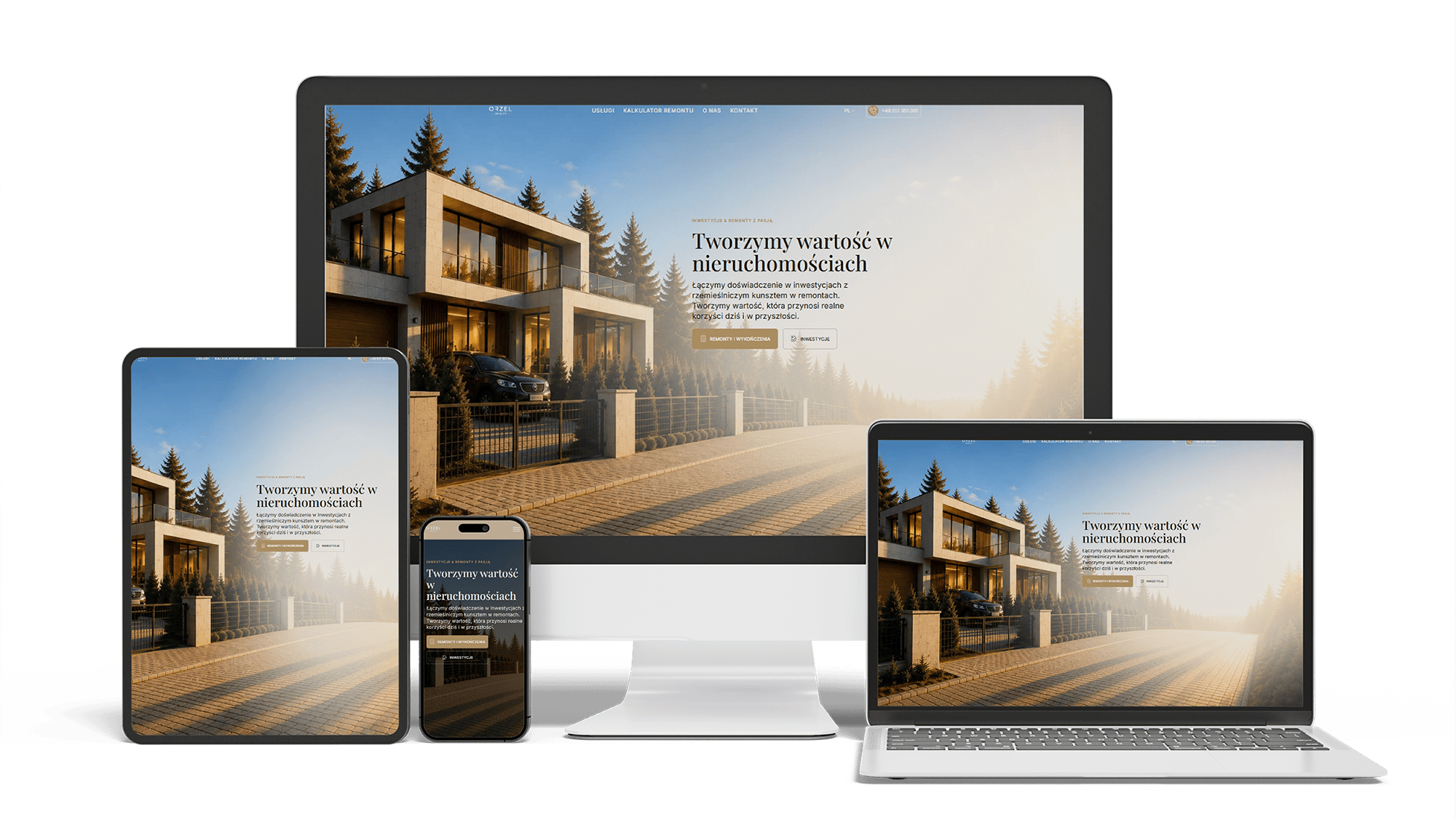
Renovation and investment website with a premium feel and 96/98/100/100 performance
96/98/100/100Design system2 languages
Full WordPress Rebuild for a Car Rim Restoration Company
92/91/96/100Photo quote formLocalBusiness markup
Architecture Website Rebuild and SEO
29× organic trafficLoads in under 1 sTop 3 in Poland
Auto Repair SEO & UX Boost
Performance 90++10% organic trafficLeads from forms
A multilingual landing page for a wheel and tyre storage business
100/95/100/1003 languagesClient edits it
Get a quote for your carpentry website
Within one business day you get the pages I would build for your shop, the fields your quote request would ask for, and a fixed price.
Carpentry website design is the service I offer carpenters, cabinet makers and joinery workshops: I plan, design and build the whole site myself, so there is no hand-off between a designer and a developer, and the price is agreed before the start. A carpentry services website sells something hard to sell online — a custom job worth thousands, made to measure, which the client cannot see until it is installed. The site has to replace the showroom, the first conversation and part of the estimate.
A website for carpenters covers businesses that sell very different things. A finish carpenter working alone sells trim, crown molding and doors to homeowners and remodelers. A cabinet shop with a CNC router sells kitchens and closets. A joinery workshop builds windows, doors and stairs. A deck builder works outdoors from spring to fall. What they share is a buyer who compares two or three shops over weeks, looks at past work many times and wants to know the price range before inviting anyone to measure.
So the site is built around proof of work and a request that carries real data. If most of your jobs are small repairs, the handyman website design page fits better; if you build or renovate whole houses as a general contractor, see the construction company website page.
The gallery is the page clients return to most, and a single wall of photos does not help them. Projects are grouped the way people shop:
- kitchens and kitchen islands
- built-in wardrobes, closets, media walls and bookcases
- stairs, railings and landings
- interior doors, trim and wainscoting
- decks, pergolas and outdoor structures
- custom furniture: tables, beds, desks
- commercial fit-outs for restaurants, offices and shops
Each project has its own page: the room, the wood and finish, the hardware, how long it took and a short note on the problem it solved, such as a closet under a sloped ceiling. Photos from the workshop — joints, glue-ups, a finish being sprayed — show the craft that a finished kitchen hides. You add a project from your phone in a few minutes, and the photos are compressed on upload so the gallery stays fast.
Clients ask the same questions before every custom job: solid oak or veneer, plywood or MDF boxes, oil or lacquer, painted or stained. A short materials page answers them once and explains why your quote differs from a flat-pack kitchen. It covers:
- the species you work with, each with a photo of a real piece, not a stock sample
- solid wood, veneer, plywood and MDF — where you use each and why
- finishes and how they age, with care instructions
- hardware: hinges, drawer runners and soft-close options
Every project page links back to the materials it used, so a client who likes a walnut vanity can see what walnut costs relative to maple.
A good request saves a wasted measuring visit. The form asks what you would ask on the phone, in short steps:
- Type of work, chosen from your list.
- Rough dimensions — with a small diagram showing which walls or openings to measure.
- Photos of the room or the old staircase, taken on a phone.
- Drawings or plans from an architect or designer as PDF or image files, plus inspiration photos.
- Wood or finish preferences, a budget range picked from options, and the date the job must be done by.
The request reaches your email with every file attached, or a shared folder if files are large. You can reply with a ballpark figure, ask for one more measurement or book a measuring visit — and decline politely when the budget and the job do not match.
Custom work has no fixed price, but clients still need a range to decide whether to call. Each type of work gets a starting price in the unit you already quote in: cabinets per linear foot, stairs per step or per flight, decks per square foot, doors per unit. Next to it is a short line on what moves the number — species, finish, hardware, site access, installation height.
If you charge for measuring and drawings, or credit that fee against the order, the page says so. A starting price filters out the client who expected flat-pack prices and gives the rest a reason to send a request.
Clients hiring a carpenter for the first time do not know what happens between the first call and the finished room. A process section shows it:
- Measuring visit and a conversation about use, style and budget.
- Drawings or a 3D view, revised until approved.
- Deposit and material order.
- Building and finishing in the workshop.
- Installation, adjustment and cleanup.
Above the steps sits one line you edit yourself in the CMS: your current lead time, for example “Booking installs from March”. It answers the question asked in almost every call and sets expectations before the deposit.
For many shops, repeat work from the trade matters more than single homeowners. Builders, architects and interior designers look for something different: whether you work from their drawings, produce shop drawings, meet a schedule and send an insurance certificate without being asked twice. A separate trade page answers that:
- the work you take for the trade — millwork, built-ins, stairs, commercial fit-outs
- drawing formats you accept and how you handle revisions
- capacity, typical lead times and the area you install in
- a trade enquiry form with a drawing upload and the project schedule
ScanM2, a 3D laser scanning and BIM company, sells to the same architects and builders; after I moved its site off a no-code builder, it gets leads every week.
Rules differ across the US: in many states and cities, cabinet installation or deck building counts as contractor work and needs a license above a certain job value. The site states the license number where one applies, general liability and workers’ comp if you carry them, and your warranty on workmanship — as text, so it can be checked. Reviews from Google sit next to the request button and name the job: “walk-in closet in white oak”, not just five stars.
Homeowners search for “carpenter near me”, “custom cabinets” plus the town, or “stair builder” and choose from the map. If clients may visit, the Google Business Profile shows the workshop address and opening hours; if you only install on site, it is set up as a service-area business with the towns listed. The website supports the profile with a page for each main type of work and the same name, phone and address everywhere.
The basic setup comes with the full site; ongoing work on the map and reviews is on the local SEO services page.
Searches for carpentry website templates, ideas and examples bring up galleries of handsome screens, and a template is a fair start for a new shop: online in a weekend, a few photos, a phone number. The limits show when the portfolio grows. Templates have one gallery for everything, a three-field contact form with no file upload, no place for prices per unit or a trade page, and the site disappears if you stop paying the builder.
A custom site is built around your types of work and your request form, usually on WordPress, and the domain, code and content stay yours. How I build on it is on the WordPress development page.
What the best carpentry websites have in common
They show real projects sorted by type, say where the shop works, give a price range and make sending measurements easy. Fonts and colors matter less than whether a client finds a staircase like theirs in two taps.
People now ask ChatGPT or Google’s AI Overviews who builds custom kitchens or oak stairs nearby and what that costs. The assistant answers from text it can parse. Types of work, wood species, starting prices, lead time, install area and license details sit in the page code as plain text rather than inside photos or a gallery script, and the business and its services get structured data.
Being named in those answers over time is a separate job; I describe it on the AI SEO and GEO optimization page.
Design is part of the build price, not a separate invoice.
- A simple carpentry website — home, types of work with starting prices, a gallery, about, a request form: 700–1,400 €.
- A carpentry website with project pages by type of work, a materials page, a quote request with measurements and drawings, a trade page and local SEO setup: from 2,000 €.
The work runs from brief and page list, through phone-first design, to build and launch; details are on the website development page, and all my prices are on the pricing page.
Carpentry website design: frequently asked questions
Order carpentry website design: what to send me
Send your shop name, a link to your Instagram, Google profile or current site, the types of work you take with rough starting prices, the area you install in, whether clients visit the workshop and whether you work for builders or designers. Ten photos of finished jobs help me plan the gallery. I will reply with a page list and a fixed price. Use the form above or write on WhatsApp.
