


Therapist Website Design for Private Practices
I design and build therapist websites for psychologists, counselors and private practices: a calm design for anxious visitors, a clear path from the first page to a consultation request, privacy-safe forms and an editor you can use without breaking the site.
- Design + build, one price
- From 700 €
- Reply within one business day
What you get with therapist website design
- A calm design built around youYour photo, your room, no stock faces or pop-ups
- A first message that feels small“What happens if I write” in four short steps
- Forms that ask for littleNo symptoms in plain email, analytics after consent
- An editor with guard railsWording warnings, locked addresses, protected pages
- Your blog moved without lossesEvery old URL redirected to its new page
- Readable by Google and ChatGPTFacts as text and structured data
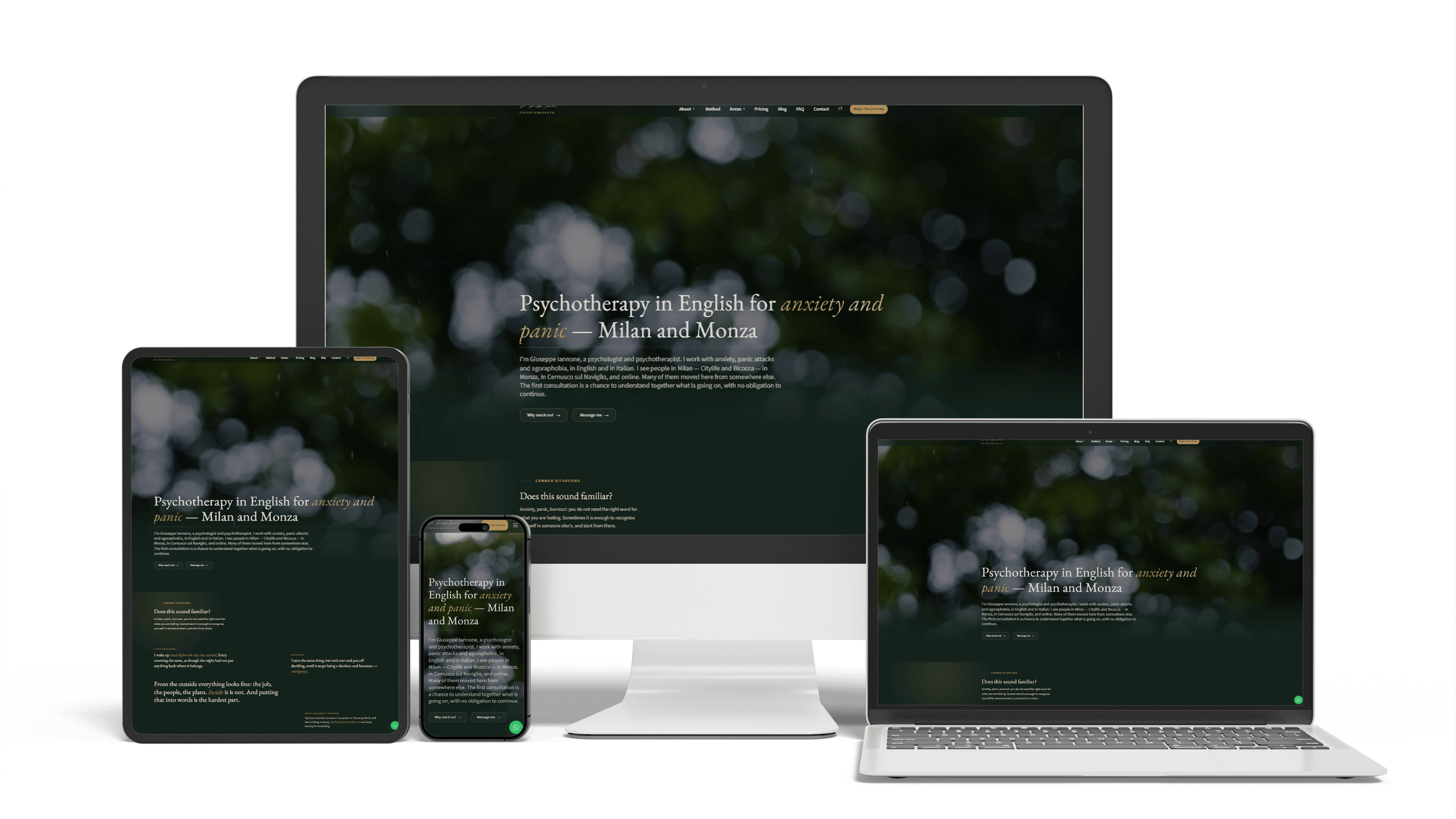
Bilingual psychotherapist website in Italy
468 of 468 posts moved2 languagesSeen in ChatGPT answers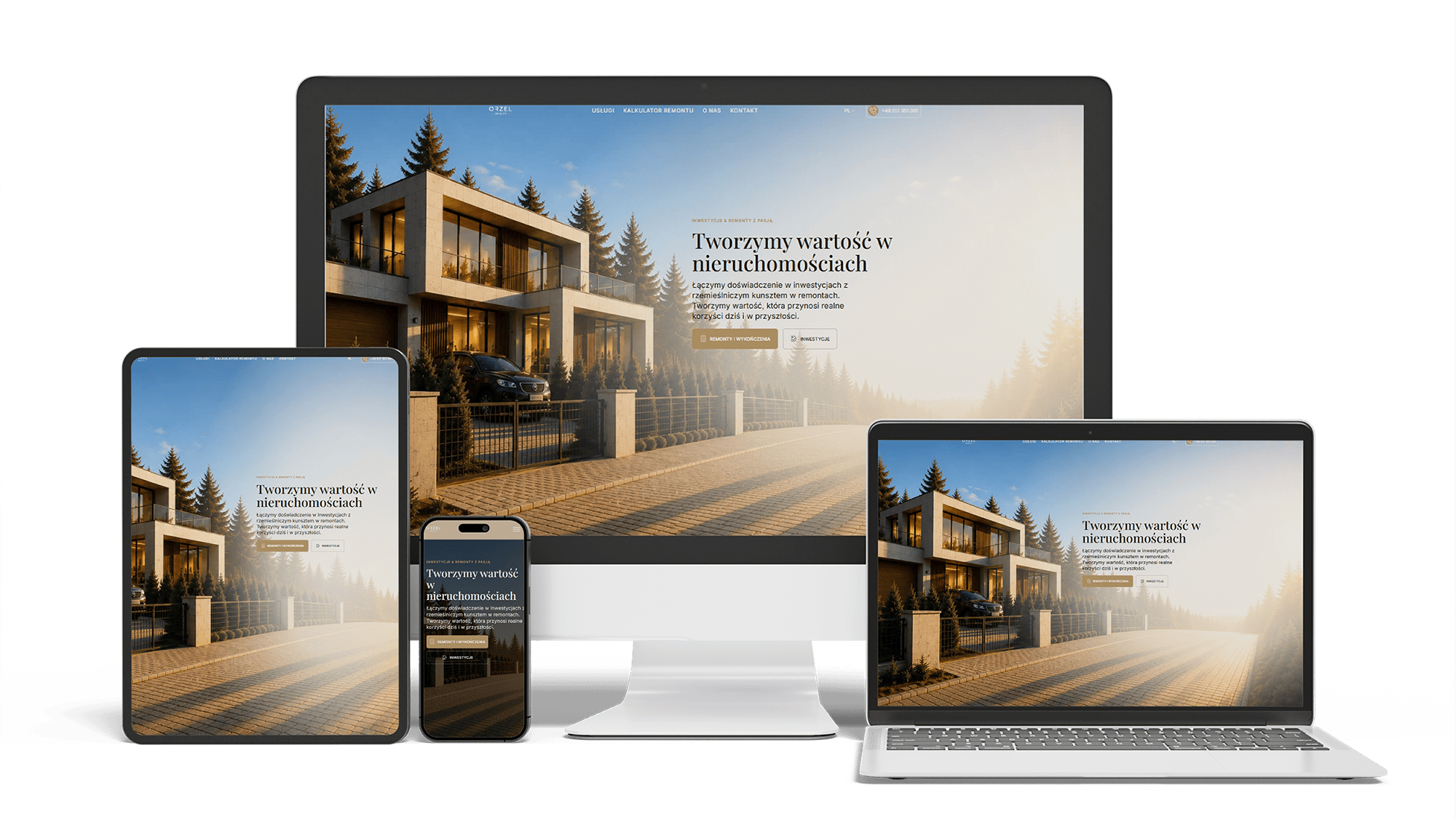
Renovation and investment website with a premium feel and 96/98/100/100 performance
96/98/100/100Design system2 languages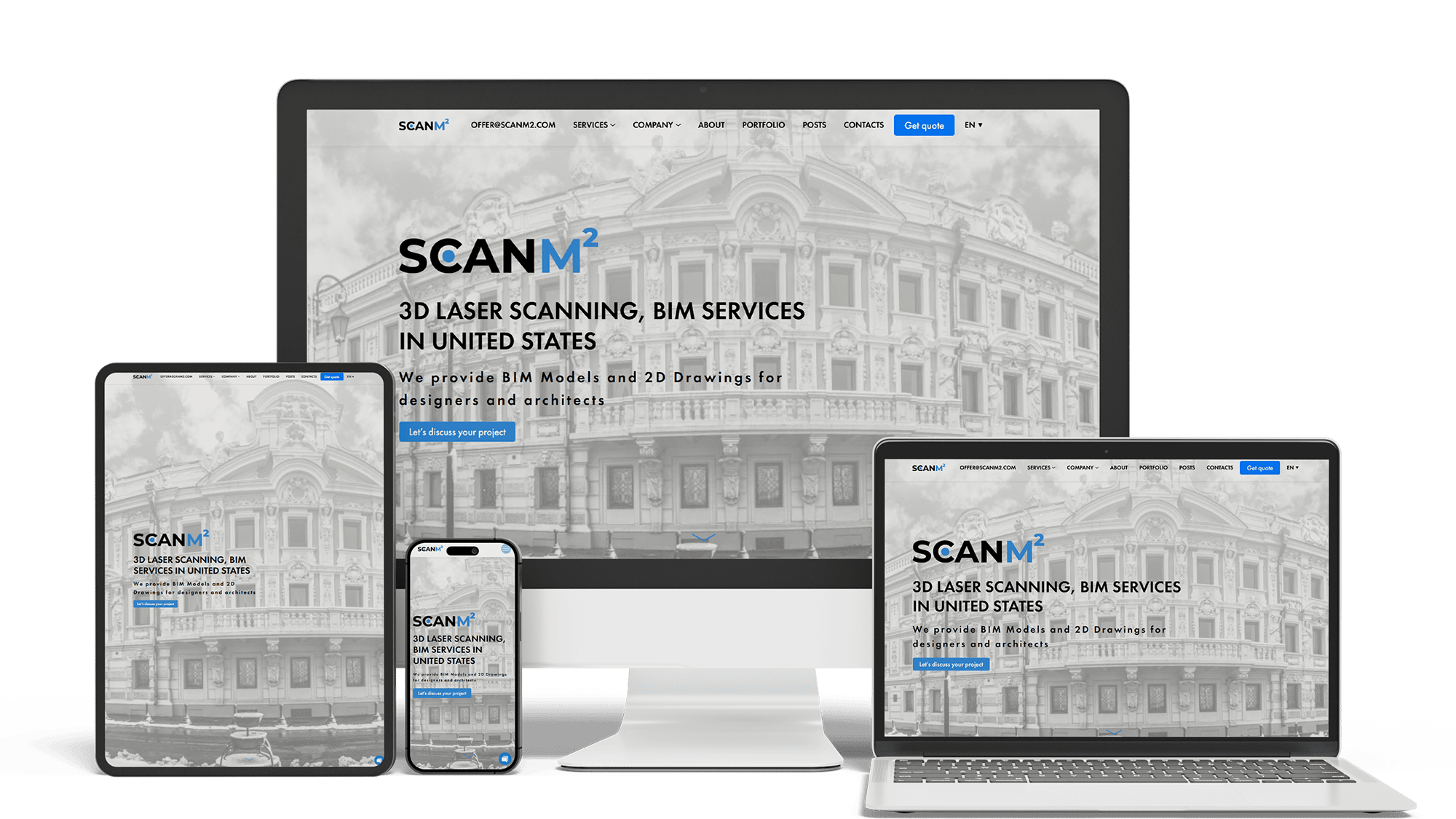
Architecture Website Rebuild and SEO
29× organic trafficLoads in under 1 sTop 3 in Poland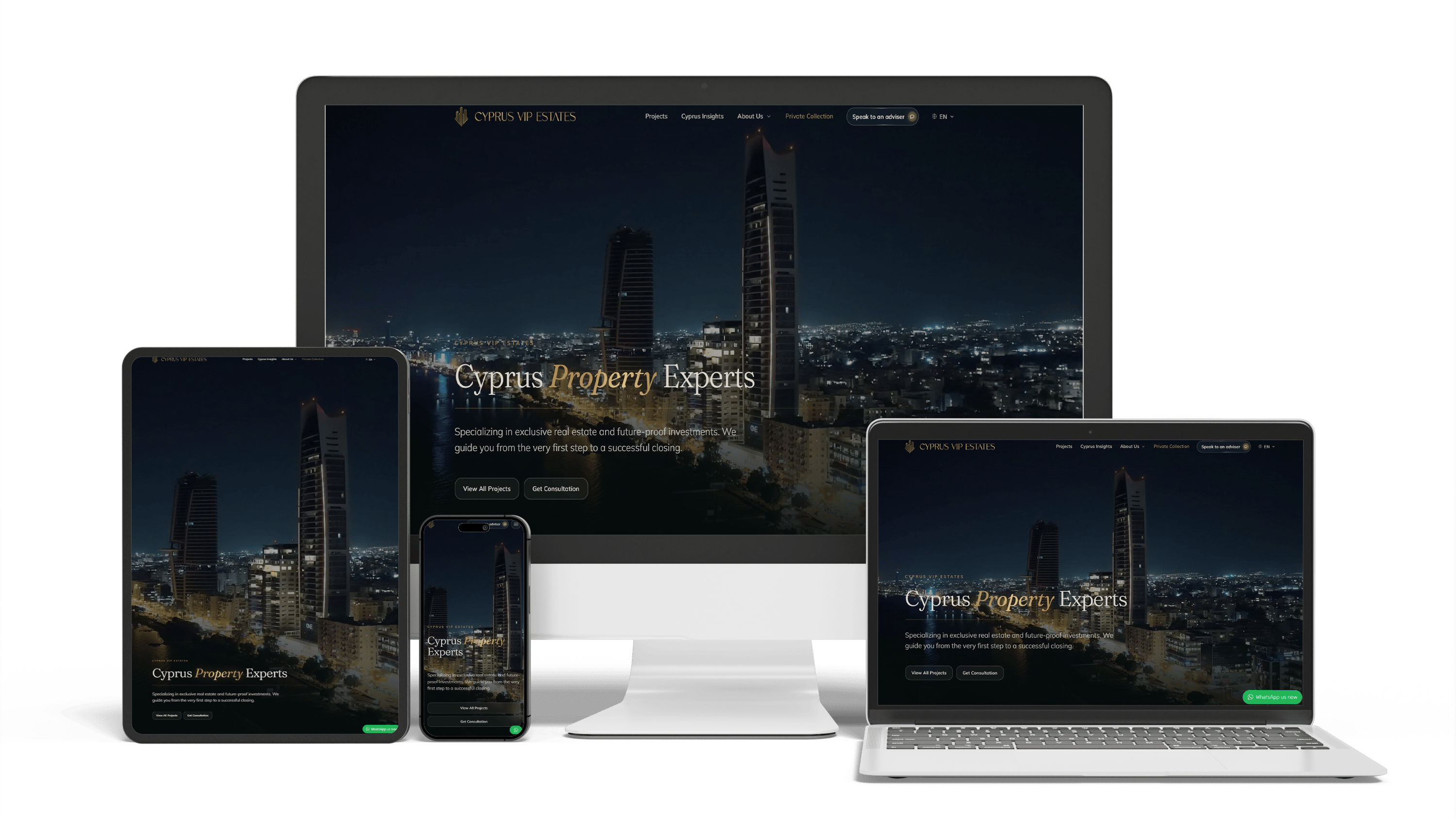
Multilingual real estate platform in Cyprus: SEO and GEO without bought links
16× faster editingTraffic from ChatGPTLeads via WhatsApp
Full WordPress Rebuild for a Car Rim Restoration Company
92/91/96/100Photo quote formLocalBusiness markup
Get a quote for your therapist website
I reply within one business day with a proposed home page and contact path for your practice, and a fixed price.
I design and build therapist websites for psychologists, counselors, marriage and family therapists and small group practices — design, code and launch by one person, at one price. A private practice website is read by someone who is not sure they are ready to ask for help. Its job is to make the next step feel small: see who you are, recognize their own problem in your words and send a short message.
Many visitors arrive late in the evening, on a phone, after weeks of hesitating. A busy page makes them close the tab. What I leave out: pop-ups asking for an email, chat bubbles, sliders, stock photos of people holding their heads, red buttons. What I put in: wide margins, a muted palette, type large enough to read without zooming, real photos of you and your room, and one accent color kept for the button that starts contact.
For Giuseppe, a psychologist and psychotherapist in Milan who works with anxiety and panic attacks, I made a custom calm design: a dark theme with light sections, a serif typeface with a true italic for quieter emphasis, and only open-licensed resources. It does not look like a template because it is not one.
Before scrolling, a visitor should know four things:
- who you help, in their words — “Therapy for anxiety and panic attacks in Portland and online”, not “A safe space to grow”
- whether you see clients in person, by video or both
- whether you are taking new clients
- the fee or insurance in one line, next to the button to get in touch
Your photo belongs near the top. People choose a therapist more than a practice, and a natural portrait in your own office tells them more than any headline.
The step people fear most is the first message. A short “what happens if I write” section on the contact page and the home page removes the guesswork:
- You write a few lines: your name, how to reach you, in person or online.
- You get a reply within the time stated on the page.
- A short call to see whether we are a good fit.
- The first session, with the fee and the cancellation policy known in advance.
Booking link or contact form? A scheduler from your practice-management system, such as SimplePractice, or a tool like Calendly suits therapists who offer a bookable consultation slot. Many prefer a short message first, so they can check fit before anything is scheduled. The site can offer both, with one of them clearly the main path.
A message to a therapist often says more than the sender meant to share. The form asks for little — a name, an email or phone, in person or online, a convenient time — with a line asking people not to describe symptoms. Where a real intake form is needed, it runs through a provider that signs a business associate agreement, as HIPAA can require in the US, not through ordinary email.
The rest is plumbing visitors never see. Giuseppe’s contact form sends through mail on his own domain with SPF, DKIM and DMARC records in place, so replies do not land in spam, and analytics starts only after consent. About five years ago I worked on a medical system built around patient records, under NDA; what stayed with me is to collect only what the site cannot do without. Your compliance adviser confirms the setup.
Builders such as Wix and Squarespace and therapy-website vendors sell calm templates for a monthly fee. For a solo therapist with one office, no blog history and a handful of pages, that is often enough, and I will tell you so.
A custom site pays off when the practice outgrows the template: several clinicians or offices, a second language, a blog that already brings visits, wording rules you want enforced, or plans for many specialty pages. Before choosing any vendor, ask whether you can take your pages, posts and addresses with you when you leave.
Beyond the home page, most private practice websites need the same small set of pages, each with one job and one button to get in touch:
- an about page in the first person: license, training, how a session with you feels
- specialty pages built from one template, so each reads and looks alike
- a fees page: session length and price, insurance or superbills, cancellation policy
- an FAQ with what people ask on the first call
- a contact page with a map when you see clients in person
Giuseppe’s site has a map of his consulting rooms in Milan, Monza and Cernusco sul Naviglio, so each client sees at once which room is nearest and how to get there.
If you work by video, a separate page explains how it goes: the platform, what to prepare, a quiet room, how payment works and where you can legally see clients. For clients in other time zones, session times are shown in their local time, not only in yours. Giuseppe works with Italians living abroad; his site is Italian first, with an English version under /en where every URL is translated rather than copied.
Many therapists have written for years on WordPress, and those posts carry their search history. On Giuseppe’s site I moved all 468 blog posts from WordPress to Next.js 16, with Sanity as the editor, and set 301 redirects from every old URL to its new address, so links and positions follow the posts. The new site also got seven pillar pages, 21 Italian subtopic pages and pages for Milan, Monza and online therapy. It took 44 working days from the first line of code to handover.
Before any move I list every existing address, match it to a new page, carry over titles and structured data, and check after launch that nothing returns an error. The same process is described on the website redesign page.
After launch you edit the site yourself, often late and in a hurry, so the editor should make mistakes hard. In Giuseppe’s CMS the editor warns him when a text contains wording Italian rules on advertising health services make risky: promised outcomes, patient testimonials, discounts, “free consultation”. Key pages cannot be deleted, and the address of a published page is locked, so fixing a typo cannot break links. He received an owner’s manual in English (69 pages) and Italian (71 pages), plus video walkthroughs.
For a US practice, the list of warnings comes from your own ethics code and board: “guaranteed”, “cure”, client quotes, claims about results. You decide the list; the editor reminds you of it every time you publish.
Assistants can only describe a practice whose facts they can read. The build takes care of that: pages delivered as text by the server, not assembled by scripts after loading; structured data for the practitioner, the practice, the conditions, therapies and services, and the Q&A; and explicit robots.txt rules saying which AI crawlers may read the site. Giuseppe’s new pages already appear in ChatGPT answers, and he found me by asking ChatGPT himself.
Being found over time — niche pages, local search, directories, assistants — is ongoing work described on SEO for therapists and on the AI SEO and GEO optimization page.
There is no separate design fee: one price covers designing and building the site.
- A simple therapist website — home, about, a few specialty pages, fees, contact: 700–1,400 €.
- A private practice website with several clinicians or offices, online therapy pages, language versions, blog migration with redirects and a CMS with guard rails: from 2,000 €.
Clinics and doctors’ practices have their own page on medical website design; how I build sites in general is on website development. All prices are on the pricing page.
Therapist website design: frequently asked questions
Order a therapist website: what to send me
Send your current site or a short description of the practice, your license and specialties, whether you see clients in person, online or both, how you want people to contact you, and a few photos of you and your office if you have them. I will reply with a proposed first screen and contact path and a fixed price. Use the form above or write on WhatsApp.