


Interior Designer Website Design
Interior designer website design and build from one person: a portfolio of large photos that still opens fast on a phone, project pages that explain the brief and the solution, a clear page about your services and fees, and an inquiry form that asks what you ask on a discovery call.
- Design + build, one price
- From 700 €
- Portfolio that opens fast
What you get with interior designer website design
- Large project photos that open fastResized per screen, sharp on a big monitor
- A page for every projectBrief, constraints, solution and credits
- Services and how you chargeFlat fee, hourly or per square foot, in your words
- An inquiry form that qualifiesScope, location, timeline and budget range
- Your city and service area as textOn-site projects nearby, e-design anywhere
- Readable by Google and AI assistantsName, style, services and areas on the page
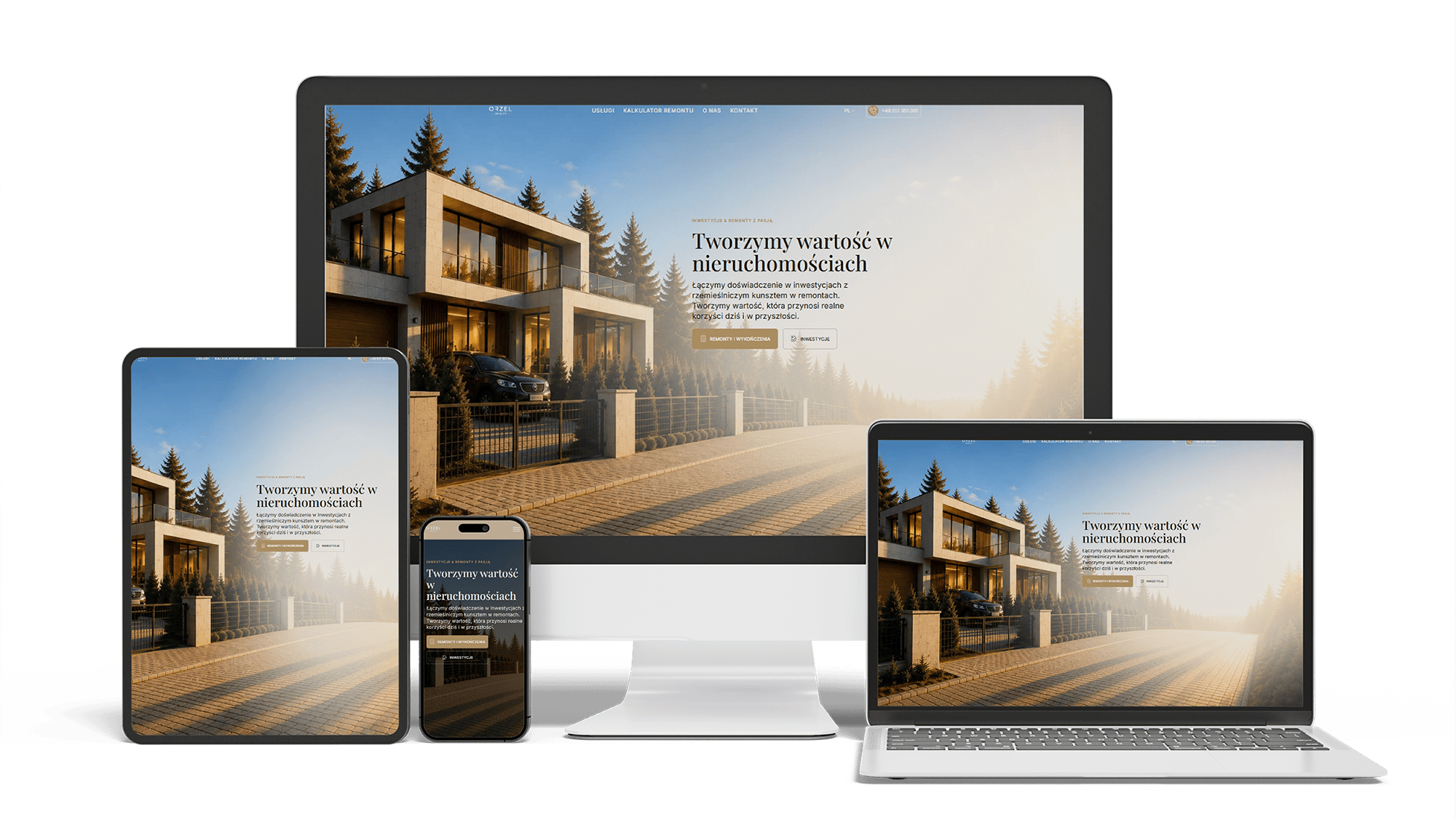
Renovation and investment website with a premium feel and 96/98/100/100 performance
96/98/100/100Design system2 languages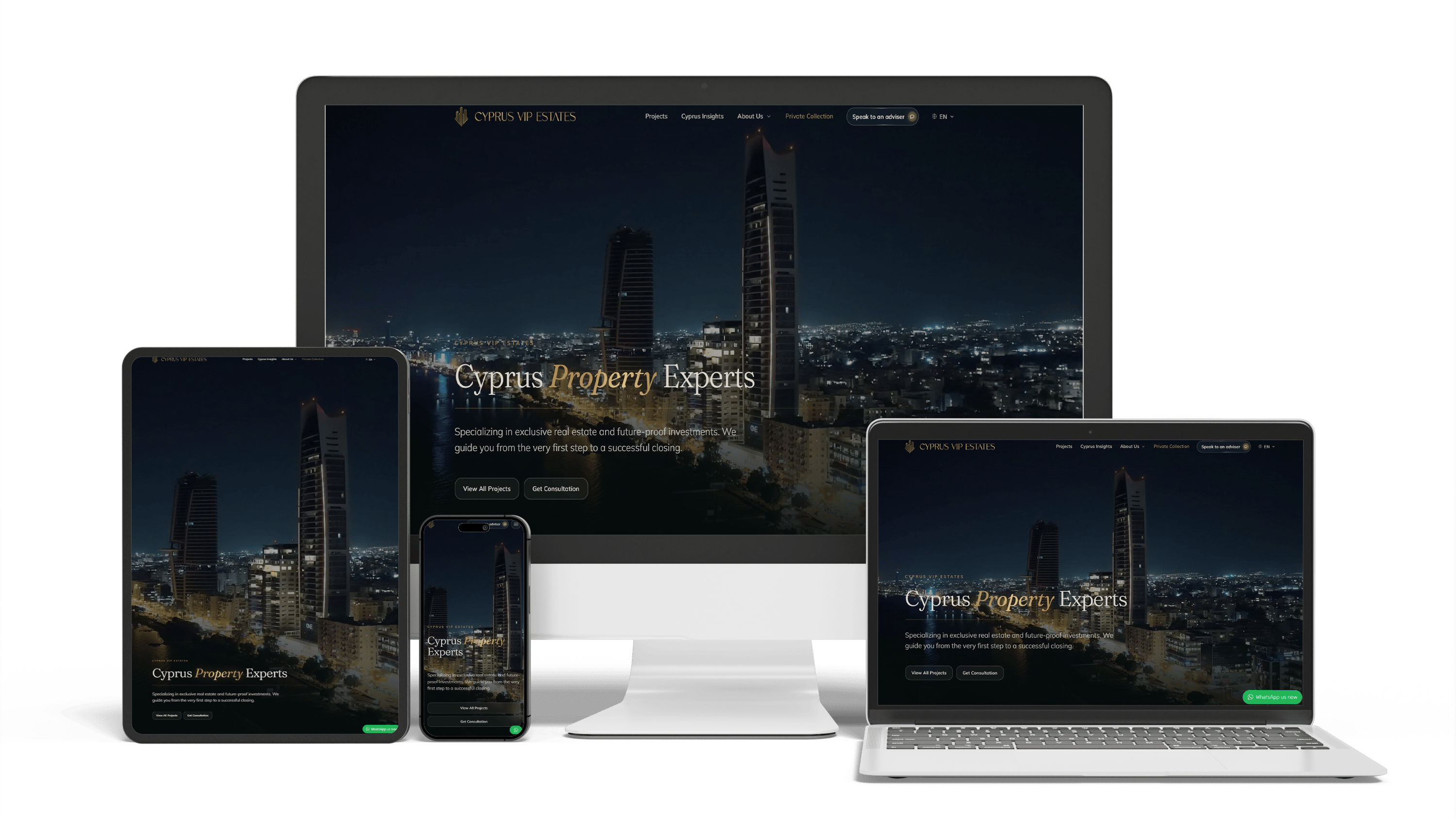
Multilingual real estate platform in Cyprus: SEO and GEO without bought links
16× faster editingTraffic from ChatGPTLeads via WhatsApp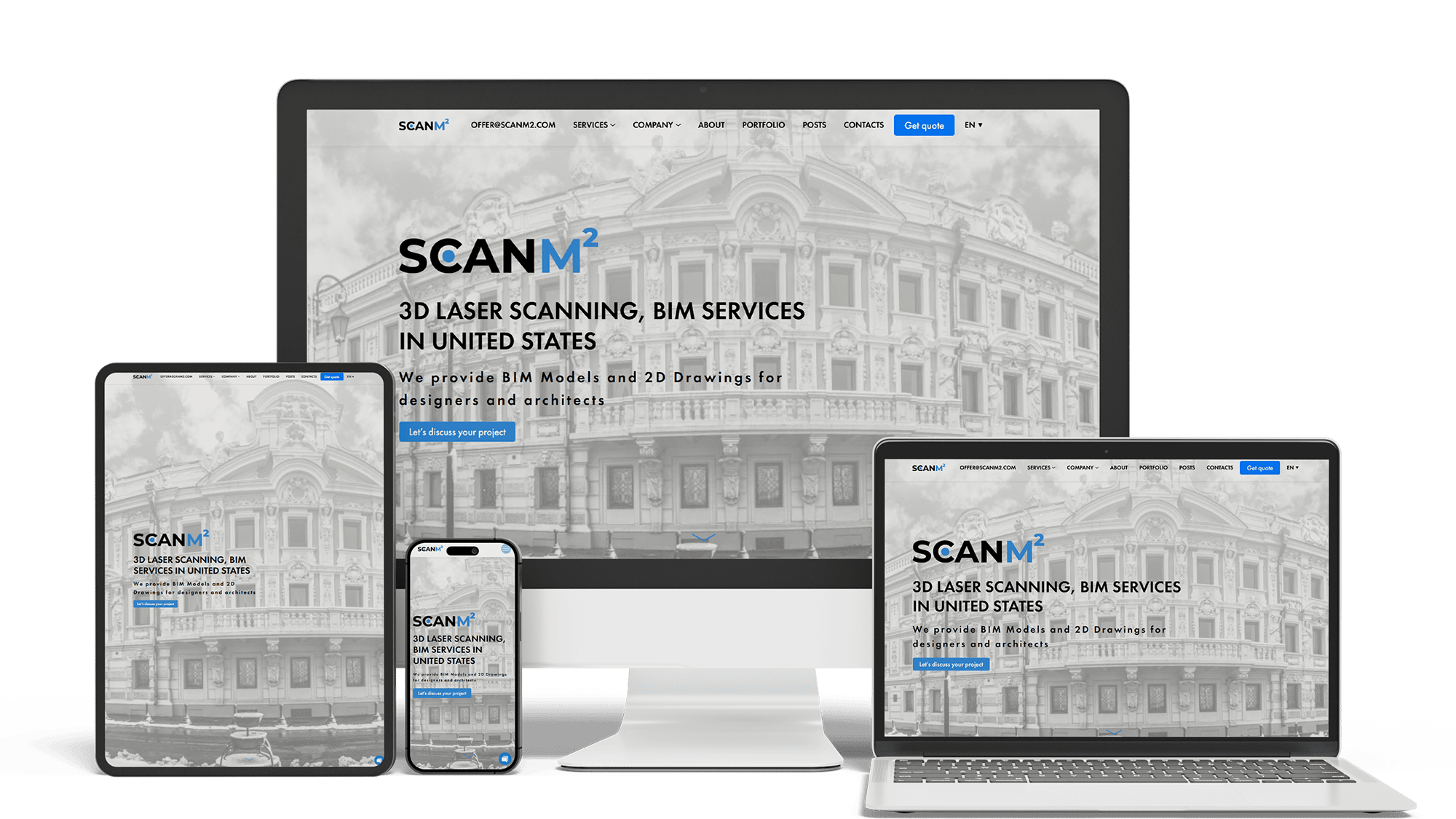
Architecture Website Rebuild and SEO
29× organic trafficLoads in under 1 sTop 3 in Poland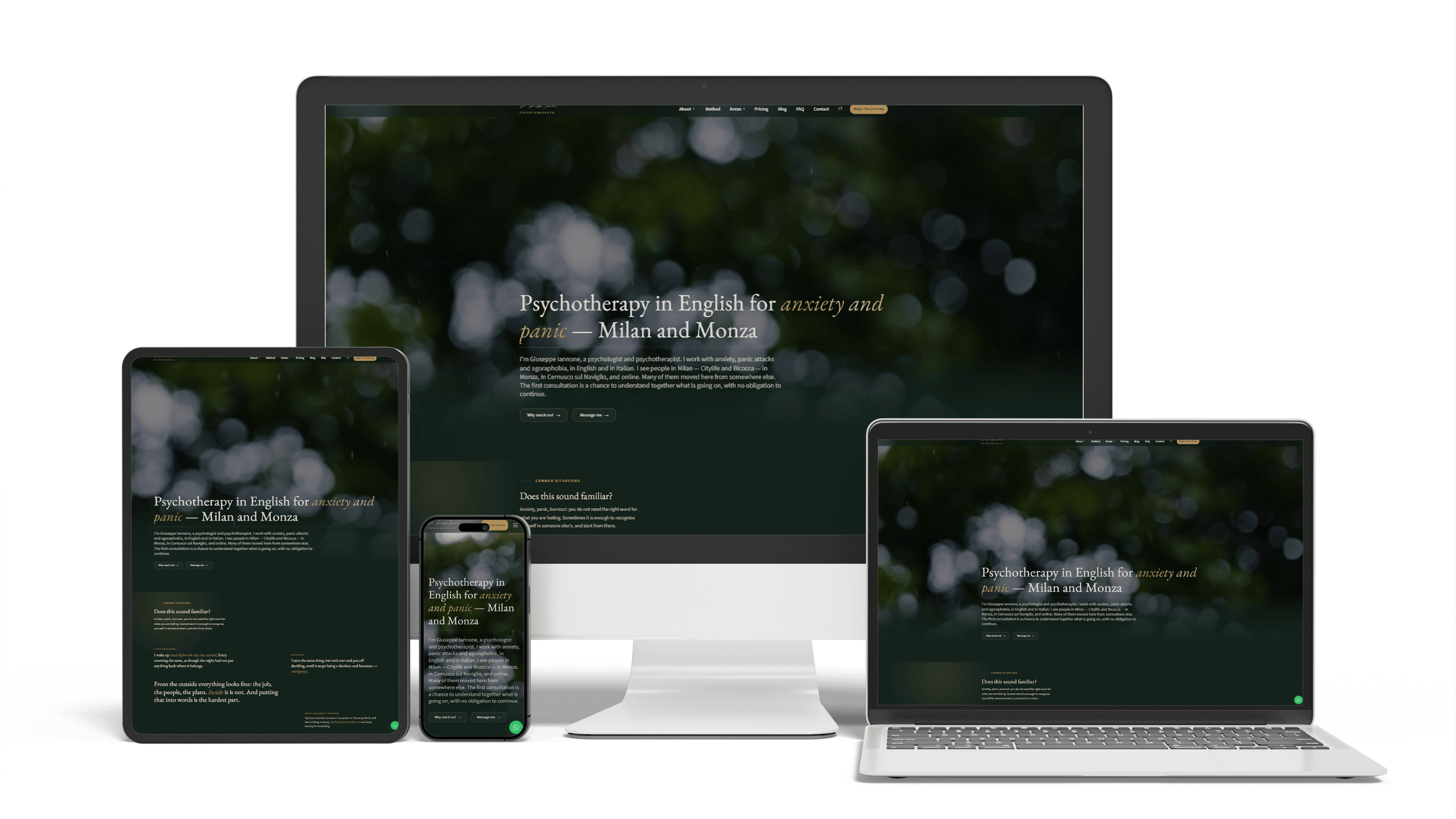
Bilingual psychotherapist website in Italy
468 of 468 posts moved2 languagesSeen in ChatGPT answers
Full Multilingual Website Development & SEO for Student Services
+5,930 clicks in 6 months359k impressionsTeam edits it
Get a quote for your interior designer website
Within one business day you get a page plan — home, portfolio, project pages, services — and a fixed price.
I do interior designer website design and build the site myself, for solo designers and small studios, so the person who lays out your portfolio is the person who writes the code and launches it. Instagram and Houzz show your rooms; your own website is where a homeowner who already likes the pictures learns how you work, what a project with you involves and how to start one.
A homeowner who heard your name from a friend, saw a feature in a magazine or followed you on Instagram usually opens your site in the evening, on a phone, with one question: is this designer right for my project? The home page answers it in this order:
- your work — one large photo of a finished room rather than a slideshow of twelve
- who you are and where — “Interior design studio in Austin, residential and boutique hospitality” as one line of text
- what you take on — whole homes, single rooms, new builds, renovations, e-design
- how to start — a “Start a project” button that leads to the inquiry form, plus your phone and email
A home page with only a logo and a full-screen video wins attention in design galleries, but a visitor on a phone is left guessing which of those four answers applies to them.
Interior design is sold on photographs, and a professional shoot arrives as large high-resolution files. Placed on a page unchanged, they make the portfolio crawl on mobile data, and the visitor leaves before the second image. The build carries the weight so you keep the quality:
- every photo cut into several widths and served as WebP or AVIF: a phone gets a small file, a large monitor gets a sharp one
- the first image of each project appears at once, the rest load as the visitor scrolls
- galleries that open full screen and swipe, instead of a slider that hides images behind arrows
- a portfolio overview filtered by project type — kitchens, whole homes, primary suites, commercial — instead of one endless grid
Photo credits and usage rights get a fixed place too: the photographer’s name under each project, and only the images your agreement with the photographer allows on your site. Shots taken for a magazine feature may be held for the publication for a while, so check before they go into the portfolio.
A grid of beautiful rooms shows taste. A project page shows how you think, which is what a client paying a design fee wants to see. Each project page follows one structure:
- the brief in two or three sentences: the household in general terms, what did not work in the space, what they asked for
- the constraints: a narrow galley kitchen, a load-bearing wall, a rental where nothing can be drilled, a fixed budget or a move-in date
- the solution: layout changes, materials and finishes, custom pieces, where the budget went
- before photos or plans next to the finished rooms, where the clients agreed
- credits: architect, contractor, photographer, stylist
The story sits beside the images as page text, not lettered onto graphics, so a client, a search engine and an AI assistant can all read it.
Someone who has never hired a designer does not know whether you charge a flat design fee, an hourly rate, a fee per square foot or a percentage of the project, and some leave because they assume the worst. A services page removes the guess without forcing you to publish numbers:
- each service as its own block: full-service design, consultation, single-room design, e-design, purchasing and procurement
- what each one includes — concept boards, floor plans, 3D renderings, specifications, site visits, contractor coordination
- how you charge, in your words, with a starting point or a minimum project size if you choose to show one
- the steps from the first call to installation day
A stated minimum turns away projects that would not fit before anyone spends an hour on a call. Whether you publish it is your decision; the page has a place for it either way.
E-design lets you work with clients outside your city: they send measurements and photos, you send a design board, a floor plan and a shopping list. It needs its own page, apart from full-service work, because the buyer and the decision are different:
- a package price or a price per room, which suits a purchase made online
- a plain list of what the client receives and how many revisions are included
- what the client sends you — room measurements, photos, images they like — step by step
- online payment and booking, or a short form if you prefer to talk first
A plain contact form brings everything from a request to choose one paint color to a full renovation two states away. A project inquiry form asks what you would ask in the first five minutes of a call:
- the project type and the rooms involved
- the location, and whether it is a new build, a renovation or furnishing only
- the timeline and a budget range picked from options you set
- how they found you, so you see which channel sends the right clients
Inquiries go to your email or into the software you run the studio on — Studio Designer, Houzz Pro, Programa or a CRM — where your account accepts outside forms. Booking the discovery call can follow through Calendly or the calendar tool you already use.
Interior design website templates on Squarespace, Showit, Wix or WordPress are where most designers start, and for a new studio a template is a sensible choice.
When website templates for interior designers are enough
- you are starting out and a dozen good photos are the whole portfolio
- most clients come by referral and the site only confirms what they heard
- you like editing pages yourself in the builder
When a custom interior designer website pays off
- the portfolio has outgrown what the template’s gallery handles well on a phone
- you want project, service and e-design pages that keep bringing search traffic for years
- you work in two languages or for clients in other states and countries
- your brand should look like your rooms, not like a layout other studios in your city already use
The best website builder for interior designers is the one you will keep updating. If a template is that for you, keep it; a custom site makes sense once the template starts costing you projects.
“What is the best website for interior designers?” has two answers. For being discovered, Houzz and Instagram are where many homeowners browse, and it is wise to be on both. For being hired, your own site does what the platforms cannot: it holds the full story of each project, your process and your fees, and it does not change when an algorithm does. Profiles on the platforms then link to the matching project or service page on your site rather than the home page.
How those profiles and your project pages get found in Google is SEO work, described on the SEO for interior designers page.
A client hiring a designer for a whole home trusts you with a large budget and months of their daily life. The About page carries that trust:
- a portrait and a short story: training, years in practice, the kinds of homes you like to work on
- the team, if there is one, with each person’s role
- press as a list of publication names, dates and links to the articles, not just a row of magazine logos
- memberships and credentials such as ASID or NCIDQ certification, as text, where you hold them
- your service area: the city, neighborhoods and nearby towns where you take on-site projects
A Google Business Profile with the same name, area and services is set up as part of my local SEO services. Studios that also run their own renovation crews sell more like builders; the contractor website design page covers that.
Homeowners now ask ChatGPT, Perplexity and Google’s AI Overviews for “an interior designer in Charlotte who does warm modern homes” or “an e-design service for a small apartment”. An assistant can only suggest a studio it can read about. The site keeps your studio name, city, service area, project types, style in plain words, services and fee model as page text, matching your Google Business Profile and Houzz; project pages describe the work in sentences; LocalBusiness structured data ties these facts together, and press items carry their dates.
Getting your studio named in those answers takes ongoing work; see the AI SEO and GEO optimization page.
Design and development are one price:
- A simple interior designer website — home page, portfolio, a few project pages, services, About and an inquiry form: 700–1,400 €.
- A full site with project page designs, services and e-design pages, an inquiry flow into your studio software, a second language if needed and local SEO setup: from 2,000 €.
The domain and hosting are registered to you, and the code and content are yours at launch; afterwards you pay only for hosting and the domain. Ranges are on the pricing page, and my general build process is described on the website development page.
Interior designer website design: frequently asked questions
Order interior designer website design: what to send me
Send your studio name, your current website or Instagram, the city and areas where you take on-site projects, your services and how you charge, links to photo folders for the four to six projects you want to lead with, and two or three designer sites you like. You get back a list of pages and a fixed price. Use the form above or write on WhatsApp.
