


SEO for carpenters and joiners: how to be found for the work you want rather than the work you are offered
Carpentry is two businesses with one name. Site work is sold to contractors, fitted furniture to homeowners who search by room and by timber. One page cannot win both, and most carpentry sites try. Audit from €250.
- Pages by room and material
- Audit from €250
- Named by ChatGPT and AI search
What SEO for a carpentry business actually consists of
- Separate pages for site work and joineryContractors and homeowners search differently
- A page per piece of fitted furnitureWardrobes, kitchens, staircases, built-ins
- The room and the timber as search termsOak, walnut, alcove, loft, under-stairs
- The local pack and your Google profilePhotographs of finished work, hours, reviews
- Minimum project size on the pageFewer quotes, better ones
- Being named by AI assistants«Bespoke wardrobe maker in my city, oak, three-month lead»

Auto Repair SEO & UX Boost
Performance 90++10% organic trafficLeads from forms
A multilingual landing page for a wheel and tyre storage business
100/95/100/1003 languagesClient edits it
Full WordPress Rebuild for a Car Rim Restoration Company
92/91/96/100Photo quote formLocalBusiness markup
Renovation and investment website with a premium feel and 96/98/100/100 performance
96/98/100/100Design system2 languages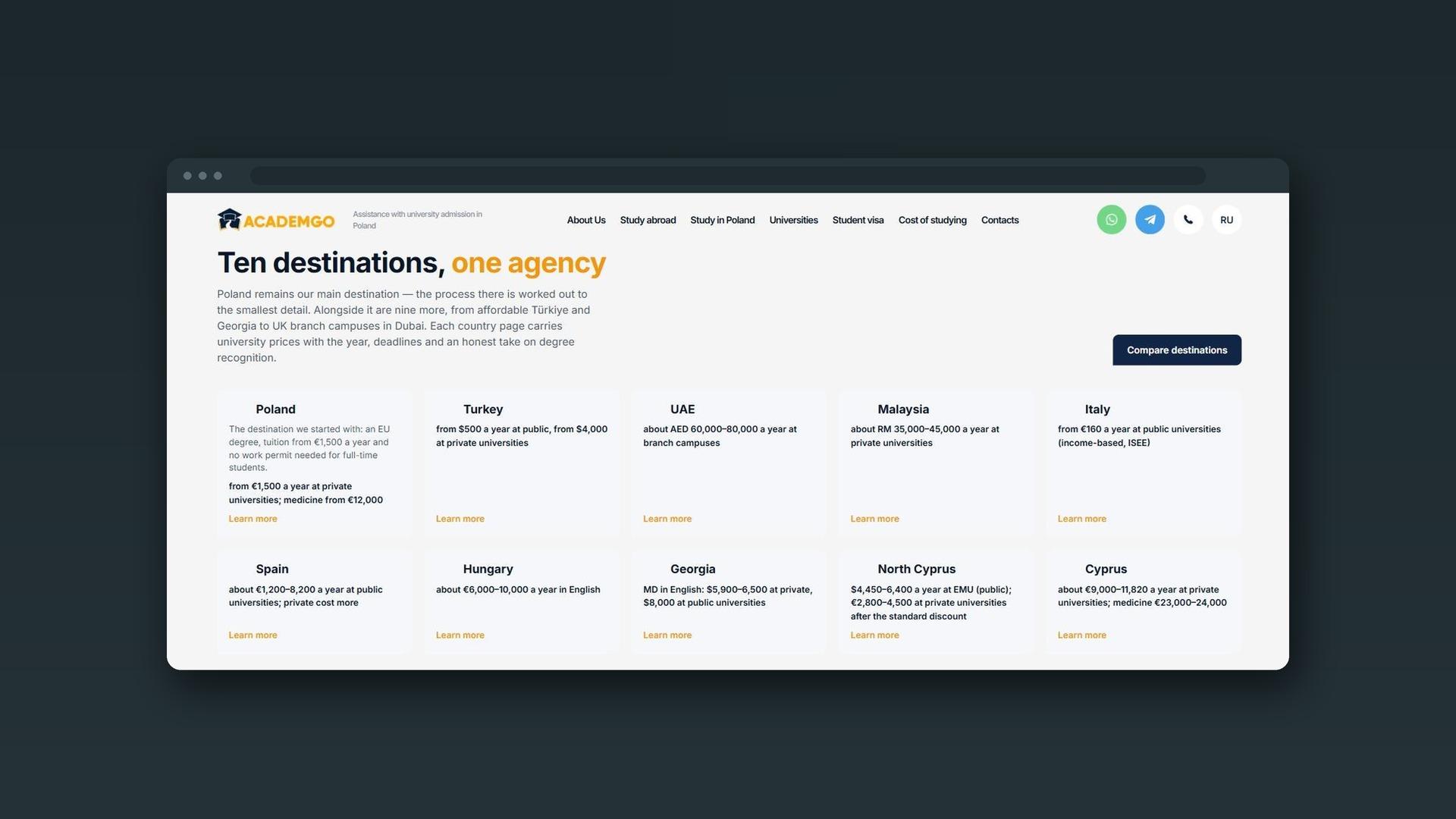
SEO case study: an education agency site, one country to ten
1 → 10 countries180 new pagesPerformance 61 → 91
I do SEO for carpenters and joinery shops myself: audit, the fixes in the code and the text, and a monthly report on enquiries.
A carpenter on a building site and a joiner in a workshop share a trade and almost nothing else commercially. Site carpentry is sold to contractors, developers and builders, who search for capacity, certification, day rates and whether you can start on the fourteenth. Workshop joinery is sold to homeowners, who search for a thing in a room — a wardrobe in an alcove, a kitchen, a staircase, shelving for a loft — and who compare photographs and lead times.
These two clients do not read the same page, do not use the same words, and do not decide on the same timescale. Most carpentry websites address both at once, which produces a home page saying «domestic and commercial carpentry, no job too small» — a sentence that answers no search anybody makes. The first decision in this work is which of the two you want more of, and then the site is built to say so.
- if you want contractors: capacity, insurance, certifications, day rates, references from sites;
- if you want homeowners: rooms, materials, photographs of finished work, lead time, price ranges;
- if you genuinely want both: two distinct sections, each written as though the other client did not exist;
- and in either case, name the trade the way your market names it — carpenter, joiner, cabinetmaker, furniture maker are not interchangeable in every country.
The valuable domestic searches are specific and they almost always name a room or a material: fitted wardrobes in a city, a bespoke kitchen, an under-stairs storage unit, alcove shelving, an oak staircase, a walnut dressing table. The person searching has a space in their house they have been looking at for two years, and they want to see that exact thing made by somebody nearby.
Most joinery sites answer this with a gallery. A gallery is images, and images are not readable: a search engine cannot see that the piece is oak, cannot tell it is a wardrobe rather than a cupboard, and does not know which room it is in. Every job type you want more of therefore needs a page that says what it is, in what material, at roughly what cost, with what lead time, and with the photographs attached to that text rather than floating in a grid.
Bespoke woodworking and furniture making as a separate line of work
Making furniture to order is adjacent to joinery and sells differently again. The buyer is not solving a storage problem; they want a specific object — a dining table of a certain length, a desk to fit a recess, a piece in a particular timber — and they are prepared to wait and to pay for the maker rather than the product. The searches are correspondingly narrow and low in volume, which is precisely why they are winnable: almost nobody writes a page about making a four-metre dining table in a specific timber.
If this is the part of the business you want to grow, it needs its own section with its own language — species, finishes, joinery methods, commission process, deposit terms — and it should not be filed under the same heading as fitting out a developer's apartments.
The most expensive thing in a carpentry business is quoting for work you would not have wanted. Measuring up, drawing, pricing and following up a job that was never going to happen costs days a month, and the usual cause is a site that invites everyone to get in touch without saying what the business does, what it costs from, or when it could start.
Publishing three facts fixes most of it: a minimum project size, a realistic range for the common jobs, and the current lead time. Fewer people will write. The ones who do will be describing jobs you want, with budgets that exist, and they will already know they are waiting until spring.
Where you want to be found by city, the groundwork is on the local SEO page. What the site itself should contain — galleries tied to job types, enquiry forms that collect room dimensions, material pages — is on the carpentry website design page, and if you want to know what is wrong before committing to anything, that is the SEO audit.
For a homeowner, the first screen is usually the map results: three businesses, their ratings, their photographs and their hours. A joinery business with no photographs of finished work on the profile loses to one with twenty, regardless of which makes better furniture, and a profile listing «carpenter» as the only service loses the search for fitted wardrobes to one that lists fitted wardrobes.
This is cheap work with a fast return, and it is usually where I start on a carpentry business, because it tends to move within weeks while the pages are still maturing. It also needs maintaining: photographs added as jobs finish, hours corrected before holidays, and replies to reviews written by the person who did the work rather than by an agency.
An SEO audit for your carpentry business
Send the site and I reply within one working day: what is holding it back and what I would do first.
Being named when a client asks ChatGPT for a joiner (GEO, AEO)
«Who makes bespoke fitted wardrobes near me, in oak, and what is the wait» is a question people now put to an assistant before opening a map, and it fits this trade well, because the client wants two or three names with reasons rather than a directory of forty. The assistant answers from text it can read, so the same things decide whether a workshop is named: job types and materials written as text rather than left in a gallery, a price range or minimum it can quote, a current lead time, and the same name, address and hours across the site, the Google profile and the trade directories.
Getting an existing site into a readable state is preparing a site for AI search, and if assistants describe the business wrongly — work you no longer take, a city you have left, a service you dropped years ago — that is fixing AI misinformation.
SEO for carpenters and joiners: frequently asked questions
Order an SEO audit for a carpentry or joinery business: what to send me
Send the site, say whether you want domestic or contract work, and list the job types you would take more of tomorrow. I reply within one working day with what is holding the site back, what your Google profile is missing, and what I would do first — including which job-type pages are not worth writing because nobody in your area searches for them.
