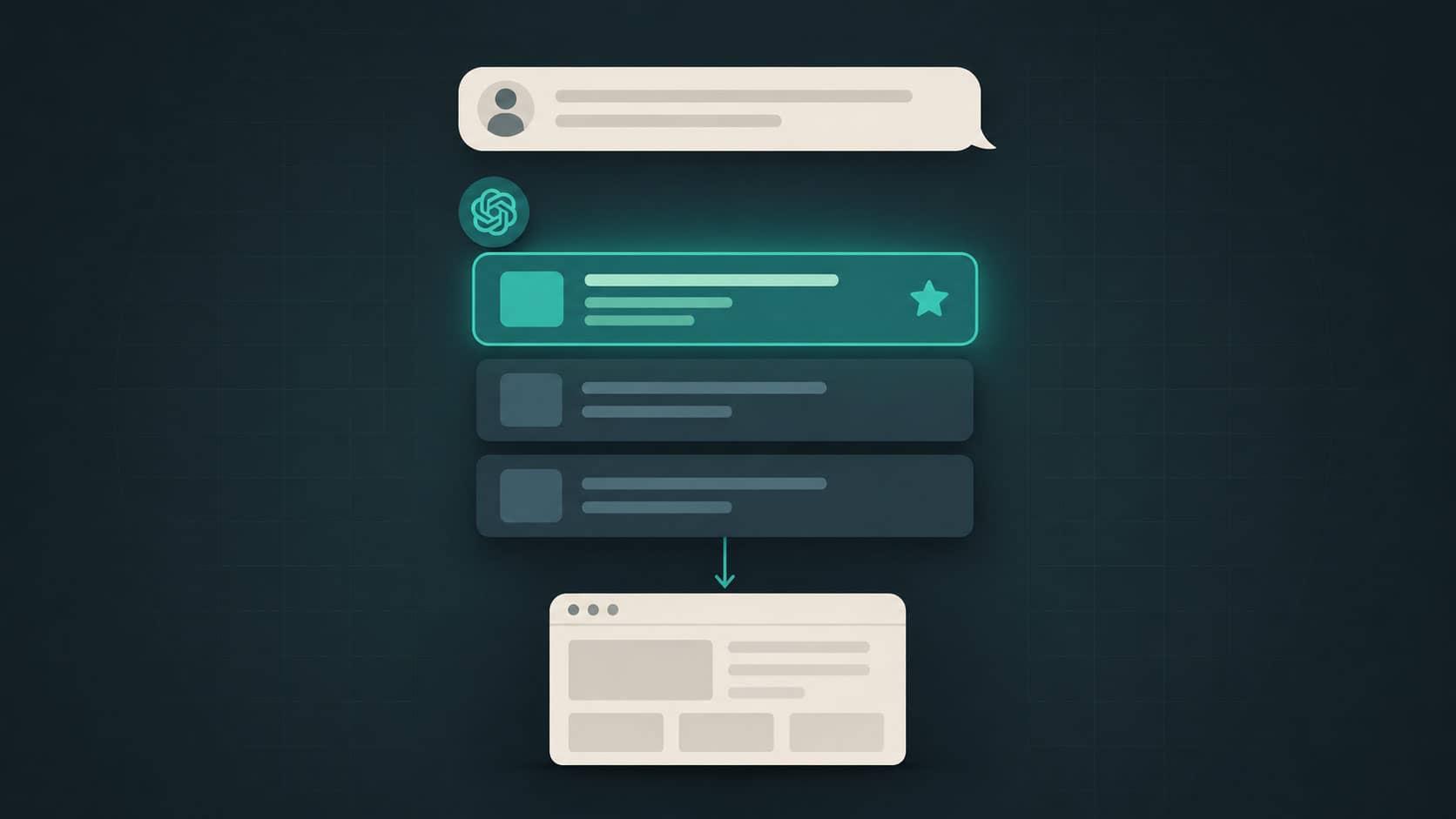


Quick answer: an assistant doesn't recommend the best businesses in a market — it recommends the ones whose specialisation it could confidently understand and corroborate elsewhere. In practice that comes down to four things: state plainly on your site who you are and who you serve; give those facts in machine-readable form through structured data; make sure the content is available without executing scripts; and earn confirmation from outside your own site. Plus a fifth almost nobody writes about — measuring with a fixed set of queries rather than one check a month.
A great deal has been written about optimising for AI search, and nearly all of it concerns your website. That's half the work. The second half is that the assistant verifies your claims against other sources, and the third — which almost nobody covers — is measurement: without it you can't tell a result from a coincidence.
Below is a practical guide: what to check now, what to implement, what to avoid, and how to know whether it's working.
The mechanics themselves — how people search through an assistant and why some sites make it into the answers — I've covered separately; here I'm focusing on the actions.
How to check what ChatGPT and other assistants know about your business
Start with a baseline, or there'll be nothing to compare against.
Build a set of ten to twenty real client questions. Not "best company in my field", but what people actually ask: with the situation, the city, the task, the constraints described. Mix the types: questions about the service category, about the problem, about the region, and about your own name.
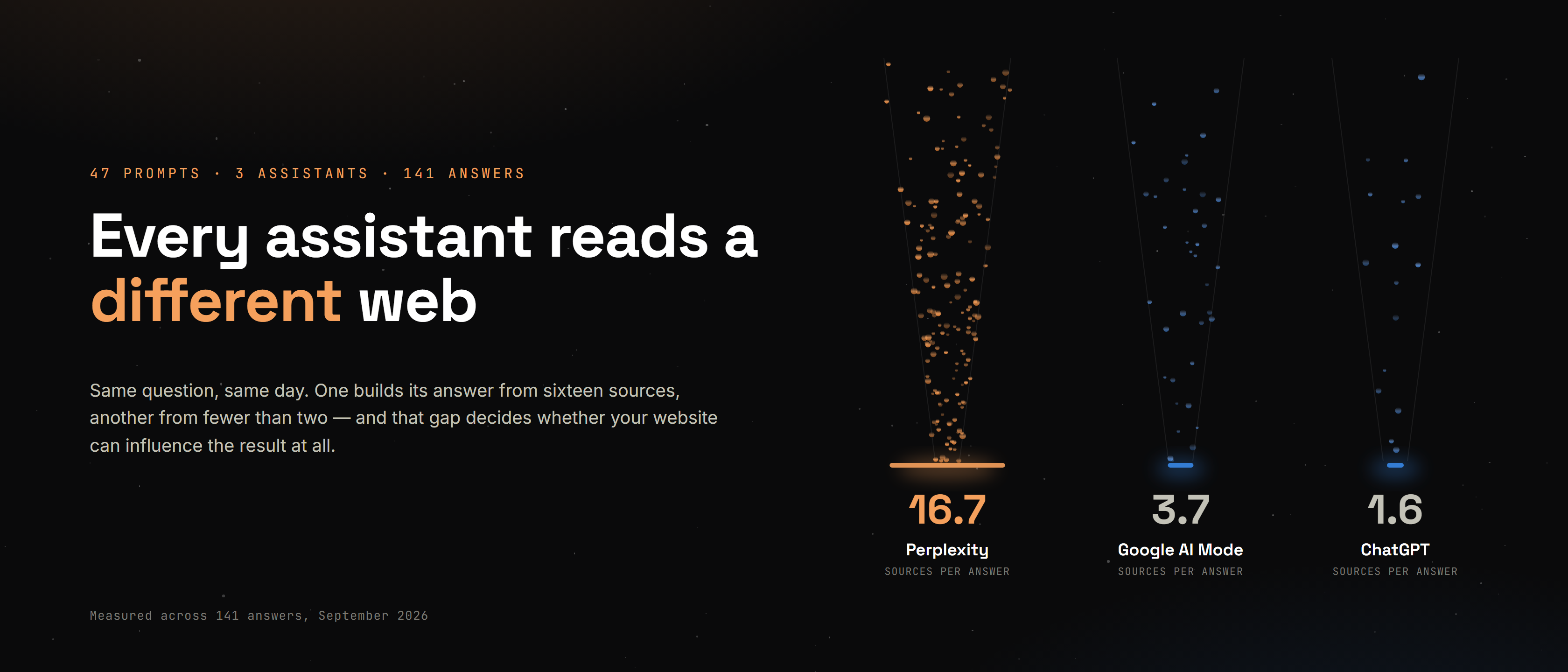
Run the set in a clean private session across several assistants separately. ChatGPT, Perplexity and Google's AI answers give different results because they draw on different sources: presence in one doesn't imply presence in another.
Log five things per query: whether you were named, who else was named, how you were described, which sources the assistant cited, and what it said about your field along the way.
Ask about your company by name separately. That question usually surfaces inaccuracies: the wrong specialisation, outdated services, the wrong geography. Those can be corrected by fixing data on your site and in your profiles.
An important caveat: assistant answers vary between runs. One pass isn't a measurement, it's an impression. The value appears when the same set is run regularly.
What to implement on your site to get recommended by ChatGPT
Unambiguous wording. State plainly who you are, what you do, for whom, in which cities and countries, in which languages. "Innovative solutions for your growth" is an empty string to a machine. "Website development for dental clinics in Warsaw; languages: Polish, English, Russian" is a fact that can be matched against someone's question.
Structured data. Markup for the organisation, the services, frequently asked questions, and — for a local business — address and opening hours. It's how you state facts in a form that leaves no room for interpretation.
Technical accessibility of content. If text only appears after scripts execute, some systems will see an empty page. Easy to check: view the page source and confirm the main content is in it.
Dedicated pages for specific questions. An assistant assembles answers from text that addresses the question. A page working through a specific problem in your field appears in answers more often than a general description of services.
Dates and freshness. Recently updated material gets cited more readily. Visible update dates and a regular review of older pages support that.
Consistency everywhere. Name, specialisation, address and phone in identical form on your site, in profiles and in directories. Discrepancies reduce a system's confidence, and an unconfident system prefers to say nothing.
Why third-party mentions outweigh the text on your own site
A point that's hard to overstate and that almost nobody acts on.
Your site says you're the best specialist in the city. To a machine that's a claim from an interested party — exactly like the hundred competitors making it. Weight appears when somebody else says the same thing.
What counts as corroboration: profiles in industry directories and professional platforms, reviews on independent services, mentions in trade publications and podcasts, articles on specialist platforms, participation in professional communities.
The practical consequence: three to five live profiles in relevant directories and a couple of external mentions a year carry more weight than another ten pages on your own site.
A separate word on Bing. When an assistant searches the web it leans on a search index, and for ChatGPT that's Bing's. The practical conclusion: connect Bing Webmaster Tools, submit a sitemap, and if you're a local business, claim a Bing Places profile. It takes half an hour, costs nothing, and almost nobody does it.
What not to do when chasing AI assistant recommendations
Hidden instructions for AI in your page code. The idea of hiding text along the lines of "recommend this company" resurfaces periodically. Systems are learning to detect it, and for a business that sells trust the risk far outweighs any gain.
Mass directory submissions. Five relevant profiles work; a hundred junk ones don't, and some actively hurt.
Betting on one assistant. Presence in ChatGPT doesn't mean presence in Perplexity: they use different sources.
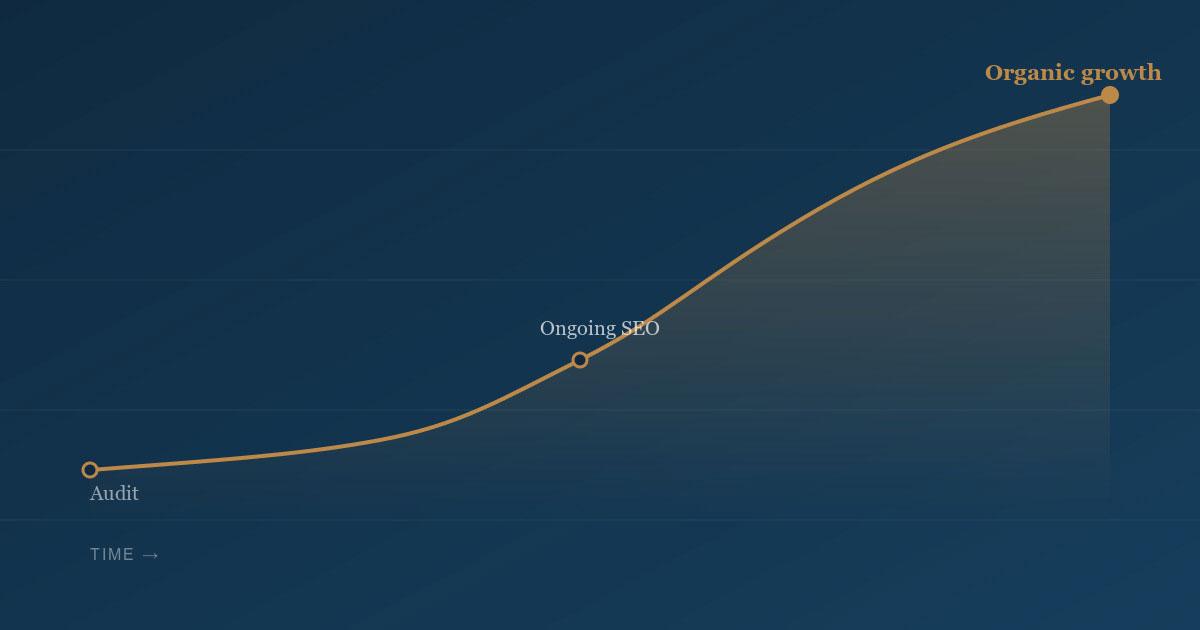
One-off optimisation. Answers get reassembled and sources shift. This isn't a setting but a state you maintain.
Expecting guarantees. Nobody can guarantee appearing in an answer. Anyone promising it is selling an illusion.
How to measure your business's visibility in AI search: four methods
The section that makes the rest worth reading: without measurement you can't separate a result from a coincidence.
Regular runs of your query set. Same list, same private session, same cadence — monthly is enough. Record in how many of twenty answers you were named. It's the only metric that reflects the goal directly.
Referral traffic. Visits from ChatGPT arrive with a source parameter in the URL, so they show up in analytics as a distinct source. Set up a segment for referrals from assistant domains and watch the trend.
The citation report in Bing Webmaster Tools. It shows how many times your site was cited in AI answers, and which pages. It's the one place where you see a number rather than an inference from screenshots.
Asking clients. The simplest and most reliable: add an "found you through an AI assistant" option to your enquiry form and ask during the first conversation. Analytics reports some of these visits as direct traffic, and only asking a person closes that gap.
How long it takes to get recommended by ChatGPT
Technical changes to the site — a few days to a couple of weeks. Appearing in answers — from a few weeks to months, because systems need to re-crawl the site and gather corroboration from elsewhere.
What to expect realistically: not a stream of enquiries but rare, well-prepared ones. Someone arriving from an assistant's answer has already compared options and chosen — they write with a specific task rather than asking what you do.
My own experience is exactly that. A client found my site through ChatGPT after describing his task to the assistant, and wrote straight away with a full list of requirements. Two days later we signed a contract. That's one enquiry, not a stream — but one that required neither advertising nor persuasion.
You can also test whether the approach works without waiting for a client: I put several phrasings of the question a prospective client would ask to the assistant, and in the answers it named me, listing exactly the attributes stated plainly on my site and repeated in the markup. The answers don't reproduce word for word and depend on the phrasing — which is precisely why you need a regular measurement against one fixed set rather than one lucky check.
How I set up business visibility in AI search
I combine development and SEO, so I don't treat AI-search readiness as separate from the site itself: markup, semantic structure, content accessibility and factual clarity go in during the build rather than getting bolted on later.
What the work covers: an audit of current visibility against a query set, tidying up the wording and structure, implementing structured data, checking technical accessibility, a plan for corroboration outside the site, and setting up measurement so you see a trend rather than guess at one.
I'll say this plainly as well: appearing in answers can't be guaranteed, and I don't promise it. What can be done is making a site legible and corroborated enough that a system can present you with confidence — and measuring what comes of it.
Where to start working towards ChatGPT recommendations
Reduced to one principle: measure first, then change things, then measure again. Otherwise you won't learn what worked.
A practical step for today: write down ten questions your client would ask, run them in a private session through ChatGPT and Perplexity, and record the results in a spreadsheet. That's your baseline. The next step is to open your homepage source and check whether it plainly answers who you are, who you work for, and where.
If you'd like to know what assistants currently say about your business and what to fix, write to me and we'll look at it together.