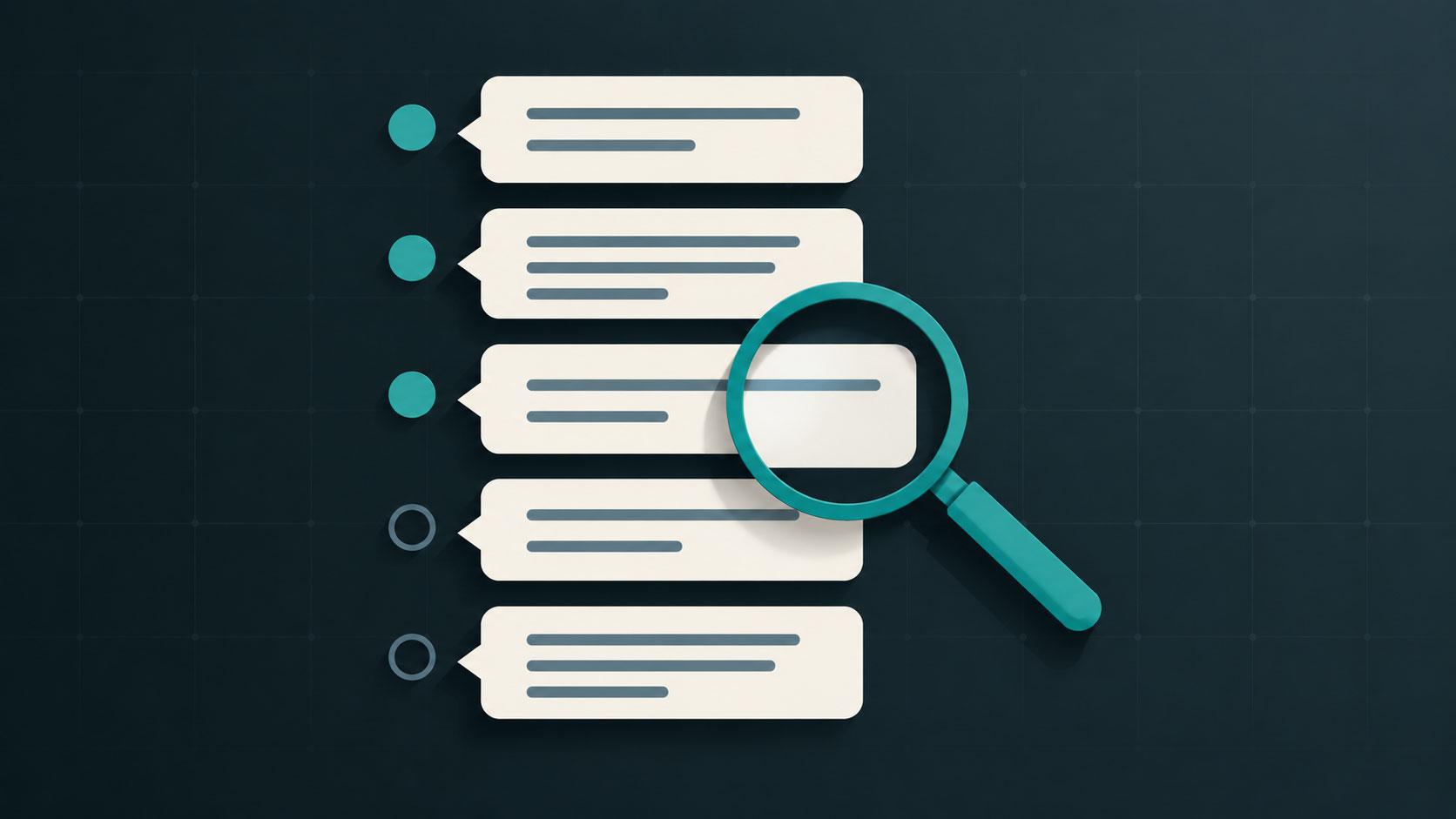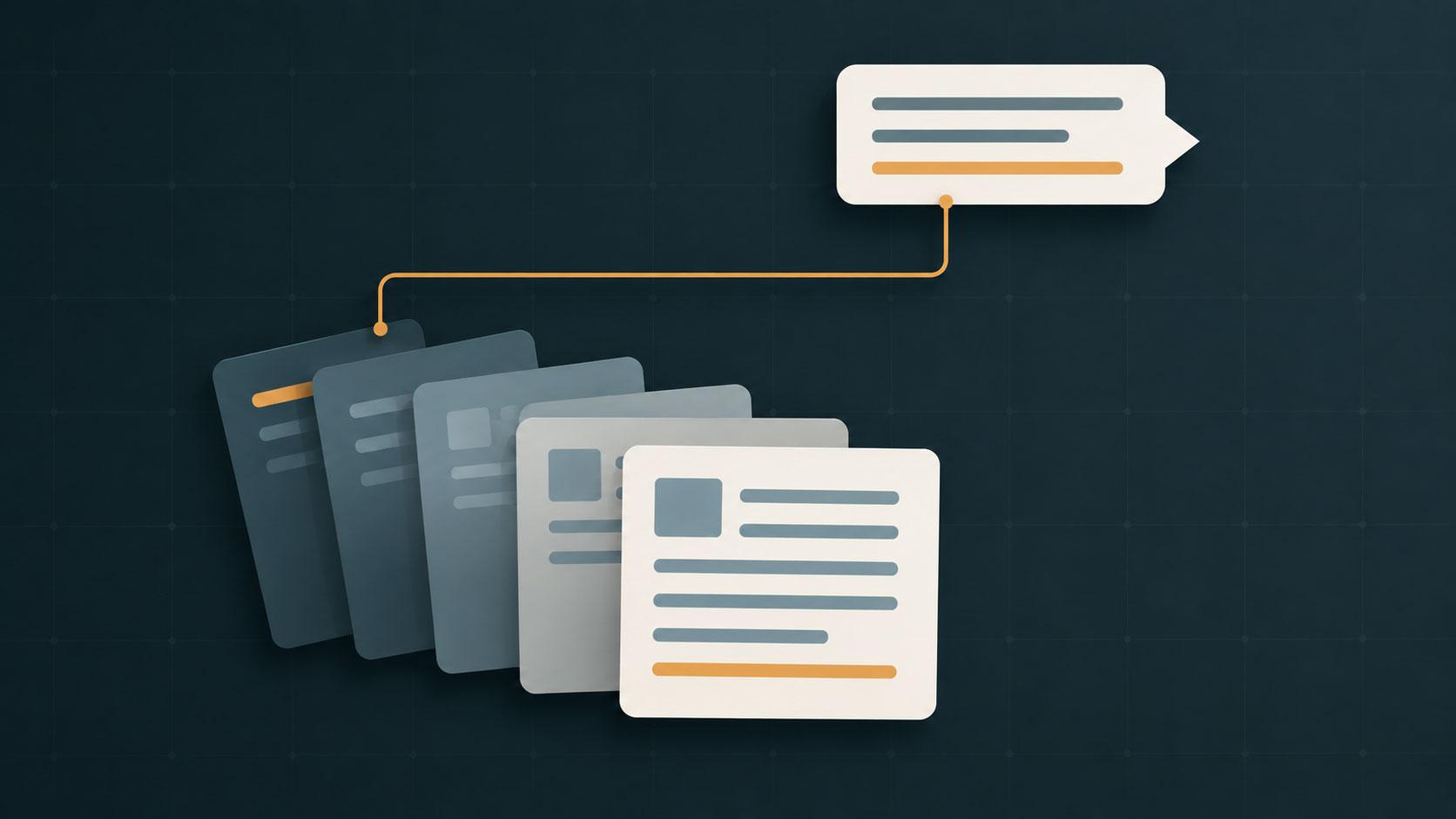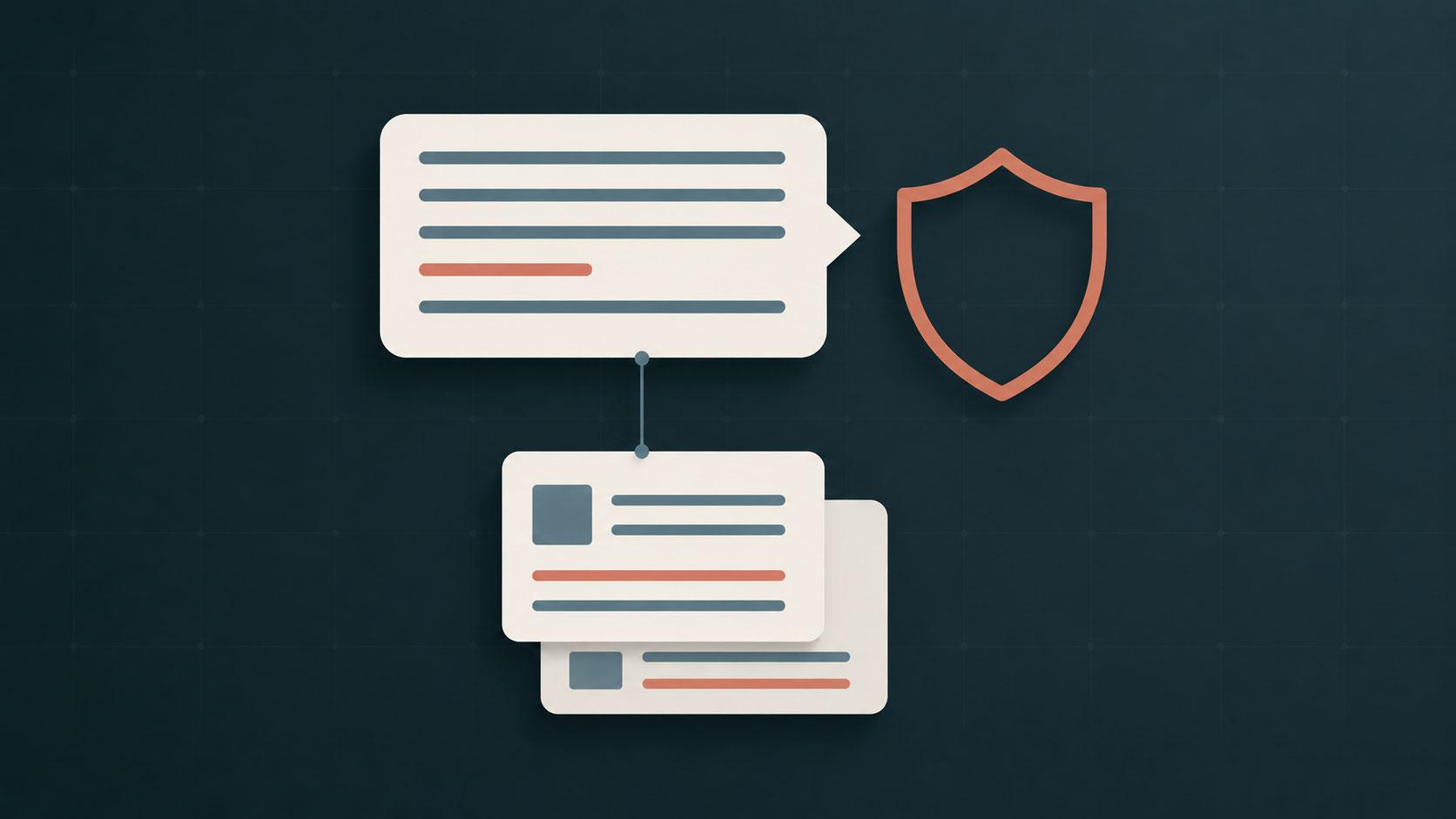


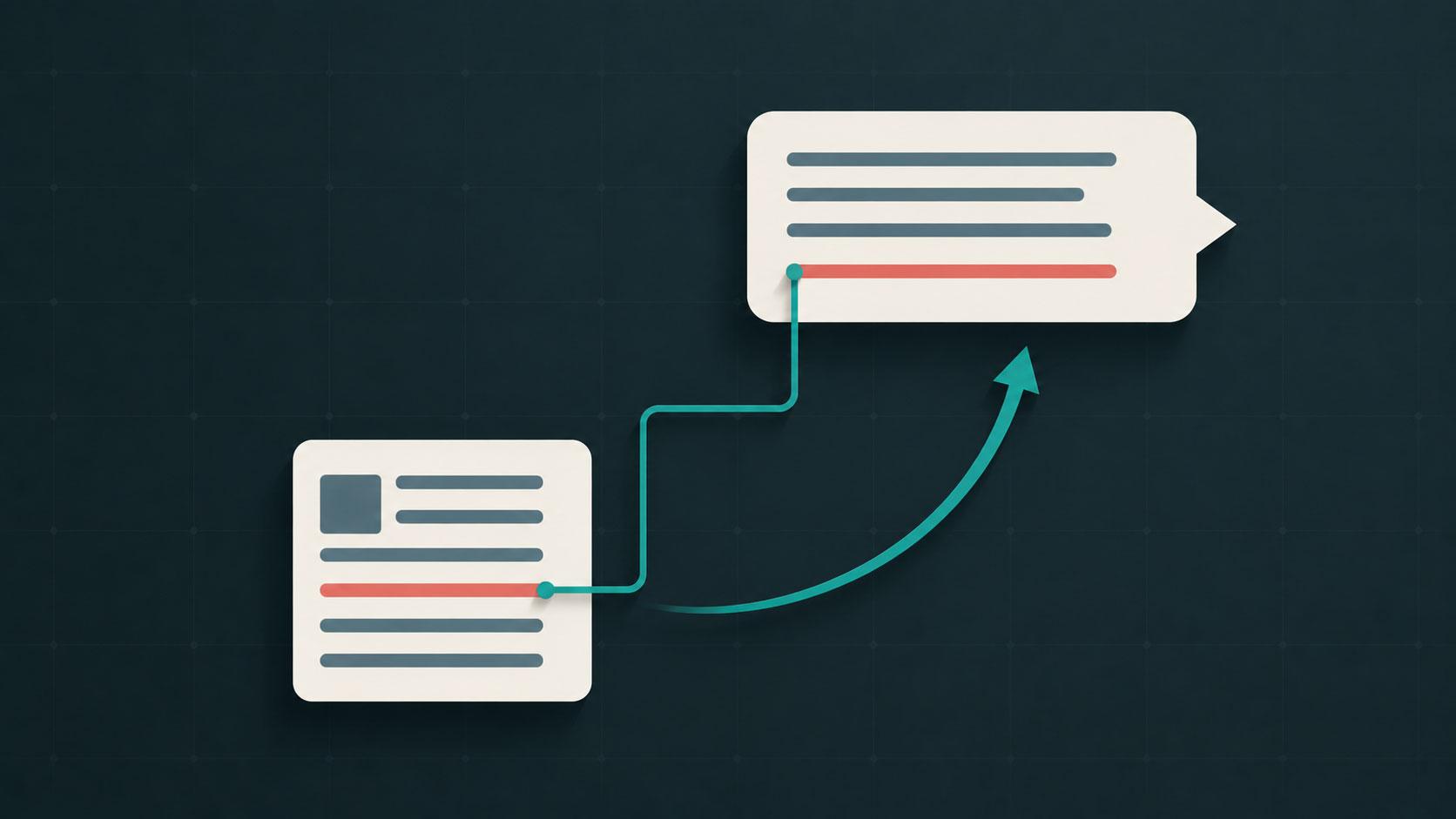
Quick answer: you cannot correct an assistant directly — there is no support ticket that changes what a model says. Corrections happen at the source layer: you find the page the wrong claim came from, fix it, make the correct fact consistent everywhere else it appears, and wait for the platform to recrawl. In-product feedback buttons help at the margin. And one category of error can't be fixed at all right now: if the claim lives in the model's training data rather than in a retrieved page, it persists until a retrain, and the only workaround is making the correct version dominant enough in sources that search-grounded answers stay right.
The instinct on discovering that ChatGPT describes your company incorrectly is to contact someone about it. That instinct is the reason most of this work goes nowhere. There is no channel through which a company corrects its own record with an AI assistant, and the feedback buttons that exist are a signal rather than an edit.
What actually changes an answer is changing what the assistant reads. Below is the sequence, in the order it works.
Why you can't correct an AI assistant directly
Assistants produce answers two ways, and neither accepts corrections.
When an assistant searches the web, it retrieves pages and summarises them. The claim it repeats came from somewhere public. Change that source and the claim changes on the next crawl — not because anyone processed your request, but because the input changed.
When an assistant answers from its own memory, the claim comes from the data the model was trained on. No live source exists to fix. That version of your company is fixed until the model is retrained, and no amount of correspondence accelerates it.
The practical consequence is that step one is never contacting the platform. It's establishing which of these two you're dealing with — which is what the audit covers, and why it comes first.
The six-step sequence for correcting AI misinformation
Six steps, in order. Skipping any of them is why corrections fail to stick.
1. Capture the evidence. Screenshot the wrong answer with the date and the prompt that produced it. Answers change; without the record you can't verify later whether anything improved, and you'll be arguing from memory.
2. Find the source. On platforms that cite, open what was cited — the wrong claim is usually sitting there in plain text. Where nothing is cited, search the incorrect claim itself and see which pages rank for it. The culprit is frequently not your own site: an outdated directory listing, an old press release, a review site profile, a competitor's comparison page from three years ago.
3. Fix the source. If it's your page, correct it and add a visible date. If it's a third party's, request the correction — most directories and review platforms have a process, and a factual correction from the business is usually accepted. If it's a page nobody will change, your only path is making the correct version more prominent than the wrong one.
4. Fix the surrounding record. This is the step people skip and the reason corrections revert. One corrected page against six stale ones loses. Your own site, your profiles, your listings, any directory carrying your details — the correct fact has to be the consistent version across all of them, stated identically.
5. Prompt a recrawl. Submit the corrected URLs in Google Search Console and Bing Webmaster Tools. This doesn't force anything, but it shortens the wait, and Bing matters more than its market share suggests, because several assistants ground their web search in it.
6. File in-product feedback. Thumbs-down on the incorrect answer with a specific, factual explanation: what was claimed, what the correct fact is, and where it's verifiable. Treat this as a signal that costs two minutes, not as the mechanism. It doesn't edit the model.
Then re-test after several weeks with the same prompt. Not the next day — nothing will have changed.
What each AI platform responds to when you correct a source
The platforms differ enough that a fix landing on one while another stays wrong is normal, not a sign that something went wrong.
- Gemini and Google AI answers — Google's live index — Errors track whatever currently ranks; the fix is essentially ranking the correct page above the wrong one
- Perplexity — Live retrieval, sources shown — Easiest to diagnose because citations are visible; typically among the faster to reflect a source change
- ChatGPT with search — Retrieval grounded largely in Bing — Bing indexation matters directly; corrections follow a Bing recrawl
- ChatGPT without search — Training data — Doesn't respond to source fixes at all until a retrain
- Copilot — Bing-grounded — Moves with Bing, like ChatGPT's search mode
Two practical consequences. Submitting corrected pages to Bing Webmaster Tools has an outsized effect relative to Bing's traffic share, because it feeds assistant retrieval. And a company can be simultaneously correct on one platform and wrong on another for weeks — that isn't a failed correction, it's different systems refreshing on different schedules.
Which AI errors about your company to fix first
Not every inaccuracy deserves the same urgency, and treating them equally wastes the effort.
Fix immediately: anything that affects a purchase decision. Wrong pricing, a capability you don't have or do have, whether you serve their country or industry, compliance or certification status, and — worst of all — any suggestion that the business has closed.
Fix within weeks: outdated but not harmful. Former service names, a description of what you did two pivots ago, old team information, a geography you've since expanded beyond.
Leave alone: phrasing you dislike, a description that's accurate but unflattering, competitors being named alongside you. Being listed with competitors is normal and not an error.
The triage matters because correction work is slow. Spending six weeks fixing a stale founder bio while a wrong price sits in the same answer is a poor use of the time.
What cannot be corrected in AI answers yet
The honest part, and the reason to check before investing effort.
If the wrong claim comes from the model's training data rather than a retrieved page, source corrections don't reach it. The model learned a version of your company and repeats it, and that persists until the model is retrained — which happens on the platform's schedule, not yours, and may be months away.
You can identify these: ask the same question with search enabled and disabled. If the answer is right when the assistant searches and wrong when it doesn't, the error is parametric.
The workaround isn't a fix but it's effective: make the correct fact so consistently present across retrievable sources that search-grounded answers stay right regardless of what the model remembers. Since a growing share of assistant answers involve search, correcting the retrievable layer covers most of the exposure even while the memory lags.
What doesn't work, and is worth stating because it gets attempted: legal letters to AI companies, hidden instructions in your page code telling assistants what to say, and mass-publishing thin pages repeating the correct fact. The first is addressed to the wrong party, the second is detectable and reputationally risky, and the third produces low-authority pages that don't outrank the source of the problem.
How to verify that an AI correction actually worked
Re-run the exact prompt from your baseline, in a clean session, several weeks after the source change. Compare against the screenshot.
Three outcomes. The claim is gone and replaced with the correct one — the correction propagated. The claim persists on one platform but not others — normal, keep waiting on the slower one. The claim persists everywhere after two months — either the source you fixed wasn't the one being used, or the error is parametric.
Log each round. Over several months the log tells you which of your sources actually influence assistant answers, which is more useful than any single correction: it identifies the pages worth maintaining carefully.
How I handle AI misinformation corrections
The distinction I draw early is between what's correctable now and what isn't. That saves the effort that would otherwise go into fighting a training-data error, and it sets an honest expectation about timing — this work is measured in weeks and months, not days.
Nobody can guarantee what an assistant will say next. What can be done is making the correct version the dominant one in everything these systems read.
Where to start correcting AI misinformation about your company
Reduced to one principle: fix the sources, not the assistant. There is no other lever.
A practical step for today: take the single most damaging wrong claim you know about — the one that would cost you a deal — and find where it lives. Search the claim itself and see which page ranks for it. That page, whether it's yours or not, is where the correction starts.
If you'd like help establishing what's being said and what's fixable, write to me and we'll work through it.