


SEO for accounting firms: how a practice gets found by the clients it actually wants
Most accounting firms rank for their own name and nothing else. The work is not «more keywords» — it is a page per client type you serve, prices as far as you will go, and a Google profile that matches. Audit from €250, and I say what I would not bother changing.
- A page per client type
- Audit from €250
- Reply in 1 working day
What SEO for an accounting firm actually consists of
- A page per client typeEcommerce sellers, contractors, clinics, startups
- Local search for one or several officesGoogle profile, service areas, reviews
- Pricing that answers the questionA fixed fee or a range, not «contact us»
- Credentials made findableLicences, memberships, who signs the return
- Content ready before the busy seasonPublished months early, not in March
- Being named by AI assistants«Find me an accountant for an LLC»
Open the search results for «website for accounting firms» and the top of the page is held by two template vendors who build sites for the profession by the hundred. That is the whole explanation. A large part of the industry sits on near-identical templates: the same page structure, the same service list, the same «we provide tax, audit and advisory services to businesses of all sizes». To a search engine those firms are interchangeable, so none of them can outrank another on anything except its own name.
The second reason is that the pages describe the service and not the client. «Tax planning» is what you do; «tax planning for an S-corp owner paying himself a salary» is what somebody searches. A firm that keeps the first wording competes with every other firm in the country, and a firm that writes the second competes with almost nobody.
Accounting is bought by segment, not by service. An e-commerce seller with inventory in three states, a construction company with retainage and progress billing, a dental practice with equipment leases, a freelancer who just crossed a VAT threshold — these people have different questions, different software, and different fears, and they search in those terms.
So the structure is one page per segment you actually serve, each naming the segment, the specific problems it brings, the software you work in, and what the engagement costs. That is also the honest filter: a firm that cannot name three segments it is better at than average has a positioning problem rather than an SEO problem, and more content will not fix it.
- name the segment in the heading, not in the third paragraph;
- say which software you work in — the segment searches by it;
- state what the engagement includes and what it costs, or at least a floor;
- show who on the team actually handles that segment;
- and do not create a segment page for work you would rather not take.
Most accounting work is bought locally even when it could be done remotely, because people want someone they can reach. That makes the Google Business Profile as important as the site: the categories, the service list, the hours, and the reviews, with the same firm name and address everywhere they appear. A firm with two offices needs a real page per office with its own address and team, not one page listing both.
What this covers in detail is on the local SEO page. Where the firm serves clients across a country rather than a city, the local side matters less and the segment pages carry the weight.
The single most common complaint from accounting-firm visitors is that no price is shown anywhere. Buyers read «contact us for a quote» as «this will be expensive and awkward to ask about», and the ones who are price-sensitive leave without contacting you — which is also the point: a stated floor filters them out before they take an hour of your time.
Going as far as you are willing is enough. A monthly fee for a defined scope, a fixed price for an annual return at a stated revenue level, or a range with what moves it. The firms that refuse any figure are usually the ones whose enquiries are hardest to qualify.
Search demand in this profession is seasonal and the content calendar has to run ahead of it. A page written during the filing rush is indexed and starts gathering positions after the rush has ended; the same page published a few months earlier collects the season it was written for. The practical rule is that anything tied to a deadline is written in the quiet months, and the quiet months are exactly when nobody feels like writing it.
A bookkeeping practice is not a smaller accounting firm — it sells a recurring operational service, usually to owners who do not want to touch their own books, and the buyer compares on monthly price, software and responsiveness rather than on credentials. Measured demand here is small: «seo for bookkeepers» and «bookkeeper seo» together run about thirty searches a month in English, which is why this is a section rather than a page of its own.
What differs in the work: the software is the keyword, because owners search «QuickBooks bookkeeper» or «Xero bookkeeper» and not «bookkeeping services»; the monthly price belongs on the page because that is the comparison being made; and a clear statement of what is and is not included prevents most of the bad-fit enquiries.
An audit is €250 and covers the site, the Google Business Profile and what AI assistants currently say about the firm. One-off work — segment pages, pricing, structured data, the local profile — runs €250–800 depending on scope. Ongoing work is €800 a month. First movements are usually visible after about a month and a half; steady growth sits on a three to six month horizon, and anyone promising a position by a date is selling a date rather than a result. The full list is on the pricing page, and what an audit contains is on the SEO audit page.
If the firm sits on a vendor template where pages cannot be added, text cannot be edited without a support ticket and the address structure is fixed, SEO work on it is paying rent. In that case the cheaper route is a site you own: website development for an accounting firm. I say which of the two applies before quoting, and a template that merely looks dated is not a reason to rebuild.
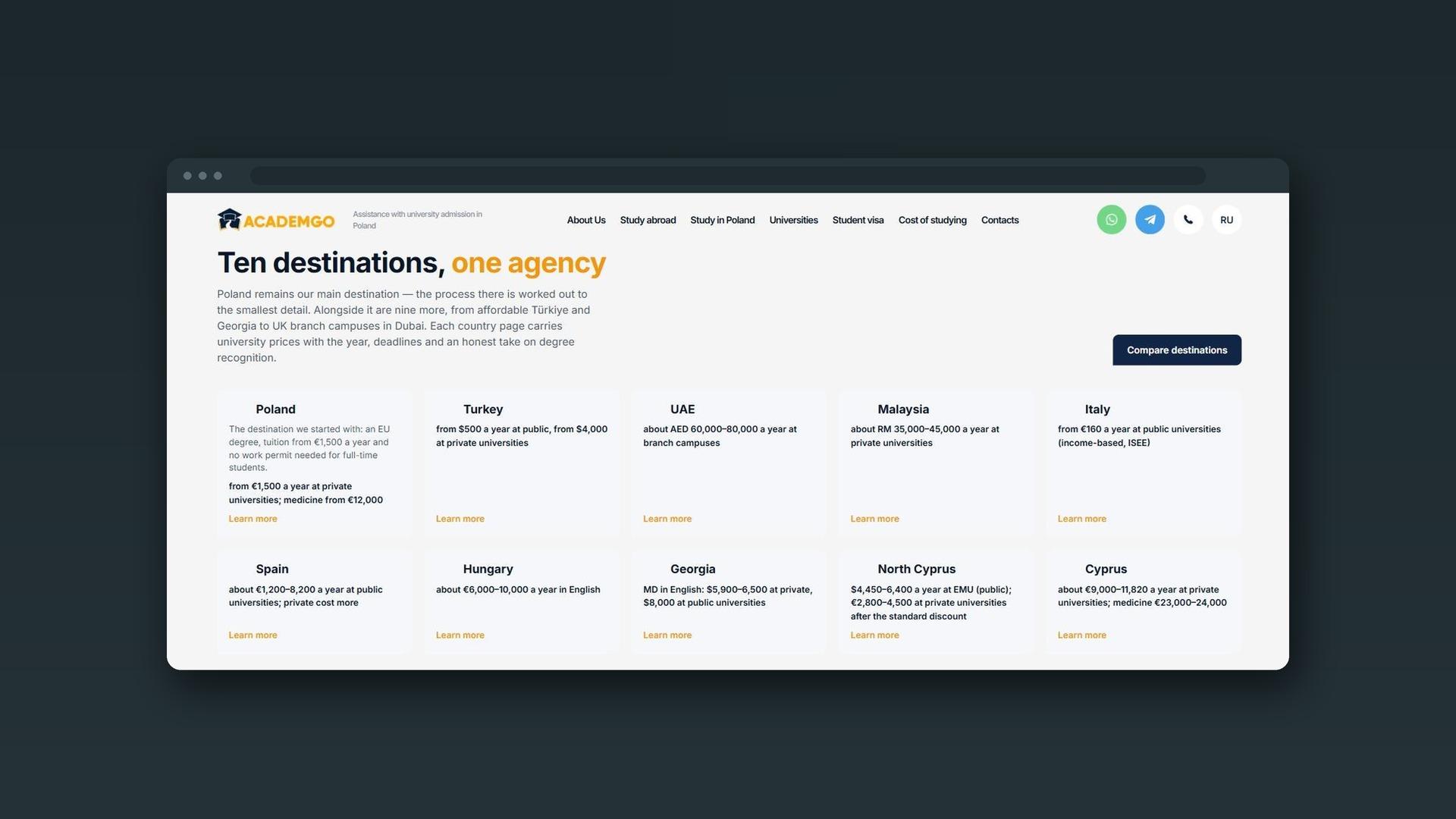
SEO case study: an education agency site, one country to ten
1 → 10 countries180 new pagesPerformance 61 → 91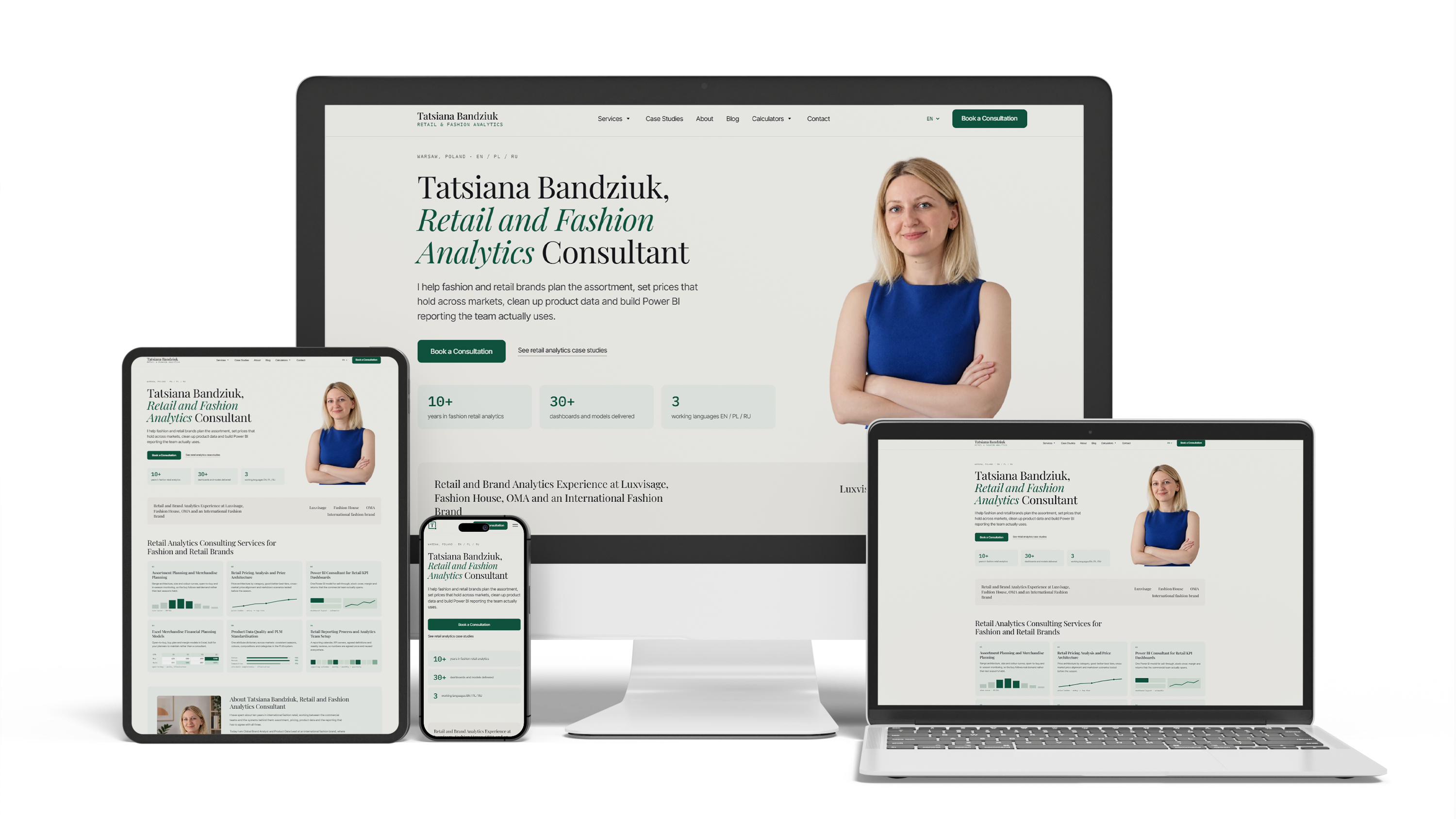
A consultant website for a retail analytics expert
100/100/100/100153 pages3 languages
Digital Agency Website Development
100% match to FigmaLive status indicatorNo-code editing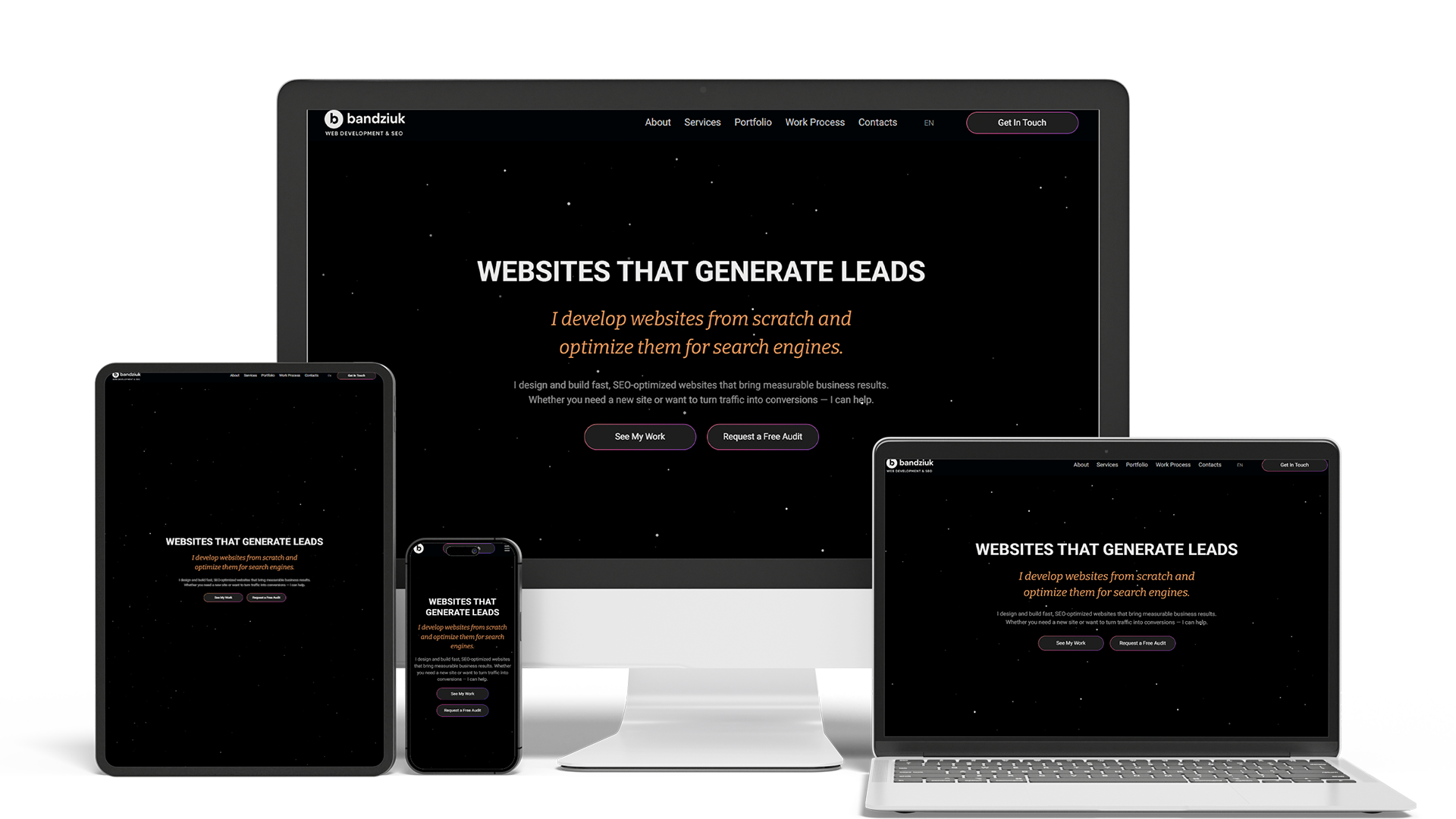
Develop and optimize a personal website with SEO
10× faster editingTraffic from ChatGPTMain lead channel
Full Multilingual Website Development & SEO for Student Services
+5,930 clicks in 6 months359k impressionsTeam edits it
An SEO audit for your accounting firm
Send the site and I reply within one working day: what is holding it back and what I would do first.
Being named when a client asks ChatGPT for an accountant (GEO, AEO)
«Find me an accountant for a one-person LLC with Stripe income» is now a question people type into an assistant before they open a search engine. The assistant answers from text it can read and from sources that agree with each other, which makes three things decide whether a firm is named: the segments and services written as text rather than shown in a brochure image, a price or a range the assistant can quote, and the same firm name, address and service wording on the site, the Google Business Profile and any professional directory that lists the firm.
A firm on a vendor template usually fails the third one, because the directory listing and the site were filled in years apart by different people. Getting an existing site into a readable state is preparing a site for AI search, and if the problem is that assistants say something wrong about the firm, that is fixing AI misinformation.
SEO for accounting firms: frequently asked questions
Order an SEO audit for an accounting firm: what to send me
Send the website, say which client segments you are actually better at than average, how many offices you have, and whether you can edit the site yourself. I reply within one working day with what is holding it back and what I would do first — and if the honest answer is that the template has to go before anything else is worth doing, I will say that rather than sell a year of work on top of it.
