

This is a diary of my own project, not a retelling of someone else's statistics. On 18 September 2026 I opened tatsianabandziuk.com to indexing — a trilingual site for a retail analytics consultant that I designed and built myself. 160 pages, no backlinks, no domain history, no branded demand. I have access to its Search Console, Bing Webmaster Tools and Clarity accounts, so the exports below are published in full and with screenshots.
The short answer first: the first impressions in Google appeared on day two after I opened the site to indexing, 70 of its 160 pages were indexed within nine days, and three weeks in half the site was still outside the index — 71 pages in "Discovered — currently not indexed". The first clicks came on day ten. The totals for the 28-day measurement window, 18 September to 15 October: 1,068 impressions and 6 clicks. The day-by-day data runs to 11 October — Search Console is still settling the final days.
Where the numbers come from. Impressions, clicks, CTR and positions — the Performance report in Google Search Console for 18 September to 15 October, all devices and all countries, no filters applied. The state of the index — the Page indexing report as of 14 October. Sessions and referrers — Microsoft Clarity for the same period, with its own bot filter. Bing impressions — Bing Webmaster Tools for 20 September to 11 October. Nothing is recalculated, rounded or averaged: every section carries a screenshot of the report its numbers come from.
Two things come without a screenshot: the query table and the reason breakdown in the indexing report. Both show specific URLs and queries I am not publishing, so those numbers appear as text — and you have as much reason to take them on trust as anyone else's. Everything else is attached as exported.
Indexing and traffic numbers from the first 28 days
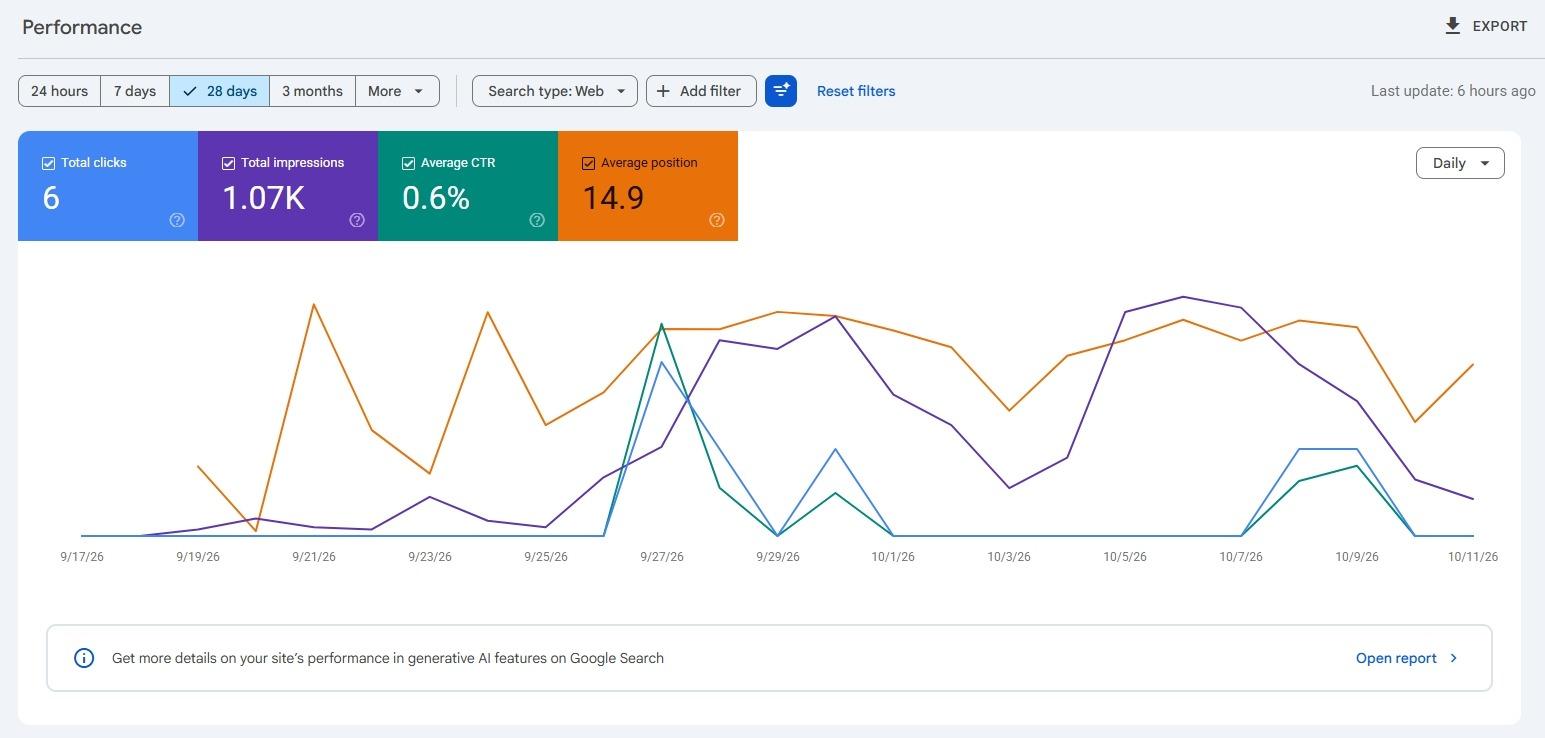
- 1,068 impressions and 6 clicks, 0.56% CTR — Search Console, Performance report for 18 September to 15 October
- Average position 14.9 across devices — the same report, with no device split applied
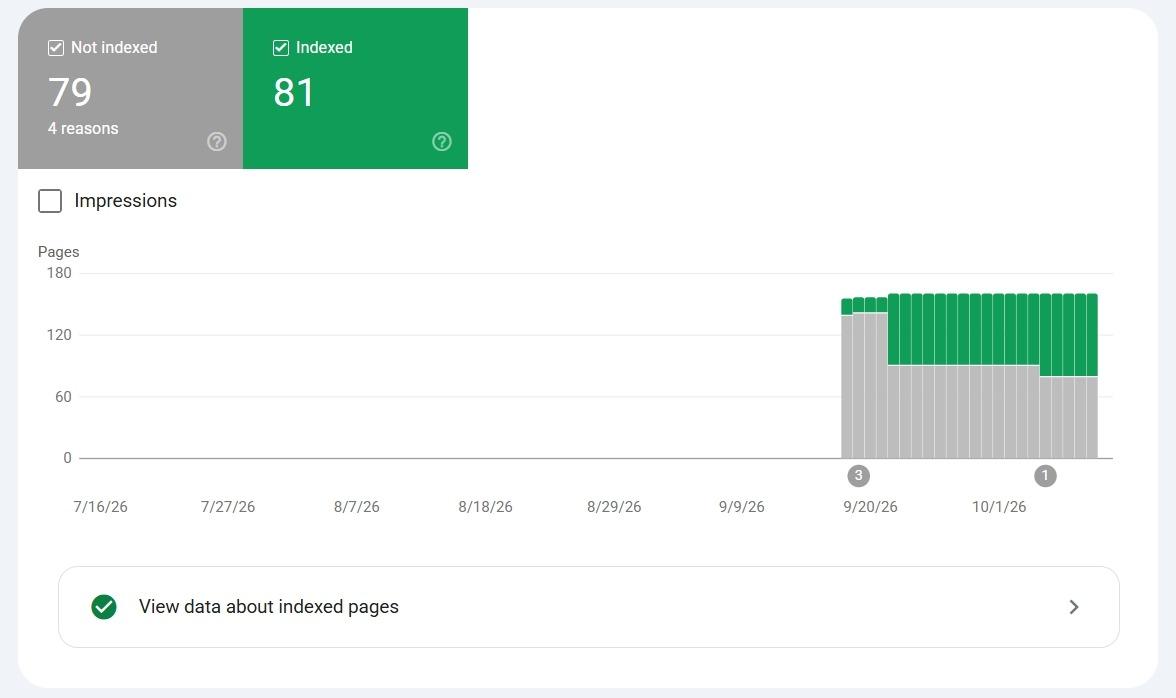
- 81 pages indexed and 79 outside the index, 71 of them "Discovered — currently not indexed" — Page indexing report as of 14 October
- 43% of all impressions came from one country where nothing is being sold, the Russian-speaking cluster together 59% — country breakdown in Performance
- 250 impressions at positions 3–8 produced zero clicks — query breakdown in Performance, no screenshot
- 7 real sessions from ChatGPT against 11 from Google — Clarity, referrers report
- 56 impressions and no clicks in Bing — Bing Webmaster Tools for 20 September to 11 October
- Zero backlinks: not one was bought or placed by hand at any point
Why these indexing and traffic numbers are real, and why they are not bad
It is easy to find posts about a thousand visits in two weeks and rankings for everything at once. None of it can be checked: no export, no date range, no domain. So this goes the other way — the domain is named at the end of the article, the exports are published, and nothing is rounded in my favour.
Now about "not bad". The site is three weeks old. It has no backlinks, no domain history and no branded demand. In those conditions 1,068 impressions, 70 pages indexed in nine days and first clicks in week two are a working start. A failure looks different: zero impressions and an empty index after a month. A thousand visits to a fresh domain with no links in two weeks is either paid traffic, someone else's screenshot, or fiction.
The uncomfortable parts are here too: 71 pages unindexed, no clicks at all from positions 3–8, and 40% of everything that reached the counter is bots. A diary is only worth reading with those included.
Starting position of the new site: three languages, 160 pages, zero backlinks
The site went live on 18 September 2026 with six service pages, six case studies, 54 articles, five calculators and the usual supporting pages, in English, Polish and Russian, with localised section paths.
Everything that normally gets postponed was done before launch: a sitemap with real last-modified dates, schema.org on every page type, IndexNow pings on publish, FAQ answers served in HTML without JavaScript, Core Web Vitals in the green.
What the site did not have, and still does not: backlinks, mentions, domain history, branded demand. Without that context the numbers below read wrong.
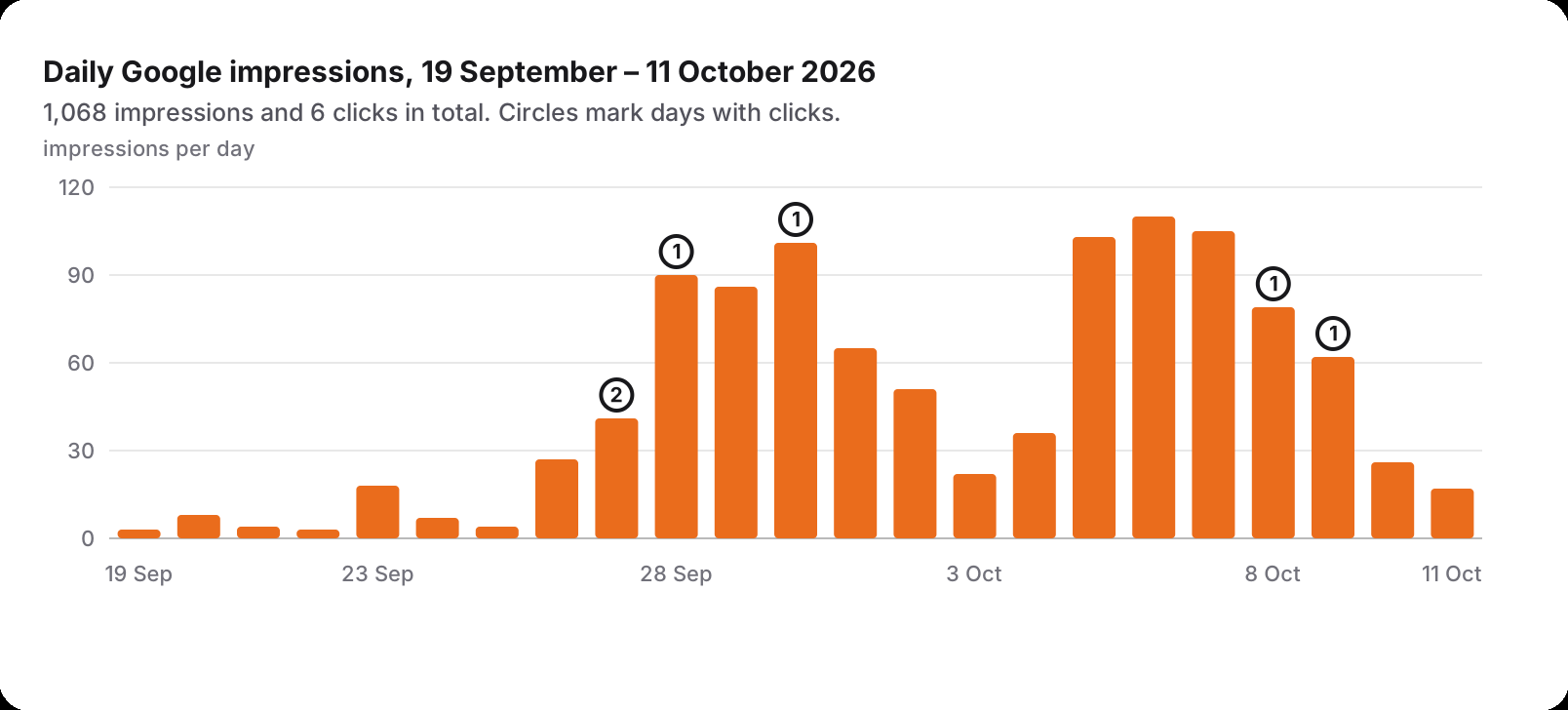
Daily Google impressions of a new site: up to 110, then down to 17
Across the 28 days Google showed the site 1,068 times and sent 6 people. The chart below covers the days whose data is already complete.
| Dates | What happened |
|---|---|
| 19–22 Sep | First impressions, 3–8 a day |
| 23–26 Sep | 18–27 a day; indexed pages grew from 17 to 70 |
| 27 Sep – 7 Oct | Plateau at 60–110 a day, first clicks |
| 10–11 Oct | Drop to 26 and 17 |
Reaching a hundred impressions a day inside two weeks is a normal start. The drop at the end is the interesting part: it looks like the end of the short-lived boost Google gives new sites to sample how users react to them. That is a hypothesis, not a fact, and next month's export will test it. If impressions do not recover, the cause is something else.
"Discovered — currently not indexed": 71 pages out of 160
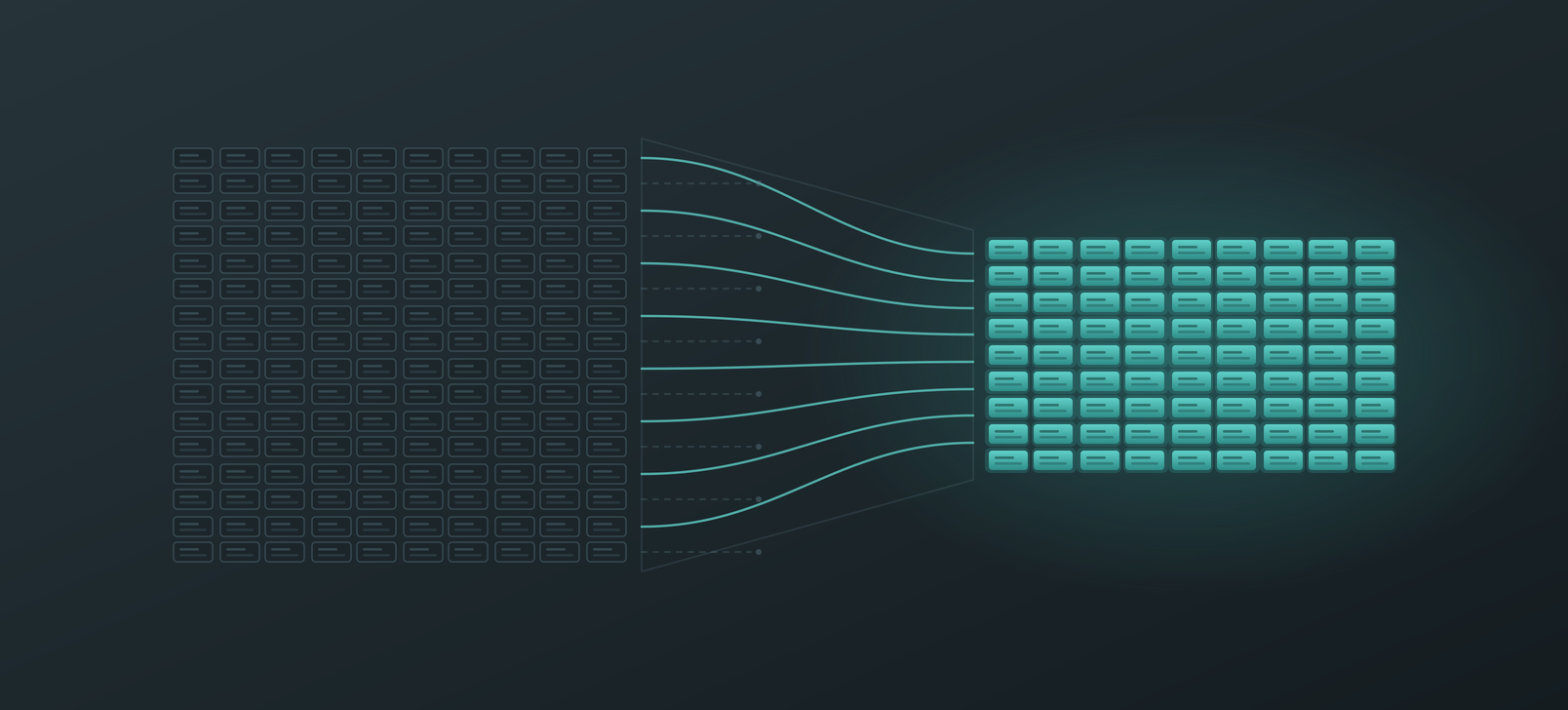
The worst number of the period. As of 14 October: 81 pages indexed, 79 not, and 71 of those in "Discovered — currently not indexed".
The status means Google learned the URL — from the sitemap or a link — and decided not to spend a crawl on it. It is not a markup error, not a robots rule, not a slow server: all of that was checked and is fine. It is a trust deficit. Crawl budget goes to domains with external signals, and a three-week-old site has none.
The conclusion follows directly, and people rarely like it: while half the pages sit outside the index, rewriting the text on those pages changes nothing. First they have to be read.
Google impressions came from the wrong markets: 43% from one non-target country
The country breakdown was the biggest surprise.
| Country | Clicks | Impressions | CTR | Position |
|---|---|---|---|---|
| Poland | 3 | 129 | 2.3% | 9.5 |
| Kazakhstan | 1 | 69 | 1.4% | 5.1 |
| India | 1 | 11 | 9.1% | 10.2 |
| Mexico | 1 | 4 | 25% | 62.0 |
| Russia | 0 | 458 | 0% | 10.4 |
| United States | 0 | 105 | 0% | 40.3 |
| Ukraine | 0 | 66 | 0% | 11.6 |
| United Kingdom | 0 | 50 | 0% | 35.4 |
| Belarus | 0 | 22 | 0% | 3.8 |
| Uzbekistan | 0 | 13 | 0% | 5.2 |
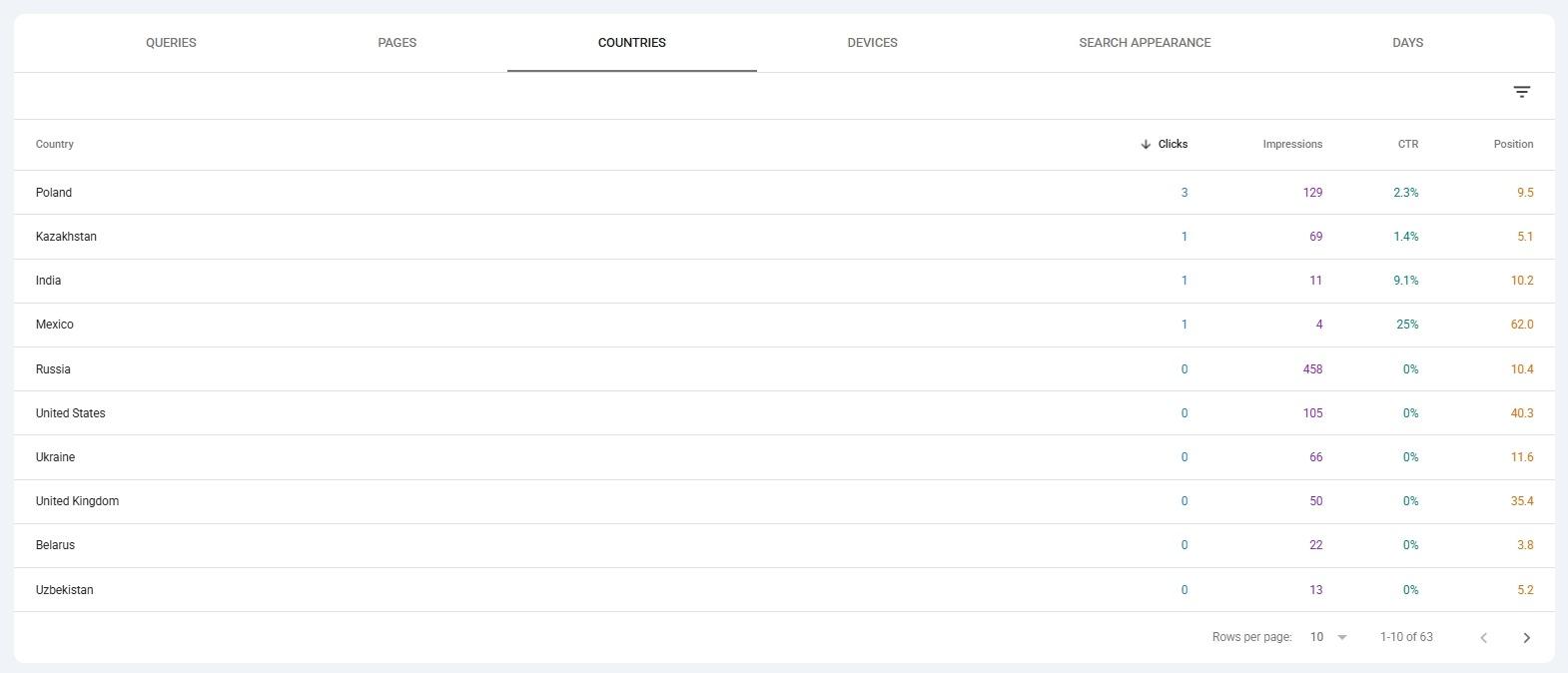
The top ten of 63 countries, sorted by clicks. Russia alone produced 458 impressions — 43% of the period's total — and not one click. The Russian-speaking cluster together with Kazakhstan, Ukraine, Belarus and Uzbekistan accounts for 628 impressions, almost 59%, and a single click between them.
The target English-speaking markets, the US and the UK, produced 155 impressions at positions 40.3 and 35.4 — effectively absent. The one market where everything lines up is Poland: 129 impressions, 3 clicks, 2.3% CTR and an average position of 9.5.
This is what happens when one language version lands in a less contested SERP: positions 3–8 arrive quickly there, while the same topics in English are held by sites with a decade of history. Aggregate numbers end up looking healthier than the actual situation.
Positions 3 to 8 in search produced zero clicks: a zero-click search, measured
The most useful finding of the period. A cluster of definitional queries — "what is this metric" — collected roughly 250 impressions at positions between 3.5 and 8 and produced not a single visit.
The cause is the query type, not the ranking. Someone asks for a definition, gets it in the snippet, in People Also Ask, in the AI overview, and never leaves the results page. A good position on a definitional query now means participating in the answer, not receiving a visit.
Practical consequence: either promise something the AI answer does not contain — a calculator, a table of benchmarks, a template, a worked example — or stop treating those pages as a traffic source and judge them by citations instead.
ChatGPT referral traffic to a new site: 7 visits against 11 from Google
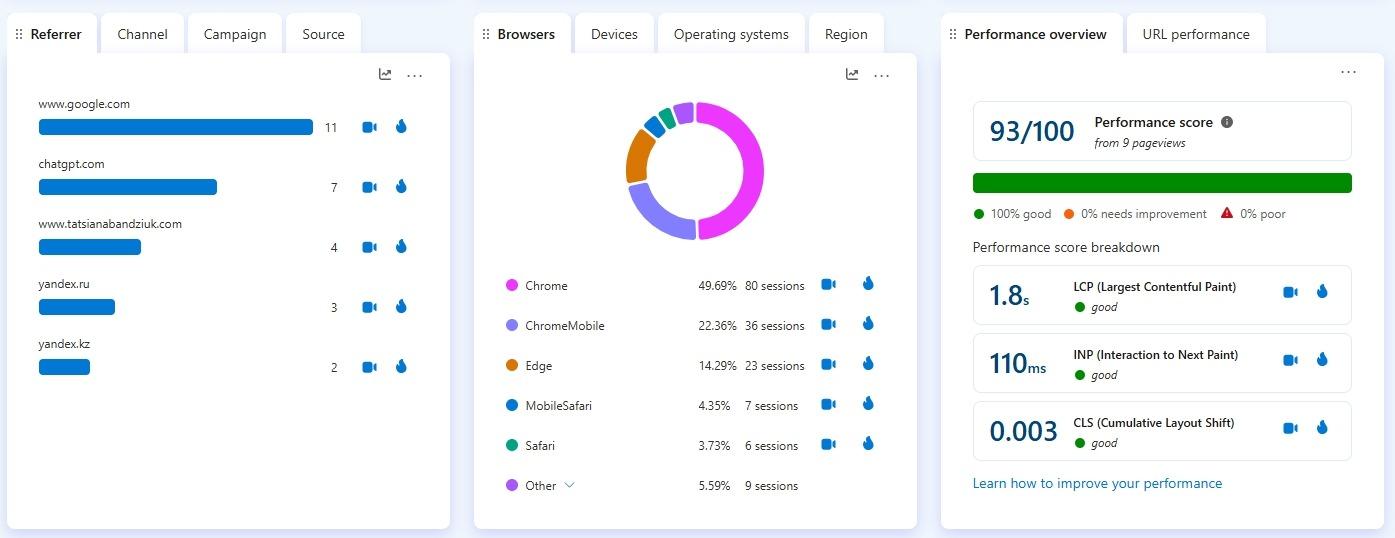
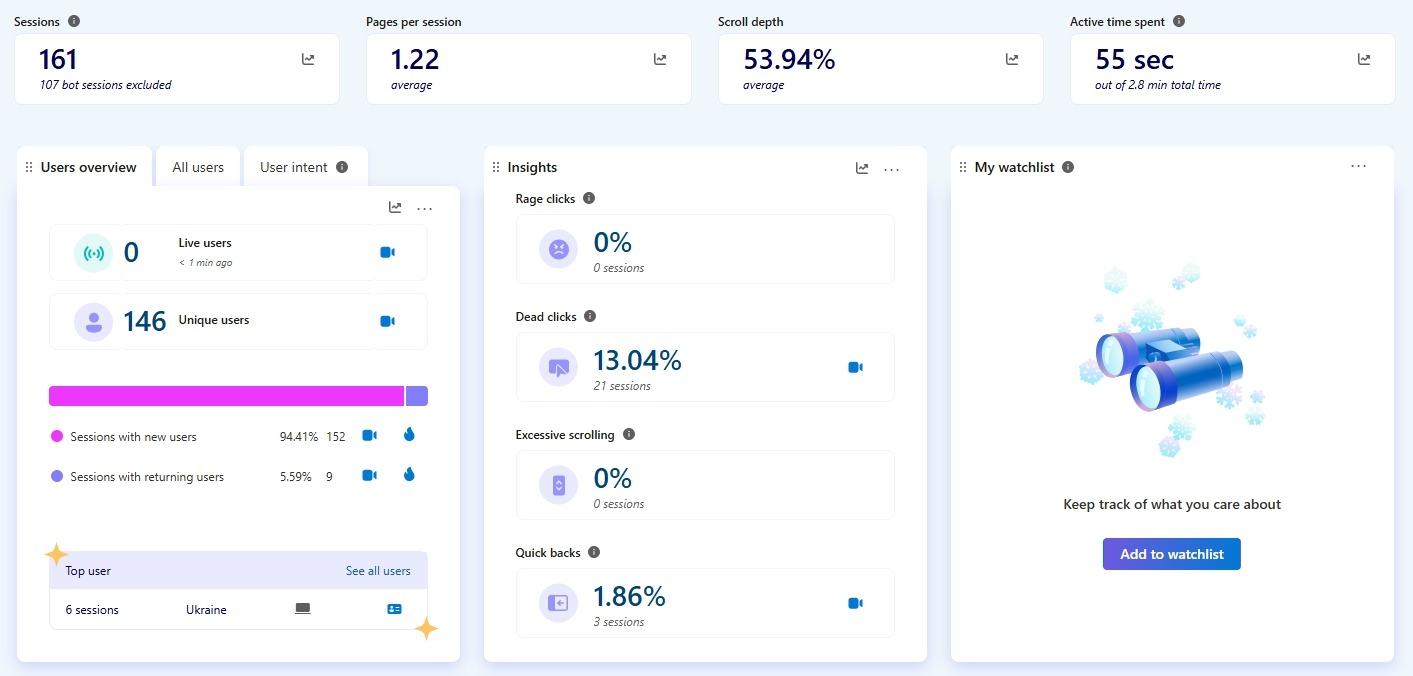
Clarity counted 161 sessions for the period and excluded 107 bot sessions on top of that. Referrers: Google 11 sessions, ChatGPT 7, Yandex 5 (three from yandex.ru, two from yandex.kz) and 4 more from the site's own domain. The rest arrived with no referrer at all: direct visits and whatever the browser did not pass on.
The bot filtering is not mine: Clarity does it and states it in the dashboard as "107 bot sessions excluded". That filter is not perfect, so 161 is "real according to Clarity", not proven humans.
At that volume it is not statistics yet, but the ratio is telling: for a three-week-old site with no links, an AI assistant delivers two thirds of what search delivers. And getting into an assistant's answer turned out to be faster than getting into Google's top ten.
One more number from the same export: the 107 excluded bot sessions are 40% of everything that reached the counter. Unfiltered, the report would have shown 268 sessions instead of 161, and the picture would look markedly healthier than it is.
Technical optimisation at launch did not speed up indexing
For completeness: LCP 1.8s, INP 110ms, CLS 0.003, performance score 93 out of 100. The site is fast, stable and fully marked up — and none of that helped with indexing or rankings.
This is not an argument against technical work. It is a reminder of what it does: it removes obstacles, it does not create demand or substitute for authority. When 71 pages sit in "Discovered — currently not indexed", shaving 0.3 seconds off LCP is not the lever.
Indexing in Bing and IndexNow: 56 impressions and no clicks
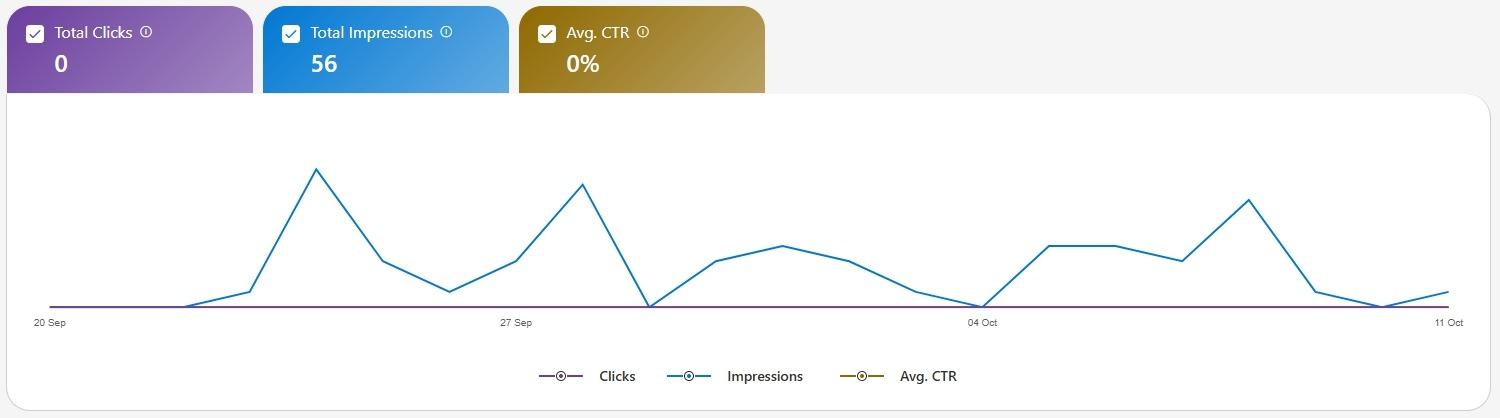
A separate thread: 56 impressions and zero clicks in Bing between 20 September and 11 October, with IndexNow submissions wired up from day one. That is low even for a new domain, so next month goes partly into diagnosing it — whether the sitemap was accepted and whether key verification passes.
Bing matters beyond its own share: its index feeds Copilot and parts of other AI answers. A site that is weak in Bing quietly loses AI visibility too.
The plan for month two: indexing, snippets, external signals
Four priorities, in order.
- Indexing. Work through the unindexed list, drop from the sitemap what should not be indexed, add internal links to important pages from the ones already ranking, manually submit twenty priority URLs.
- Snippets. Rewrite titles and descriptions for ten pages already sitting at positions 3–15, around a promise the AI answer cannot fulfil.
- External signals. First mentions: profiles, professional communities, two guest pieces. Without this, priority one hits a ceiling.
- AI visibility baseline. Run 30–40 control questions through ChatGPT, Perplexity, Google AI Overview and Copilot, record where the site appears, repeat monthly.
Which site this is, and where to see how it was built
How tatsianabandziuk.com is built and why it was built that way — section structure, page templates, markup and speed — is covered in the case study in my portfolio. This diary covers only what happens to the site after launch, month by month.
Next instalment in a month, with a fresh export and a test of two hypotheses: whether impressions recover after the drop, and whether indexing moves once external signals exist.