



Quick answer: A construction-niche business owner fired his developers and SEO team and moved entirely to vibecoding — building the site through AI with no technical oversight. The AI-generated redesign was pushed straight to the live site, and within two days traffic and rankings started collapsing. The causes: lost page URLs, swapped locale versions, missing structured data, and the wrong rendering strategy for key content. After two weeks of diagnosis and fixes, the site fully recovered within a month. The lesson: AI is a powerful tool, but it needs expert technical oversight — not a replacement for it.
This story isn't about AI being bad. I use it in my own work every day. It's about what happens when a powerful tool is used without technical oversight — and what that can cost a business in downtime and lost clients.
A site with real organic traffic before the switch to vibecoding
A business owner in the construction niche came to me. Before that, he had a working, growing site: over a thousand quality visitors a month from organic search, a steady stream of inquiries, and years of accumulated technical history — correct page addresses, a working structure, search engine trust.
This wasn't an experiment. It was a tool that brought the business real revenue.
How the business switched entirely to vibecoding instead of a dev team
After watching TikTok videos and Threads posts about how AI can now "build a website on its own," the owner made a decision: fire the entire development and SEO team and run the site entirely through AI-assisted vibecoding — development without any technical specialist involved.
Wanting to rethink development costs is understandable, and I get it: any business owner has the right to look for more efficient ways of working. The problem wasn't the decision to try AI. The problem was how it was done.
He wanted a new design — and he got one. The AI rebuilt the site's look, created a new admin panel. And then all of it was pushed straight to production — onto the live, working site — with no staging environment, no intermediate review, no technical audit.
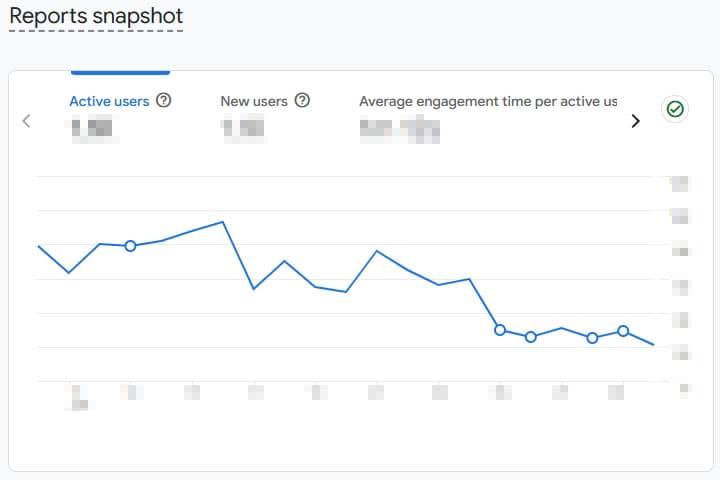
Within two days, the site visibly dropped. And it didn't recover — for over a month it just kept losing rankings and traffic.
Vibecoding's technical mistakes: what broke on the site
There were several causes, and each sounds different to a developer than to a business owner. Let me walk through each one the way I'd explain it to a client, not a fellow developer.
Page addresses were lost (URL structure). Imagine your business had thousands of business cards handed out across the city, each with the correct office address printed on it. Search engines had "memorized" the site's page addresses in exactly that form, for years. When the redesign changed those addresses without proper redirects, everyone who went to the old address — both real visitors and search crawlers — hit a dead end. Years of accumulated search trust in those pages reset overnight.
Language versions got swapped, and search engines were never told (locales and hreflang). The site has separate sections for different languages — the German section and the English section, each at its own address. During the redesign, they were literally swapped: what used to serve German content started showing English, and vice versa. Search engines were never informed of this swap — the technical signal (the hreflang attribute) that says "this page is for German speakers, this one for English speakers" stayed pointed at the old addresses. And worst of all: no redirects were set up from the old language addresses to the new ones either. As a result, both visitors and search crawlers who had used the same links for years either got the wrong language or hit dead pages. Search engines stopped trusting what they saw and started demoting the site's entire language structure.
Enhanced search results disappeared (structured data, rich snippets). The site used to show extra elements in search results — ratings, answers to common questions, structured information visible directly in the results, before a visitor even clicked through. That works through special technical markup (Schema.org) — invisible to the eye but visible to search engines. It was lost during the redesign migration. The site started looking far plainer in search than its competitors, and got fewer clicks even at the same ranking positions.
Part of the site became "invisible" to search engines at the moment they visited (server-side rendering). This one's a bit more technical, but here's an analogy. A site can be built two ways: bake the finished page in advance and serve it instantly on request (server-side rendering) — or assemble it "live" in the visitor's browser after the page has already loaded (client-side rendering). For key content that needs to be visible immediately — to both visitors and search crawlers — the first approach is critical. The AI defaulted to the second approach in several key places where the first was needed. As a result, search crawlers sometimes found the page still empty, and real visitors experienced slower, janky loading.
Each of these problems on its own is about a week of work to fix. All four at once, with no diagnosis and no understanding of what actually broke, brings a business to a standstill.
What broke and how it was fixed — summary table
| What broke | What it means in plain terms | How it was fixed |
|---|---|---|
| Lost page addresses (URLs) | Search engines and visitors hit old addresses and found nothing | Restoring the URL structure and setting up redirects from old addresses to new ones |
| Swapped language versions (locale/hreflang mix-up, no redirects) | German and English versions swapped places with no warning to search engines — old links led to the wrong place | Restoring correct locale addresses, updating hreflang markup, and setting up redirects from the old language URLs |
| Lost search markup (Schema.org) | The site disappeared from enhanced search results — ratings, answers, extra information | Restoring the technical structured data |
| Wrong page-rendering approach (client-side instead of server-side) | Part of the content was invisible to search engines the moment they visited | Moving critical parts of the site back to server-side rendering |
Rescuing the site after vibecoding: what I did
I spent two weeks on systematic diagnosis and fixes: restored the correct page addresses with proper redirects, put the language markup back in place, restored the structured data, and moved critical parts of the site back to server-side rendering where it mattered for speed and search visibility.
About a month after the fixes, the site stabilized and started gradually growing back — rankings returned, traffic returned, inquiries returned.
The lesson isn't that AI is bad — it's about expert oversight of AI-assisted development
I actively use AI in development myself — it's a powerful tool that speeds up routine work and helps me move faster. The difference isn't whether to use AI. The difference is whether it's used under expert oversight or instead of it.
AI is excellent at doing exactly what it's told. But it doesn't automatically know that you can't change a URL structure without redirects, that you can't mix up language versions, that you can't lose structured data, that you can't casually change how pages are rendered. That knowledge is expertise, not a feature of the tool. Without someone who understands this and reviews the output before it reaches the live site, any powerful tool can push anything to production — and nobody notices until it's too late.
Checklist: how to protect your site when using AI in development
If you're considering using AI for website development or a redesign, here's what's worth doing without exception:
- Never push changes straight to the live site. Any significant change should first be tested on a staging copy of the site, inaccessible to search engines and visitors, and only then moved to the main site.
- Set up basic monitoring. Google Search Console alerts and simple uptime monitoring will surface a problem within hours, not after a month of unnoticed decline.
- Keep the URL structure stable through any redesign — and if addresses do change, always set up redirects from old to new.
- Have a specialist who understands both development and SEO technically review AI-generated changes — especially anything touching site structure, language versions, or how pages are rendered.
- Don't confuse a beautiful design with a working site. These are two separate questions. A site can look stunning and still be invisible to search engines — the two are unrelated.
- If you want to use AI in development, pair it with expert oversight rather than replacing expertise with it. AI amplifies someone who understands its output — it doesn't replace that understanding.
If your site has already been hit by an unreviewed AI redesign
If your site's traffic has sharply dropped and isn't recovering after a redesign, migration, or AI-assisted experiment, it's likely one or more of the causes described above. These problems are diagnosable and fixable — usually faster than it seems, if you know where to look. Write to me and I'll run a technical audit and tell you exactly what's happening with your site.